← BACK TO SHOP
← BACK TO SHOP

Watergate: How a tape recorder brought down a president

Nixon Pic.png

This episode was written & produced by Kevin Edds.

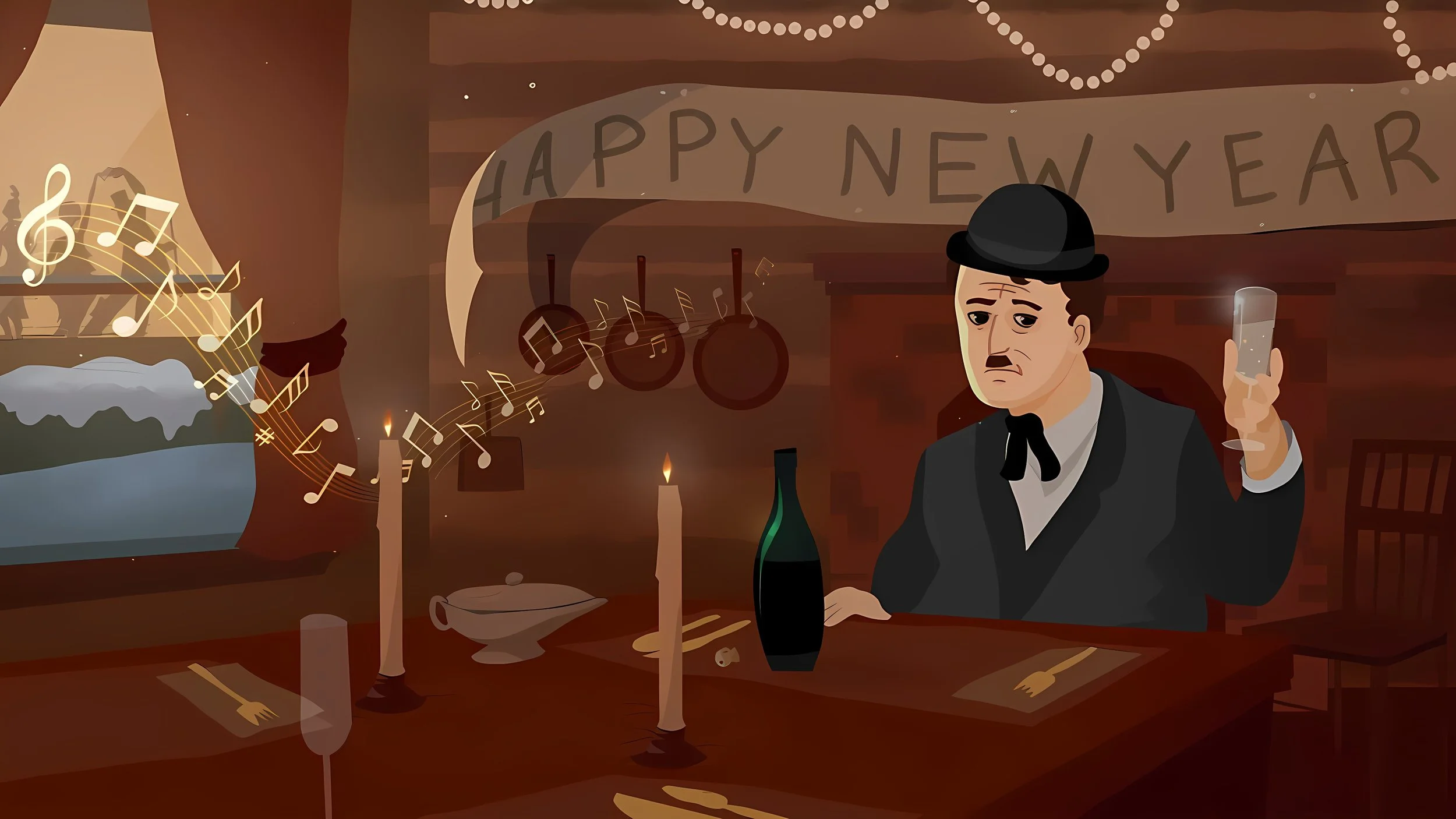
Watergate is one of the most widely-referenced scandals in our nation’s history. The actual word itself has been appropriated in order to name many later scandals. But for a new generation of Americans, Watergate is just a name, or an event that they speak about but may not know many details. What was the real scandal behind Watergate? Who was involved and why? How did an open reel tape recorder secretly planted in the White House basement lead to the demise of the 37th President of the United States? Featuring Luke Nichter, author of The Nixon Tapes, and founder of NixonTapes.org.

MUSIC IN THIS EPISODE

Long Weeks by Dexter Britain
Aurora by Blake Ewing
Render by Steven Gutheinz
Deep Night by Live Footage
Hollow by Alaskan Tapes
Song for Stone by Generdyn
Five Families by Ryan Taubert
Near by Steven Gutheinz
The Weight of It All (Instrumental) by Kaleigh Baker
Red4 by Tangerine
Can’t Stop (No Oohs Ahhs Instrumental) by Reagan James

Twenty Thousand Hertz is produced by Defacto Sound.

Subscribe on ⁠⁠⁠⁠⁠⁠⁠⁠YouTube⁠⁠⁠⁠⁠⁠⁠⁠⁠ to see our video series.

If you know what this week's mystery sound is, tell us at ⁠⁠⁠⁠⁠⁠⁠⁠mystery.20k.org⁠⁠⁠⁠⁠⁠⁠⁠.

Support the show and get ad-free episodes at ⁠⁠⁠⁠⁠⁠20k.org/plus⁠⁠⁠⁠⁠⁠.

Follow Dallas on ⁠⁠⁠⁠⁠⁠Instagram⁠⁠⁠⁠⁠⁠, ⁠⁠⁠⁠⁠⁠TikTok⁠⁠⁠⁠⁠⁠, ⁠Facebook⁠, and ⁠⁠⁠⁠⁠⁠LinkedIn⁠⁠⁠⁠⁠⁠.

Join our community on ⁠⁠⁠⁠⁠⁠Reddit⁠⁠⁠⁠⁠⁠.

Check out Bose at bose.com/20k.

Follow Bose on Twitter & Facebook.

View Transcript ▶︎

SMOKING GUN TAPE, Pt 1 – Haldeman: Now, on the investigation, you know, the Democratic break-in thing, we’re back to the-in the, the problem area because the FBI is not under control…

You're listening to Twenty Thousand Hertz... The stories behind the world's most recognizable and interesting sounds. I'm Dallas Taylor. This is the story… of The Watergate Tapes.

SMOKING GUN TAPE, Pt 1 – Haldeman: …their investigation is now leading into some productive areas…

This is an excerpt of a secret recording in 1972 of President Richard Nixon’s Chief of Staff H. R. Haldeman, updating the President about the FBI’s continuing investigation into the Watergate scandal.

SMOKING GUN TAPE, Pt 2 – Haldeman: …also there have been some things like an informant who came in on the street to the FBI in Miami...

While it’s hard to hear, this is the infamous "Smoking Gun" tape, the recording of Nixon discussing the illegal Watergate break-in. This tape was like a smoking gun at a crime scene that had Nixon's fingerprints all over it.

Just over 40 years ago a startling series of events in our nation’s political history took place. Almost everyone has heard about the Watergate scandal, but many don’t know what really happened, why it’s called “Watergate,” and how our lives are different today because of it.

Here’s Nixon himself commenting on the break-in.

SMOKING GUN TAPE, Pt 3 – Nixon: Well, I mean, ah, there’s no way… I’m just thinking if they don’t cooperate, what do they say? They they, they were approached by the Cubans. That’s what Dahlberg has to say, the Texans too. Is that the idea?

It’s this piece of audio that led to the downfall of the 37th President of the United States. Before we dive into the details of this tape, let’s rewind and find out how we got here.

Before this scandal, the law was completely different. Nixon personally owned these tapes, not the US government. Despite the fact that recording without consent or knowledge was illegal, it was still pretty common in the White House.

Luke: We now know that presidents back to FDR in 1940 taped, and so did Truman and Eisenhower and Kennedy and Johnson. Nixon was actually continuing a long trend that had started over 30 years before.

That’s Luke Nichter, an Associate Professor of History at Texas A&M. He’s also a historian and has been listening to, transcribing, and digitizing the White House tapes of Richard Nixon.

Luke: What I've heard is that Nixon, after he was elected in November of '68, he had the typical meeting, the incoming president with the outgoing president. On the tour that Johnson gave Nixon of the White House, it included his taping system and, "You ought to have something like this for yourself to have your record," but Nixon obviously had the system torn out and didn't use it; I mean ultimately replaced with a far more sophisticated system.

Nixon had the US Secret Service install a state-of-the-art Sony tape recorder with microphones hidden in the oval office, cabinet room, and other places where he would have private conversations.

Luke: Unfortunately, the people running the system day-to-day and putting the new reels on didn't have the same understanding and weren't as sophisticated. They're basically going to Peoples Drug in Dupont Circle and buying the cheapest kinds of tapes you can use, a thin little tape. The result of having this thin little tape is not only has it not held up very well over the years, the originals are reportedly in pretty bad shape.

But also, the quality is terrible [tape clip], It's as little as putting a saucer or a teacup down on a desk where the microphones are embedded sounds like an earthquake.

Despite the low quality tapes the Secret Service chose to use, Nixon’s recording technology was different from Johnson’s in a very key way.

Luke: What Nixon did was also different in a couple respects, because Nixon's was the first one that was sound-activated.

Taping systems prior to Nixon, Kennedy's and Johnson's, had to be turned on and off for every conversation. Obviously, it was turned on when it suited the president's interest and it was turned off when it suited the president's interest.

Nixon, for all those other faults, was someone who loved history. I think he thought that it was unfair to history, that you needed to capture everything.

Nixon wore a device similar to a pager, that was issued to him by the Secret Service. If it came within range of one of the microphones, it would come on automatically.

Luke: Sometimes Nixon would leave his jacket in the oval office and he'd go out to the Rose Garden. Sometimes we'd get his dogs barking [barking dogs SFX], we'd get cleaning crews [vacuuming SFX], we'd get tour groups [crowd SFX], we'd get staffers setting up or tearing down a meeting [staffers prepping meeting], we'd get the whirring blades of Marine One [helicopter SFX], the presidential helicopter. You'd get all kinds of other things that aren't really historical, but will also tell you a lot about history.

Some of the most fascinating parts of the Nixon tapes are meetings that weren’t even political in nature. It was almost as if he was the host of his own private talk show.

Luke: The president talks to celebrities and musicians and pop culture figures, world leaders. The president talks to everybody. When someone's in there, who you think like, "I can't believe Nixon's talking to Ray Charles," and then tells the story that I'm not sure I've read anywhere else, and they're only there on the tapes.

Charles: I lived next door to a gentleman who was a pianist.

Nixon: Oh!

Charles: I loved to hear him play. He was my sole inspiration because he could have, you know, pushed me off the stool, I mean, you know, and told me to go play.

Nixon: Yeah.

Charles: But he didn’t. You know I guess he must have felt that any child that is willing to give up his playing time—

Nixon: Mm-hmm.

Charles: —to listen to music, he must have it in his bones.

Luke: Nixon always interrupts everybody he talks to. For several minutes, he didn't interrupt Charles. You can tell he liked the story. When Ray Charles got done telling the story, Nixon said, "Now that was a great story."

What the tapes are more than just politics or Nixon, they're a time capsule of Americana ... I mean you've got Johnny Cash talking about prison reform…

Nixon: Johnny, how are you? It’s going to see you again!

Cash: It’s my pleasure.

Nixon: Good to see you. You look good.

Cash: I’m doing alright.

Luke: You've got all these people who you would never think Nixon would be talking ... I mean Nixon, this cardboard cutout, stoic, the ultimate square in the 1960s, and the tapes reveal so many more dimensions about someone.

Another interesting visitor to the Nixon White House was Elvis Presley. Elvis wore a purple velvet suit with a large gold belt buckle along with his trademark sunglasses. He also brought along a gift—a Colt .45 pistol—but in a display case.

According to a Nixon aide’s notes of the meeting Elvis asked the president for a badge from the Bureau of Narcotics and Dangerous Drugs. And within the hour it was done.

But while Elvis was invited into the Oval Office, unfortunately his visit occurred two months before Nixon’s recording devices were installed.

Besides Nixon, the Secret Service, and a few White House aides, the recording system was entirely secret. Perhaps for Nixon the historical record was more important than the privacy rights of those being recorded.

Luke: If the president is meeting with somebody, usually the lowest ranking person is taking minutes or notes. If they're really skilled, it can look almost like a transcript, but ultimately edited out for political content, gossip, language.

Taping changed the way the White House worked. With the tapes rolling, Nixon changed the way you conducted business. He would say to say Soviet General Secretary Leonid Brezhnev, "Come into the oval office. Let us talk candidly. No staff present, no notes. We'll just talk like old friends." He did this time and again.

Because of the recording system, these types of intimate conversations may have led to political progress between the two nations.

Nixon: If we decide to work together, we can change the world.

Luke: These, for the most part, have never been transcribed, never been published. Most people don't know where these are at on the tapes. These are incredible conversations because, in this case, the tapes aren't just supplementing the traditional record, they are the record.

Another interesting moment we have on tape is a conversation between Nixon and his wife Pat, in which they discuss a pair of pandas being brought from China to the National Zoo.

Nixon: We announced today that the pandas would go to the Washington -

Pat: Yeah, I got the word.

Nixon: And I think it’s fine, everybody as pleased with it and -

Pat: Yeah

Nixon: - the weather’s good here, it’s not quite as cold as it probably ought to - it could be [unclear] but they can live in this kind of weather. And so, it’s a good story and we said that you and I had both, that we had decided it should come here.

Nixon’s excitement to share the news about the pandas with his wife shows a different side to the president than most of us ever hear about, all thanks to the tapes.

Nixon: It’s gonna be a hell of a story.

In the two and a half years that the recordings took place a lot happened. Nixon was reelected in a landslide. The recorded conversations involving the campaign are some of the most authentic accounts of election politics we have on record. Other important events included the Vietnam War, huge domestic reforms like the first Earth Day, the creation of the EPA, the beginning of Amtrak, the Endangered Species Act, the Wilderness Act, the Clean Air Act and the Clean Water Act.

Luke: People don't question the money we carry in our wallet. In August of 1971, the US dollar went off the gold standard, which many economic historians credit as the beginning of globalization.

Again, a tribute Nixon in taking us off the gold standard and all those conversations, how that happened, why, and when are all in the Nixon tapes.

Nixon became so comfortable with his recording system, that the few people that did know about it felt he almost forgot it was there. That allows us now to listen to a president unfiltered and unrestrained. But it also led to the most detrimental piece of audio in political history, the “Smoking Gun” tape.

This tape would mark the beginning of the end of the Watergate scandal, an event that started a two-year courtroom and political saga that not only changed history, but still impacts the way we discuss scandals today.

But what exactly was the Watergate scandal? We’ll get to that, in just a moment.

[music out]

MIDROLL

[music in]

Despite his overwhelming electoral victory in 1972 and his numerous accomplishments in Office, to many people, Nixon’s ultimate legacy comes down to one word... Watergate.

Luke: Watergate is part of pop culture today everyone knows the term 'Watergate', but if you actually pin them down to say, "Well, what do you know about Watergate?" It's this scandal or scandal culture that was created in Washington. While every scandal, it seems like, since Watergate has this suffix -gate appended to it, very few people can actually tell you much about the original 'gate', Watergate.

In its most basic element, Watergate was a break-in that took place in the early morning hours of June 17th, 1972 in the Watergate office complex which housed the offices of the Democratic National Committee. Five burglars, some whom were former CIA agents, were found to have ties to President Richard Nixon's Committee to Reelect the President.
The break-in involved the installation and maintenance of wiretapping devices that could listen in on the affairs of the Democratic National Committee.

Luke: What we then learned later was there already had been prior break-ins. The speculation is what they were doing on the 17th was they weren't planting bugs, they were fixing bugs that had been planted on a previous break-in.

What we learned was there had been other break-ins, and including this exact location, this exact team of burglars. During the campaign of '72, breaking and entering was a political device.

To this day, we still don't have definitive answers in terms of who ordered the break-in, why they broke in when they did, or what they were looking for.

In hindsight, we look back, and anybody who can use Wikipedia says, "Didn't Nixon win in a landslide in '72? Why did his people need to be doing this silly thing?”

The Watergate break-in spurred numerous investigations into the Nixon Administration’s involvement with the event. Senator Howard Baker is famously quoted as saying…

[Senator Baker Recording - “What did the president know and when did he know it?”]

It was all hearsay and conflicting testimony… until the discovery of Nixon’s White House recordings.

Over a two-year period, investigations into the Watergate scandal uncovered Nixon’s secret taping system. In 1974 the Supreme Court ruled Nixon must release the tapes to a special prosecutor, leading to the discovery of some very important recordings.

Luke: Anybody who Googles 'smoking gun' and 'Watergate' or 'the Nixon tapes', there is a recording that's called the smoking gun tape. Ultimately, this and a handful of other tapes were the most damaging to Nixon.

[SMOKING GUN TAPE: Pt 4 – Nixon: How do you call him in, I mean you just, well, we protected Helms from one hell of a lot of things. Haldeman: That’s what Ehrlichman says.]

[Nixon: Of course, this is a, this is a Hunt, you will-that will uncover a lot of things. You open that scab there’s a hell of a lot of things and that we just feel that it would be very detrimental to have this thing go any further. This involves these Cubans, Hunt, and a lot of hanky-panky that we have nothing to do with ourselves.]

Luke: What the tape reveals was that Nixon was aware of a cover-up of the Watergate break-in. In other words, that he and that his White House staff had knowledge of a break-in and that they were actively doing things to conceal the purpose much earlier than he said in public statements. And beyond that, that he was willing to use the CIA to possibly block the FBI investigation of Watergate.

Here’s Haldemann again updating Nixon on the status of the investigation.

SMOKING GUN TAPE: Pt 5 – Haldeman: the FBI guys working the case had concluded that there were one or two possibilities, one, that this was a White House, they don’t think that there is anything at the Election Committee, they think it was either a White House operation and they had some obscure reasons for it, non political,… Nixon: Uh huh. Haldeman: or it was a…

Nixon: Cuban thing-

Haldeman: Cubans and the CIA. And after their interrogation of, of…

Nixon: Colson.

Haldeman: Colson, yesterday, they concluded it was not the White House, but are now convinced it is a CIA thing, so the CIA turn off would… Nixon: Well, not sure of their analysis, I’m not going to get that involved. I’m (unintelligible).

Haldeman: No, sir. We don’t want you to.

Nixon: You call them in.

Nixon: Good. Good deal! Play it tough. That’s the way they play it and that’s the way we are going to play it.

When it came to listening to what was on the tapes, technology again played a huge role, but this time because of how we consumed news in that era. There was no internet, no YouTube, and no way to share the recordings with the general public. The only way to hear what was on the tapes was to actually sit in the courtroom.

Luke: You read news accounts of the time it was kind of fascinating when the tapes were eventually used in litigation. People would wait up around the block of the courthouse. This could be the only the only time you can hear tapes. The news account were fascinating because people would wait all day. Overnight they'd sleep on the sidewalk to be one of the 55, or whatever it was, who could sit in the public part of the courtroom.

The press accounts are great because they say things like, "Today is the only time we will ever hear of these conversations." Of course, now we look back, 40 years later, and think, "Well, thanks to the internet and technology, anybody can listen to these in their own homes or on their own mobile device," but at the time this was so earth-shattering that ... a president had this veil of like a monarch. I think Watergate and the tapes, in a sense, tore the veil in half and made the president more human.

Within 10 days, even the most die-hard supporters of Nixon, the Republican Party, and they were dwindling, gave up their case at that point. Within two weeks, Nixon resigned.

Cronkite: Good evening. President Nixon reportedly will announce his resignation tonight…and Vice President Ford will become the nation’s 38th President tomorrow.

Rather: President Nixon released transcripts that he did indeed know about the details of the Watergate break-in…

Rather: During the afternoon the president did more work on his speech. He began clearing out his desk…White House aides said privately, “It is over.” Some secretaries wept…

Cronkite: This is indeed an historic day, the only time a president has ever resigned from office in our nearly 200 years of history…

Nixon: Good evening, this is the 37th time I have spoken to you from this office, where so many decisions have been made that shaped the history of this nation. Each time I have done so to discuss with you some matter that I believe affected the national interest. In all the decisions that I have made in my public life, I have always tried to do what was best for the nation…

Luke: One of the lores of Watergate, is that the cover-up is always greater than the crime. In this case, it was true for Nixon. It really was his behavior during the cover-up period that ultimately did him in.

The question for many still remains: Since the tapes were ultimately his downfall, why did Nixon secretly record himself in the first place?

Luke: The best answer I can give, is that Nixon wanted his record of what was said to whom and when, that he knew that those around him would go write their own memoirs, they would have their own histories.

You have to remember the law was totally different. These tapes were his personal property. He could've destroyed them, he could've dumped them in the Pacific, that was okay. During Watergate, that would look bad, but he was entitled to do that. Today the law completely errs on the other side, that everything a president does is public, public record. They should be in the archives one day.

I think Nixon wanted his record. He wanted to retire, he wanted to write his multi-volume memoirs, like Winston Churchill did after World War II. These were going to be his history, that he was going to settle scores one day with this.

Nixon’s unfortunate legacy is being the only president in US history to resign. After countless documentaries, TV shows, books, and articles about the Watergate scandal it would seem that the story has been completely written. Or has it?

Luke: 3,451 hours were recorded. Just around 3,000 hours have been released to date. We have this 500-plus hours that have never been released.

We have all these court records, that have never been released because they're serving to protect someone.

To put a time frame on this it typically takes 30 to 50 years to get some records declassified, if ever at all.

Luke: It's taken over a hundred years just to release the clothes Abraham Lincoln was wearing on the day he was assassinated in 1865 at the Ford's Theater.

A couple of years ago there was a World War I document that was declassified, and thought, "What could possibly still be secret from World War I?" This document obviously had some continued operational use for many years to justify its ongoing classification.

In this case, the only way you can get records like this that are in a legal limbo is to find a friendly judge to issue a ruling to open them.

Luke has actually been working on this issue for several years which could blow the lid off of some yet unknown details of the Watergate scandal.

Luke: It's still a matter that's before the judge, Judge Royce Lamberth in Washington. This is an ongoing petition now. As a historian, my fingers are crossed that one day we'll have all the records released, so stay tuned.

Watergate changed so much about American politics and our nation. The various ways we consume media, how politicians go about their duties, and what constitutes privacy has all been impacted by a tape recorder that was hidden in the basement of the White House.

Luke: It made journalists into heroes and really launched the field of modern investigative journalism as we know it. A whole generation of young people wanted to go into journalism. The legal structure really changed. New laws scrutinizing public access and records.

It was a break-in that occurred in 1972, but it also was a bigger, more transformative event in US history. People, as stakeholders in our democracy, became more active and called into account our elected officials. Ultimately it was a watershed moment. It changed the political landscape, it changed investigative journalism, and it changed the relationship between the American people and their government.

Twenty Thousand Hertz is produced out of the studios of Defacto Sound, a sound design team that makes television, film, and games sound incredible. Find out more at Defacto Sound dot com.

This episode was written, produced, and edited by Kevin Edds… and me, Dallas Taylor… with help from Sam Schneble. It was sound designed and mixed by Colin DeVarney.

Many thanks to Luke Nichter, author of The Nixon Tapes, and founder of NixonTapes.org. Check it out for more info. Also, this episode only scratches the surface of the nuances of Watergate and the Nixon tapes. If this piqued your interest, there are tons of movies, books, and wikipedia articles waiting for you.

All of the music in this episode is provided by our friends at Musicbed. You can listen to these tracks, including this one, “Long Weeks” by Dexter Britain, on our exclusive playlist which you can find at music dot 20k dot org.

Continue the Nixon conversation on Facebook & Twitter. You can also drop us a note with show idea, comments, or other random thoughts at hi at 20k dot org.

If this is the first time you’ve heard Twenty Thousand Hertz, take a moment to go subscribe in the podcast app of your choice. There are lots of other great episodes about recognizable and interesting sounds similar to this one. And, for those of you who are already a subscriber, please tell all of your friends about it!

As always, thanks for listening.
 

Recent Episodes

Sonic Seasoning: Can sound affect our taste buds?

Chocolate Pic.png

This episode was written & produced by Dave Parsons.

Taste is one of our most subjective of the five senses. A flavor that elicits delight in one individual may evoke strong disgust in another. And while we all have a basic understanding of flavor, we rarely think about the other sonic factors that may be affecting how we interpret different tastes. In this episode, we consider the relationship between sound and taste, and the power certain sounds can have over our taste buds. Featuring Charles Spence, head of the Crossmodal Research Laboratory at Oxford University.


MUSIC IN THIS EPISODE

Prism by Steven Gutheinz
Wandering by Dustin Lau
North by Blake Ewing
Perfect Timing by Dexter Britain
Ideas by Dexter Britain
Lights by Blake Ewing
Off White33 by Tangerine

Twenty Thousand Hertz is produced by Defacto Sound.

Subscribe on ⁠⁠⁠⁠⁠⁠⁠⁠YouTube⁠⁠⁠⁠⁠⁠⁠⁠⁠ to see our video series.

If you know what this week's mystery sound is, tell us at ⁠⁠⁠⁠⁠⁠⁠⁠mystery.20k.org⁠⁠⁠⁠⁠⁠⁠⁠.

Support the show and get ad-free episodes at ⁠⁠⁠⁠⁠⁠20k.org/plus⁠⁠⁠⁠⁠⁠.

Follow Dallas on ⁠⁠⁠⁠⁠⁠Instagram⁠⁠⁠⁠⁠⁠, ⁠⁠⁠⁠⁠⁠TikTok⁠⁠⁠⁠⁠⁠, ⁠Facebook⁠, and ⁠⁠⁠⁠⁠⁠LinkedIn⁠⁠⁠⁠⁠⁠.

Join our community on ⁠⁠⁠⁠⁠⁠Reddit⁠⁠⁠⁠⁠⁠.

Check out Bose at bose.com/20k.

Follow Bose on Twitter & Facebook.


View Transcript ▶︎

[restaurant SFX]

You're listening to Twenty Thousand Hertz... The stories behind the world's most recognizable and interesting sounds. I'm Dallas Taylor. This is the story of how sound can impact our taste buds.

In 1984, a strange and remarkable thing happened across the restaurant industry, and it all had to do... with fajitas.

Up until the early 1980s, tex-mex restaurants primarily served chili, enchiladas and tacos as their signature dishes. But in 1984, the fajita became all the rage. When the popularity of this steak and pepper combo began to spread, national restaurant chains clamored to create the perfect recipe. Some would focus on a unique spice blend, or the addition of side ingredients to lure in curious customers.

...but, Chili’s - the young tex-mex chain out of Dallas - took a different approach. For them, a fajita order was treated like a performance. Once the steak and vegetables were finished cooking, the chef would plate the meal on a fiery-hot skillet [hot skillet SFX], causing them to immediately crackle and hiss. The server would then march the loud, sizzling skillet through the dining room for all the patrons to hear. [sizzling skillet traveling through dinning room SFX]

More than a unique spice blend or specialty ingredients, sound made all the difference. During each mealtime, once the first skillet sizzled down the aisles, restaurant workers quickly discovered that fajita sales would increase immediately. Chef’s all across Chili’s restaurants began referring to this phenomenon as “the fajita effect.”

In fact, once the first order of fajitas made its way to the kitchen, [bell SFX] the cooking staff would begin firing up the skillets and chopping ingredients [chopping SFX] for the massive influx of fajita orders that were sure to follow. Not only did their approach to serving fajitas prove to be a genius marketing tactic, but the sizzle of the dish also provided a sense of flavorful freshness for those enjoying the entree.

And just like that, the summer of 1984 quickly became known as ‘the summer of fajita madness’. Thanks to Chili’s, a huge percentage of restaurants across the country now serves their fajitas on mouth-watering sizzling skillets.

How does the sound of sizzling beef influence our dinner choices? What does the crunch of a potato chip have to do with our overall taste satisfaction? And, can the right music or sound make a dessert taste sweeter?

Charles: This is a really fun area to talk about, to explore, because it is something that is counterintuitive.

That’s Professor Charles Spence, head of the Crossmodal Research Laboratory at Oxford University. Crossmodal is a term used to describe when an experience in one of our main senses - touch, taste, hearing, vision, or smell - impacts or changes the perception of another sense. Charles is the leading authority on this phenomenon. He started his research in the 1990s, and has published over 500 articles in scientific journals on the subject. He’s also consulted for a number of multinational companies, advising on various aspects of crossmodal design, packaging, and branding.

Charles: For example, if I spray a certain perfume around and suddenly the people you're looking at look more attractive that would be a crossmodality effect of scent on sight. The more we look the more of these crossmodal connections are that what we see changes what we hear, what we hear can change what we feel, what we feel might change what we taste, and what we taste might change what we smell.

By changing what people hear, you can influence what they taste, and how they think about what they’re tasting. If you happen to have a piece of plain chocolate nearby, keep it handy. Later in the show, we’ll be doing our own crossmodal experiment featuring sound and taste, so you can experience these sensory connections for yourself. Connections that, in his early research, Charles investigated through the sensation of ‘crunch.’

Charles: We started out by having people in the lab here in oxford biting into potato chips [potato chip crunch SFX] and every time they bit into a potato chip we would change the sound of their crunch. Sometimes making it louder [loud crunch SFX] or quieter [quiet crunch SFX]. Sometimes boosting just certain frequencies of people's crunching sounds. In so doing we could add about 15% freshness or crunchiness to the potato chip simply as a function of sound.

Think about what things taste like, maybe what they smell like, what they look like but very few really think about sound. Yet, when you think about what it is you do like in foods and what you like to snack on then probably things like crunchy, crispy, crackly, creamy, carbonated, maybe even squeaky will come in there. All of those attributes that you might think that you feel in your mouth or between your teeth are really primarily driven by what you hear when you bite into and interact with those foods.

Crunch is certainly ONE aspect of taste, but the crossmodal effects of sound don’t stop there. Sound can also manipulate flavor. Now, for any skeptics out there, Charles was kind enough to supply us a few tracks he uses in his experiments. Still have that piece of chocolate? Go ahead and take a bite, then listen to the following two music tracks I’m about to play. While listening, think specifically about how the chocolate tastes. Here’s the first track.

[SWEET track]

Did any flavor stick out in your mind? Now, with the same piece of chocolate - or a new piece. Or three or four new pieces - take a listen to this second track.

[BITTER track]

Any change? According to Charles’ research, the first track - the higher-pitched music - should have brought out the sweetness of the chocolate. The second track - the low-pitched music - should have brought out the bitterness.

Charles: It's kind of bizarre at one level that playing music would change the taste of a food. If you are trying to bring out sweetness then you are looking for higher pitch [high pitch ding SFX] rather than looking for lower pitch [low pitch ding SFX].

Feel free to go back and test this with as many chocolates as you like - don’t worry, I won’t judge.

Charles: The whole world of taste and flavor is a complex one because one, people can't agree what the basic things are. I know that kind of on your tongue you get sweet, sour, salty, bitter, and umami, that mysterious fifth taste of tomatoes and Parmesan cheese. Beyond that what are the other basic categories that we could play with? Is it maybe citrus or meaty, floral, fruity, burnt, creamy?

The majority of us all seem to share these surprising connections between our senses, between sounds and tastes that no one really knew existed but the more we study them the more robust they seem to be and the more we can integrate them into experience design.

The practical uses of crossmodal research have expanded beyond Charles’ lab. Companies and celebrities alike are getting in on the experience.

Charles: I was lucky enough to go to New York to work with The Roots.

Charles teamed up with QuestLove and the rest of The Roots to bring sonic seasoning to the masses.

Charles: The Roots created a new song, together with Stella Artois, based on our research of the sounds of tastes that you find in that beer. As you move the dial across the screen on your computer then different instrumentation comes in or fades out to enhance the sweetness or the bitterness of the drink.

In this experiment, The Roots created two versions of the same track - Side A & B - one with higher pitched instrumentation, which is suppose to bring out the fruitier and sweeter notes and one with lower pitched instrumentation, which is suppose to bring out the bitter notes. Take a listen, and see if you can tell the difference as we switch back and forth.

Here’s side A...

[Bittersweet Side A]

And here’s side B...

[Bittersweet Side B]

Did you hear the difference? Again, the first track was designed to bring out the sweetness, while the second was to bring out the bitterness. Pretty cool, right?"

Charles: These findings have created a lot of interest now and there are a number of examples from out there in the real work of people who have taken up the findings and incorporated them into their offering.

After the break, find out how other companies are putting Charles’ research to good use, and why these crossmodal relationships might exist between our senses.

[music out]

MIDROLL

[music in]

We’ve already heard some fantastic examples of ways sound can influence the taste of food, but other than making for some really cool party tricks - why are these relationships important? What are the broader applications?

Charles: I've seen interesting examples of people taking research and running with it. One would be from British Airways. The airline who, a couple of years ago, took our findings and for their long-haul passengers offered one channel on the headset with music designed to match the meals that you could choose from the menu. A bit of sonic seasoning for the passengers given the deleterious effects of that background noise. Putting on those headphones with the noise cancellation and then bringing in music to match the taste of the food seems like a good idea.

We have earlier this year a café in Vietnam, where they are playing sweet music 24 hours a day with the idea that that will allow them to put a little bit less sugar into their cakes, pastries, and drinks, but keep the perception in the mind of those who go to the café the same. You're eating, drinking something a little bit less unhealthy, but it tastes just as good as always and that may be down to the music in the background.

Who knows, maybe sonic seasoning will become more of a diet trend in the coming years... but...until that happens, the application of Charles’ research can most often be found in advertising campaigns.

Charles: I know of companies over in the Netherlands who are selling bitterballen. These little fried snacks that go with your beer, a very Dutch treat. They're accentuating the sound of the crunch in the adverts on TV.

You might think of something like Magnum ice cream, a chocolate-covered ice cream lolly. Again when the model on the TV set in the advert bites into that ice cream you'll hear a crunch, a crack, the chocolate may be louder than is really the case because the advertisers are now understanding the importance of sound and conveying a certain expectation.

If this kind of commercial manipulation sounds familiar, it’s because we’ve heard it before. Take this Pringles commercial from the 90’s:

[Prinples commercial]

Or more recently, this TV ad by KitKat.

[Kit Kat commerical]

Many food companies utilize sonic branding as a way to convince customers that their products are fresh and delicious. Think of the pop of a Snapple cap [Snapple cap pop], or the fizz of an ice cold Coca Cola [Coca Cola fizz].

But not all sonic branding is intentional, or even desired for that matter. In 2010, SunChips developed a new 100% compostable chip bag, with one unfortunate design flaw - the bag was way too loud. [loud bag crunch SFX] After numerous complaints and a dip in market share, SunChips later released a modified, quieter bag. [quieter bag crunch SFX]

For better or worse, the snack industry has been keen to crossmodal relationship for quite some time. But all these real world examples beg the question - what makes them work?

Charles: We don't know for sure where these cross-sensory associations between taste and sound come from. If you think about that sweet taste being higher in pitch, bitter tastes being associated with lower-pitched sounds, where might that come from? Well, if you look at birth in humans, in rats, in chimpanzees, that all species, when you put a sweet taste on their tongue at around birth will stick their tongue out and up to kind of lick and ingest the goodness, the calories they need for growth. [baby giggle SFX]

Put a bitter taste on a newborn's tongue, be it a human, be it a rat, be it a chimpanzee and the tongue will immediately kind of go out and down because we're all born ejecting bitter tastes [baby whine SFX] because that's something that signals quite often poison...If you think about the kind of gurgles that a newborn would make with a tongue in different positions or you might make now if you try and stick your tongue out up and down, you'll hear a slight difference in the sonic qualities. Maybe that it's there from birth, and our brains pick up the statistics of the world.

Even if these multisensory relationships have been with us since birth, they aren’t without limitations.

Charles: If I gave you a glass of water it's not really magic. There's no music I could play that would make you think that water was wine. … but what I can do if I give you a complex taste like that spicy salad, like a rich creamy chocolate or a glass of wine, a cup of coffee, a soft drink. Then I can accentuate something in that tasting experience.

It may not be turning water into wine, but enhancing an existing taste through sound is still a remarkable discovery.

Charles: It's kind of nice almost to talk to people, to share your findings and to try and bring them into this new space that initially they think is bizarre, is bonkers, is ridiculous. Then maybe they come away thinking, "Wow. I never realized that sound had that kind of effect."

Food is often considered one of the great joys of life, and for good reason. Eating involves all of our senses. And while sound influences how our food tastes, it may not be as obvious as the alluring sight of a bright red apple or the delicious smell of a fresh-baked cookie - but learning to appreciate its sonic nuances can open a whole new world of flavor.

Twenty Thousand Hertz is produced out of the studios of Defacto Sound, a sound team dedicated to making the world sound better. Find out more at defacto sound dot com.

This episode was written and produced by Dave Parsons...and me, Dallas Taylor. With help from Sam Schneble. It was sound designed and mixed by Jai Berger.

Thank you to our guest Charles Spence from the Crossmodal Research Laboratory at Oxford University. His incredible work in the field of crossmodal relationships is what made this episode possible. If you’re interested in the work Charles and his team are doing, check out his new book - Gastrophysics: The New Science of Eating.

This episode was inspired by two other great podcasts. The first was 99% Invisible’s episode called "the sizzle" and the second was GastroPod's Crunch Crackle Pop show. Both are worth a listen.

Like the music you hear on this episode of Twenty Thousand Hertz? Each song is provided by our friends at Musicbed! You can listen to all of them, including this one, "Off White33" by "Tangerine", on our exclusive playlist. Start listening now at music.20k.org.

You can get in touch with me at hi at 20k dot org. You can also connect with us on Facebook and Twitter. If you tried our taste experiment earlier, please let me know if it worked for you.

You’ll find all of the links I mentioned in the show description.

Thanks for listening.


Recent Episodes

Fight or Flight: Why airplane sounds make us anxious

Fear of Flying Pic.png

This episode was written & produced by Jim McNulty.

Are you afraid to fly? Does even the thought of boarding an airplane make you anxious? You’re not alone. Millions of Americans suffer from clinical aviophobia. While some manage to distract themselves long enough to endure a flight, countless others avoid flying altogether. What are those mysterious sounds that trigger our fears on airplanes? And how do we keep our anxieties from interfering with our lives? Featuring Dr. Devika Fiorillo, Ph.D., a clinical psychologist who specializes in anxiety disorders, and Tom Finnegan, a commercial airline pilot with more than 20 years in the air.

Music in this episode

Kings - Ryan Taubert
Wallflower - Steven Gutheinz
Heo - Kino
Blissful Ignorance - Dexter Britain
Timeline - Blake Ewing
Open Sea - Moncrief
Just Watched - Steven Gutheinz
As it Was (Piano Strings Instrumental) - Future of Forestry
Tavern - Steven Gutheinz
Prayer - One Hundred Years
Deeper (Extended Version) - Chris Coleman

Twenty Thousand Hertz is produced by Defacto Sound.

Subscribe on ⁠⁠⁠⁠⁠⁠⁠⁠YouTube⁠⁠⁠⁠⁠⁠⁠⁠⁠ to see our video series.

If you know what this week's mystery sound is, tell us at ⁠⁠⁠⁠⁠⁠⁠⁠mystery.20k.org⁠⁠⁠⁠⁠⁠⁠⁠.

Support the show and get ad-free episodes at ⁠⁠⁠⁠⁠⁠20k.org/plus⁠⁠⁠⁠⁠⁠.

Follow Dallas on ⁠⁠⁠⁠⁠⁠Instagram⁠⁠⁠⁠⁠⁠, ⁠⁠⁠⁠⁠⁠TikTok⁠⁠⁠⁠⁠⁠, ⁠Facebook⁠, and ⁠⁠⁠⁠⁠⁠LinkedIn⁠⁠⁠⁠⁠⁠.

Join our community on ⁠⁠⁠⁠⁠⁠Reddit⁠⁠⁠⁠⁠⁠.

Check out Bose at bose.com/20k.

Follow Bose on Twitter & Facebook.

View Transcript ▶︎

[Airplane cabin SFX]

You're listening to Twenty Thousand Hertz... The stories behind the world's most recognizable and interesting sounds. I'm Dallas Taylor. This is the story behind the sounds we hear on an airplane, and how to take the fear out of flying.

[Airplane take off SFX]

Tons of people have a fear of flying. Even celebrities who have to travel all the time for work share in these fears. People like Jennifer Aniston, Ben Affleck, Sandra Bullock, and Colin Farrell have all been reported to struggle with this. Even John Madden, the former NFL Coach turned TV Commentator. He had such a big fear that he famously travelled cross-country between Monday Night Football games in his custom bus, dubbed the “Madden Cruiser”. He stopped flying after a panic attack he suffered on a flight. And, he’s not alone.

As many as 1 in 3 Americans is either afraid to fly or has some uneasiness about getting on an airplane. And for many, the sounds, the sensations—even the thought of flying—can trigger a full-on panic attack.

So, some quick math.

At any given time, there are as many as five (5) THOUSAND aircrafts in the skies above the U.S. alone. That’s according to the FAA, the Federal Aviation Administration. Now, The International Air-Transport Association tells us that the average flight has 65 people on it. That means, at this very moment while you’re listening to this podcast, there could be over a hundred thousand people white-knuckling it across the friendly skies here in the U.S alone. And the National Institute of Mental Health says that roughly 20 million Americans in total are afraid to fly!

So, what’s up with this? Why are so many people afraid to fly? Is this an isolated fear? Or is it a common symptom across multiple conditions? And what role does sound play in triggering these fears?

Devika: The fear of flying is called aviophobia.

That’s Dr. Devika Fiorillo, a clinical psychologist with advanced training in addressing trauma, anxiety and related disorders.

Devika: About half of the people tend to be afraid of flying because they're afraid of crashing. There's also the other half, which primarily tends to be people who are either claustrophobic, so they are afraid of being in these enclosed spaces, or people who have agoraphobia, which is the worry about having a panic attack when escape is difficult.

Sometimes the fear of flying originates after a bad flight situation. Someone might have had been in a flight where there's a lot of turbulence, possibly an emergency landing, something somewhat traumatic or highly stressful.

If we’re being honest—flying can be stressful on a good day!

By the time you get to the airport [car door slam SFX], check your bags [luggage SFX], take off your shoes [removing shoes SFX], pull out your laptop [removing laptop from bag SFX], go through the screening process— and heaven forbid you have to get a pat-down [TSA SFX] by the time you reach your gate [airport intercom SFX], you’ve been through a lot already.

But this is about more than inconvenience. For some, being afraid to fly can significantly interfere with their ability to earn a living or spend time with loved ones. And for travelers already on edge before they even leave the ground, any unknown sound can trigger an attack.

Devika: Someone that’s coming in with a fear of flying is already coming in with some vulnerabilities.

Not every person who has a fear of flying is afraid of the same sounds. When they notice a sound [turbulence SFX], immediately our brains work very quickly.

How does this information get processed. Does it go through this really quick fear route, which is our very primitive system, how we survived? Or it might decide to go a different route, where it engages this higher ability to reason.

Our capacity as humans for reason and abstract thought allows us to solve complex problems. But the built-in, primal fear response can lead us down a dark path.

Devika: If you think about problem-solving and imagination, there is definitely a link there. Imagination when it comes to fear of flying is not very productive imagination. 1) it takes you away from the moment, the here and now, and, 2) you're often engaging in these what-ifs that may or may not occur.

The moment your brain perceives that there might be real or imagined danger, immediately your system starts to go into this panic mode. Our bodies respond pretty automatically. You might notice a lot of trembling, shaking, lightheadedness, dizziness, trouble with breathing. your body's getting ready to fight or to flee the situation.

The problem with fear of flying, though, is once you’ve developed that problem, you're more likely to pay attention to all of the information that is in your environment, and this is where sounds come in, telling you that something dangerous could happen. Once you go into that mode, your senses are heightened and you're looking for any piece of information that really feeds into this narrative that flying is dangerous and that itself becomes sort of a vicious cycle.

Basically our brains are looking for affirmation for its preconceived notion that every little creek, bump or bang must mean that the wing is breaking off or the engine is about to blow up. Our mind can be an internal echo-chamber.

Of course, in this age of YouTube, and the ability of a news source to bring the worst possible, extremely rare situations to the forefront of our attention in an instant... it’s unnaturally easy to find examples to feed this internal, fear-focused echo chamber.

[Airplane rattling SFX]

THAT is the sound of an entire airplane rattling around like a washing machine, posted by Instagram user maesaya. In 2017, an Air Asia X flight was forced to turn around when something went wrong with an engine. Passengers had to endure that vibration for close to two hours as the plane limped home, with the captain asking everyone to pray—twice!

And who can forget the Miracle on the Hudson?

[Flight 1549 cockpit recording]

In 2009, U.S. Air Flight 1549 makes a forced water landing in the Hudson River after striking a flock of Canada geese after takeoff from New York’s LaGuardia Airport.

[Flight 1549 cockpit recording]

THESE! are the kinds of close calls that give even the hardiest of travelers pause.

But isn’t air travel supposed to be one of the safest forms of travel around?

Here’s Tom Finnegan, a commercial airline pilot with more than 19,000 flight hours and 20 years in the business.

Tom: The reliability of these airplanes is nothing short of astonishing. They work and they last a long time.

Tom says that airlines in the US and Europe offer the best combination of engineering, maintenance and training in the world.

Tom: We’re very lucky here in the U.S., the aviation system here, from the small regional airlines up to the big global airlines, are so safe that it's taken for granted a lot. The percentage of times we have to do it right isn't just 99%. It's 99 and I think out to like 7 decimal points how often we do it right here in the US. Our system is so safe, it's boring, which is a good problem to have in a lot of ways.

These airplanes are designed to a level where if one system fails, as a passenger, it’s going to be invisible to you. They're built with the idea that they're going to keep going in the event of one failure or even a couple of failures.

The airplanes I fly have two engines. They're mounted on each wing. Before I take off, I already know, if the engine blows up on the runway, I have either enough room left of runway to stop, or I have enough power to continue to take off on one engine.

That’s one of the things that we practice absolutely the most, those takeoff failures.

Your flight crews train constantly for those worst-case scenarios so passengers don’t HAVE to worry about them. And all that training seems to be paying off. According to the FAA, if you happened to be the 1 in 11 million could be involved in an airline accident, you still have a 96% of survival. Flying is estimated to be two HUNDRED times safer than driving! And most of us don’t think twice before getting behind the wheel.

Intellectually, we get it. But emotionally? That’s a whole different story. So, what’s the solution? How do we cope with these fears? And what ARE all those noises on an airplane? More on that in a minute.

[music out]

MIDROLL

[music in]

We’ve heard a lot about why so many people have such a fear of flying. And we also know that flying is one of the safest ways to get around. Now, let’s talk about how people cope with these fears, so that they don’t have to interfere with work, vacations, or visiting family. For that, we turn back to Dr. Fiorillo.

Devika: Facing your fears can be really difficult, because it's almost like you're playing this tug of war with your physiological system. On the one hand, you may really want to face your fears. On the other hand, going into it is definitely something that will bring about, for most people, a lot of anxiety…

It’s that aversion to being uncomfortable—to being afraid—that leads some people to create what Dr. Fiorillo calls “safety behaviors.”

Devika: There's a fine balance between distraction and also just being here in the present moment, because if you always distract yourself, you don’t necessarily teach yourself how to cope with the issue.

They might go on a flight, but they might endure it with a lot of distress and they might take a lot of alcohol as a way to numb their system down. Somebody else may take a sleep aid. There's definitely benzos, anti-anxiety medications that people can sometimes take.

There might be other people who really research thoroughly what each and every sound means, what kind of planes are safer. The problem with people who fear flying often is that they are getting a lot of information; it's just not from the right sources.

So knocking back a few drinks might get the job done on that cross-country flight, but it’s not exactly a long-term solution for conquering your fear of flying. And filling your brain with the wrong information can feed into that vicious cycle of what therapists call “catastrophizing.”

Earlier, Dr. Fiorillo brought up this connection between imagination and problem solving, and the tendency to fear the worst when someone hears an unknown sound on their flight. Let’s go back to our commercial airline pilot, Tom, and see if he can take some of the mystery out of these sounds for us.

Tom: The sounds [airplane cabin SFX] a passenger would hear during the pre-flight setup; you’ll hear different chimes as the seatbelt sign is turned on [chime SFX]. You can hear different things if you’re in the last row versus the front row or if you're over the wing— and if you happen to be sitting on the right side of the airplane you’re probably going hear when they close one of the cargo doors [cargo door closing SFX]. It’s a heavy duty latch that kind of clunks into place [latch SFX]. Once the cabin doors close [doors close SFX] and the airplane is being pushed away from the gate, there’s a tow bar and there’s a tractor that they push you back from. You can hear that clunky noise of disconnecting the tow bar, as well as feel it. [tow bar disconnect SFX]

You’ll hear a difference in the air conditioning system [air condition turn off SFX]. Then you'll hear the engines slowly start to whine up [engines whine up SFX], that turbine sound. The airplane engines are started by compressed air that comes off a small turbine engine. Most of them are in the tails of these airplanes. The pilots redirect the air from the air conditioning systems so you can't air-condition the airplane at the same time you start the engines.

Once the engines are started the pilots do a few more checks up front [pilot check point SFX]. I tell the copilot to the the flaps to whatever position our performance requires that day. Flaps [airplane flaps SFX] are the things that are on the front of the wing and the back of the wing and they basically change the shape of the wing to allow the wing in order to allow the airplane to do different things.

That covers most of the pre-flight bells and whistles that passengers may hear [pilot "clear for take off" SFX]. But once the engines rev, and the plane takes to the sky [plane take off SFX], fears can be triggered by sounds AND sensations. And the air itself is responsible for both.

[Airplane in cabin flight SFX]

Tom: Most of the airplanes I've flown—takeoff, cruise, landing—the noise level up in the cockpit is at least 80 decibels. Depending again on the airplane or where you are in the airplane, it can be as low as 70 decibels in First Class, which generally is the quietest part of the cabin. The wind noise outside the airplane that accounts for a lot of the overall kind of white noise, the din that you hear. [airplane white noise SFX]

Now light and moderate turbulence we encounter all the time. It's nothing at all to be worried about. it's a disturbance in the airflow over the wings. And the airflow over the wings is how the airplane generates lift, and if it's disturbed, you'll feel it as a bump. [turbulence SFX]

The density of the air can impact how much lift can be generated at a given speed. When you hit different pockets of temperature, density, rising air, and any other air disturbance, you feel these interruptions as turbulence [turbulence SFX]. All of this is perfectly normal.

Tom: The worst thing that happens is a flight attendant who's out of her seat or a passenger who's in their seat without their seat belt on, can get thrown around the airplane and injured. Things can come loose. The overhead bins may pop open and a bag will fall out. But honestly, for the structural integrity of the airplanes, it's incredibly rare that anything happens that the airplane is actually destroyed in flight. It just doesn’t happen.

That pretty much eliminates the worst case scenario at 35 thousand feet. But for many, it’s the final approach that triggers their worst anxiety as the ground starts to get a whole lot closer.

[airplane descending SFX]

Tom: Once you start to descend and come in for a landing, you may notice the engine noise has changed [airplane engine SFX]. The high-frequency whine maybe is a little bit lower as they reduce the thrust on the engines to have the airplane start to come in and land.

Once you get closer to the ground, that is when the pilots reconfigure the shape of the wing, and as they extend the flaps, you may hear that hydraulic pump. And as that happens you can sometimes even hear a change in the airflow of the air over the wing. [airplane wing SFX]

Once the pilot lands the airplane, you'll notice on the tops of the wings, big boards come up. They're called speed brakes or spoilers. They change the airflow over the wing [airflow over wing SFX].

The last thing you’ll notice, the engines accelerate or rev up [engine rev up SFX] after landing as the pilot adds power to the reverse thrust system.

There are doors inside the cowl that redirect the air instead of out of the back of the engine, out the side. If you happen to be sitting there, you can hear it hitting the side of the fuselage.

[flight attendant SFX]

So now we know… And while knowing may be half the battle, there has to be a better way to handle air travel than just trying to stave off panic attacks or avoiding flying altogether.

According to Dr. Fiorillo, the answer may lie in one of the same treatments that’s used for post-traumatic stress disorder: Exposure therapy.

Devika: The idea with exposure therapy is that you really give an opportunity to the person to face what they're fearing. Some people are afraid of taking off. Some people are afraid of landing. Some people are afraid of turbulence. There's different sounds that people are afraid of. Some people have this anxiety that shows up even in the context of walking around in the airport before you get to the flight itself. Every person looks different.

Think about exposure as this idea of allowing yourself to have difficult thoughts and feelings in the context of a particular stimulus, whether that’s a sound, the sight of an airplane, any of those things, we can get creative to think about how you can do that even if you're not ready to get on an airplane yet.

Nowadays, there's a lot of work on mindfulness, in particular, in terms of anxiety disorders. It's basically like grounding. It has some of those similar principles but this idea of taking your attention from the thing that is causing you a lot of fear ... in this case, it might be the sound ... to something that is here that you can touch, that you can feel, that you can come into contact with.

You have to remind yourself that just because you feel this doesn’t mean the bad thing is going to happen. You're sort of validating the emotion to a certain extent, but also understanding that it doesn’t necessarily mean that something is really going to happen.

Now that we’re challenging our fears, we’re not avoiding. Now what do we do? Well for starters, try something we take for granted every day. I’ll give you a hint.

[takes deep breath in, and breath out]

Devika:One thing that you might have heard a lot of is this idea of doing some deep breathing. There is some value to doing that, which is just slowing down the way you breathe and really making sure you're breathing from your abdomen rather than from the chest, which is the tendency when we're having a panic attack.

The other is really to get people to engage in the current moment on other things that are happening right here, right now. This sometimes is referred to as grounding, so holding onto things that are next to you. You can engage in any of your senses here.

Noticing the feeling as you move your fingers through the chair you're sitting on, noticing what the kid across the aisle looks like and what that person might be doing, taking in information from the environment that you might not otherwise be attending to.

How do we know when things have gotten out of hand? When does being uneasy on an airplane go from being a minor inconvenience to an obstacle requiring treatment?

Devika: There are a couple of different things to look out for. One is have you really not just avoided flying, but has this actually caused problems for you? Has it taken both time and emotional resources from you? Have you missed out on significant life events because of flying? Is it causing problems for you occupationally? Maybe you work in a setting where flying tends to be somewhat a regular thing that you need to do. Is it limiting your life in a way that’s causing you some pain?

It’s often said that admitting that you have a problem is the first step towards healing. How bad is your fear of flying? Did you identify with the safety behaviors Dr. Fiorillo mentioned? Did your anxiety levels go up just listening to the discussion. Perhaps now that you know what many of those mystery sounds are, your next flight won’t be so nerve-wracking. And even if you aren’t afraid to fly, hopefully you’ve gotten some insight into how pervasive fear and anxiety can be.

And if your fears are stopping you from enjoying life the way you want, it’s okay to seek help. The resources are out there: doctors, counselors… even apps! Whatever route your journey takes, I think we can all agree—we could all use a little less turbulence in our lives.

Twenty Thousand Hertz is produced out of the studios of Defacto Sound, a sound design team that supports ad agencies and storytellers. Check out recent work for collaborators such as Nike, Netflix, National Geographic, Discovery and more at Defacto Sound dot com.

This episode was written, produced and edited by Jim McNulty...and me, Dallas Taylor. With help from Sam Schneble. It was sound designed and mixed by Nick Spradlin.

Huge thanks to commercial airline pilot, Tom Finnegan for giving us his first hand experience...as well as to Dr. Devika Fiorillo for her professional expertise.

The music in this episode is from Musicbed, and I’m a huge fan! They represent more than 650 great artists, ranging from indie rock and hip-hop to classical and electronic. Head over to music.20k.org to hear our exclusive playlist.

You can find us all over the internet and there are a bunch of different ways to get in touch… so if you have a show idea, or just want to chat, reach out! One way you can find us is at hi at 20k dot org. You can also find us on Facebook and Twitter.

The most important thing you could ever do for us is completely free… and that’s to tell a friend through text message, in-person, or telling your network how much you love the show on social. Word of mouth is absolutely critical to podcast survival.

You’ll find all of the links I mentioned in the show description.

Thanks for listening.


Recent Episodes

Sound Firsts: Landmark recordings in history

christian-joudrey-65080 16x9.png

This episode was written & produced by Kevin Edds.

What is the oldest recorded sound in history? For over 100 years researchers thought they knew until a mind-blowing discovery by historians found something new - and technological advances allowed it to be played back for the first time in history. What is the oldest recording of a musical performance, president, battlefield, television broadcast, cell phone call, and more? Featuring Patrick Feaster, co-founder of FirstSounds.org, three-time Grammy nominee, and Ph.D. in Musicology as well as Lynn Novick, award-winning filmmaker, and co-directing partner of Ken Burns.

MUSIC IN THIS EPISODE

Home - Chris Coleman
Bodum - Steven Gutheinz
Man on Wire - Steven Gutheinz
Mystique - Sun Village
Gift of Life - Tony Anderson
Isle - Steven Gutheinz
People of the Future - UTAH
Becoming Human - Ryan Taubert
Summit - Dexter Britain
Summit - One Hundred Years
Washedway - evolv

Twenty Thousand Hertz is produced by Defacto Sound.

Subscribe on ⁠⁠⁠⁠⁠⁠⁠⁠YouTube⁠⁠⁠⁠⁠⁠⁠⁠⁠ to see our video series.

If you know what this week's mystery sound is, tell us at ⁠⁠⁠⁠⁠⁠⁠⁠mystery.20k.org⁠⁠⁠⁠⁠⁠⁠⁠.

Support the show and get ad-free episodes at ⁠⁠⁠⁠⁠⁠20k.org/plus⁠⁠⁠⁠⁠⁠.

Follow Dallas on ⁠⁠⁠⁠⁠⁠Instagram⁠⁠⁠⁠⁠⁠, ⁠⁠⁠⁠⁠⁠TikTok⁠⁠⁠⁠⁠⁠, ⁠Facebook⁠, and ⁠⁠⁠⁠⁠⁠LinkedIn⁠⁠⁠⁠⁠⁠.

Join our community on ⁠⁠⁠⁠⁠⁠Reddit⁠⁠⁠⁠⁠⁠.

Check out Bose at bose.com/20k.

Follow Bose on Twitter & Facebook.

View Transcript ▶︎

[Music start]

From Defacto Sound, you're listening to Twenty Thousand Hertz... The stories behind the world's most recognizable and interesting sounds. I'm Dallas Taylor. In this episode, we’ll be going back in time to discover sound firsts.

[oldest known recording of cell phone call]

You’re listening to what might be the oldest known recording of a cell phone conversation, all the way back in 1948.

[continue cell phone clip]

It’s hard to believe how much technology has changed in the past century, especially for our listeners born in the first half of the 1900s.

[continue cell phone clip]

While this is the oldest known recording of a mobile phone call, according to AT&T, the first call took place in St. Louis two years earlier in 1946.

That got me wondering, what are the oldest sound recordings in existence today? And, not just recordings, but what are some of the first sounds, voices, songs, events, and audio technologies, in human history? Strap in and hold on, we’re going back in time, through the history of sound.

Patrick: My name is Patrick Feaster, I’m a co-founder of the first Sounds initiative, three-time Grammy nominee, and received my PhD in folk and riff musicology. When I was a graduate student, I wrote a dissertation on how people adapted to the phonograph when it was very, very new. This possibility of speaking or performing for people who are in different times and places was radically new at the time.

Nobody really would’ve had any sense for how to proceed. How do you talk to someone who’s not there next to you? How do you talk to someone who’s going to be listening to you at some other time? When is now? Is it when I’m speaking? Is it when you’re listening to me? Where is here? Is it where I am, is it where you are? Things like that.

So, to figure this out, to figure out how people were trying to make sense of this way back at the beginning, I needed to find some of the very earliest recordings so that I could eavesdrop on their dilemmas. To do that, I found I had to learn a lot more about the very earliest recordings to figure out which they were, how to play them, how to identify them.

For over a hundred years researchers would point at Thomas Edison as the inventor of recorded sound. [Edison recording] An 1888 Edison recording of “Israel in Egypt at London’s Crystal Palace was thought to be the oldest playable recording in existence. Edison’s revolutionary invention, the phonograph, was the first of it’s kind to both record, and playback, sound.

[Edison recording clip]

But historians knew about even older archival recordings. And the key word is “recordings” because these earlier attempts at capturing sound could not be played back.

Patrick: The very earliest experiments with something resembling sound recording as we know it today, involved recording the vibrations of vibrating objects themselves. For example, you’d pluck a string [string pluck SFX] and it would vibrate. You'd tap a metal rod [metal rod tap SFX] and it would vibrate. You’d sound a tuning fork [tuning fork SFX], and it would vibrate. The idea was you’d attach something to that object that could leave a trace. A pen, a pencil, a stylus is what we usually call this. Then move a surface along rapidly underneath it [pen drawing SFX]. If everything worked right, you’d either get a row of dots, or a wavy line that would tell you how that object had moved over time.

Styluses of all types would scratch these waveforms into materials as varied as tin foil, soot-covered paper, paraffin wax, and even… wood.

Patrick: The earliest recordings of sounds passing through the air were made by Édouard-Léon Scott de Martinville. He was impressed by a discussion of how the human ear works. He had the idea of trying to build an artificial ear, where instead of passing the vibrations along to our brains, they’d write them down on a sheet of paper.

So in 2008 historian David Giovannoni, Patrick, and their colleagues rewrote history and unveiled the oldest known audio recording of a human voice ever made, by Leon Scott, 17 years before Edison patented the phonograph.

[Leon Scott recording]

Patrick: Right now the earliest really intelligible recording we have is Au clair de la lune from April 9 of 1860. That’s because we can correct the speed, it’s a recognizable tune, you can listen to someone singing across the ages, and really get a sense for what things actually sounded like in the room where he was.

[Au Clair de la Lune recording]

Leon Scott’s ear-shaped device was designed to only look at sound. He was a stenographer and wanted to invent a way to record the wave patterns of conversations, testimony, or speeches. While he had no way to playback these wave patterns, he hoped he could learn to read them like a language, thus avoiding potential errors in transcription.

Patrick: The earliest ambient noises that we could have recordings of are probably the sounds of the Metropolitan elevated railway New York City.

[NYC railway SFX]

The problem is that they don’t really sound like a whole lot. The vibration of girders that were holding up the railway. It could be that we’re hearing those. In terms of sounds from the environment, there’s a recording from 1890 of the chiming of big Ben in London.

[Big Ben reocrding]

Another favorite early recording of just noises in the background is a home recording on a wax cylinder where someone had just taken a phonograph out to a barnyard some time, probably in the late 1890’s.

[home farm recording]

But let’s go back further, even before Leon Scott’s 1860 recording. Are there other recordings out there?

Patrick: In 1857 every recording Scott made has all of these pitch fluctuations burned into it. We can try to get rid of these through guesswork. For example, in the case of a recording of the cornet made sometime in late 1857 [cornet recording], we know that cornets play continuous notes, they don’t wobble around the way the human voice could. My colleague, David Giovannoni and I have tried to speed correct one of these very early recordings of the cornet using educated guesses.

[restored cornet recording]

How about even earlier?

Patrick: Scott’s very first experiments were carried out sometime in 1853 or 1854. One of them is a plate of speech [speech clip], and the other one is a plate of guitar sounds [guitar clip]. They’re pretty messed up. We can get some sort of sounds out of them, but I doubt these sounds have much resemblance to anything that was actually heard back in 1853 or 1854.

While it’s tough to make anything of those sounds, it’s unbelievable that they still exist. That someone took sound out of the air, and made a physical record of it, and were able to even remotely reproduce it.

How about any sound from earlier than that. Is there a sound that was recorded in any fashion earlier than 1853?

Patrick: We have records of tuning forks going back to 1850 or so. You can play them back [tuning fork recording], but these aren’t sounds passing through the air. They’re sounds that were picked up at their source. Some people might say that’s not really a sound recording. If we think of recordings of electric guitars picked up electrically as sound recordings, then these tuning fork traces ought to be considered sound recordings too.

These tuning fork recordings from 1850 are currently the oldest known audio recordings of any kind. But might we one day find something even older, perhaps one that used a different recording technology or medium to capture it?

Patrick: People like to speculate about sounds somehow being recovered from the even more distant past. For example, people speculate about sounds picked up on pottery. If someone was holding a chisel or something just right up against the edge of a pot as it was spinning on a potter’s wheel, could it have picked up sounds out of the air?

Or brushstrokes on paintings. Could the paintbrush that a painter was holding have vibrated in response to sounds passing through the air? Could we recover sounds from old paintings? I have a scenario of my own in mind where dinosaurs dragging their tails in the mud could have picked up sounds. Maybe of the dinosaurs voices, or things like that.

It’s very fun to speculate about all of this, but I don’t think we’ll ever run into any experiments at recording sounds passing through the air from before the work of Leon Scott.

Now that we’ve gone as far back as possible in the history of recorded sound, let’s uncover some other sound firsts.

Patrick: For a long time, people were eager to try to find a recording of the voice of somebody born in the eighteenth century. Just a few years ago, I was going through, trying to identify a group of cylinders at Thomas Edison National historical Park, and found a recording thereof the voice of Helmuth Von Moltke. The military leader in the Prussian wars of German unification.

[Helmuth Von Moltke recording]

He was born in 1800, so the last year of the eighteenth century, making him the only person from that century whose voice survives in a recording. Which is really ironic, because his nickname was Das große Stille, or The Great Silent One because he didn’t talk very much. The earliest born woman whose voice survives on record, as far as I know, is a woman named Rachel See-wom-bwa [Rachel's voice recording] who was born in 1815.

Let’s move on to some other firsts, like those from the battlefield.

Patrick: The earliest recording of authentic noises of war dates from World War I [WWI recording]. You’ll find a lot of different statements about who the first president of the United States was to make a sound recording, or who has a sound recording that survives today. The earliest really confirmed example is going to be Teddy Roosevelt.

[Teddy Roosevelt recording]

We’re only half-way through our list of sound firsts, with more examples coming up from the worlds of radio, television, film, and even outer space. And we’re also going to speak with Lynn Novick, the acclaimed documentary filmmaker who’s worked with Ken Burns for almost 30 years as she gives her take on discovering previously unheard sounds and their importance.

We’ll get to all of that in just a moment.

[music out]

MIDROLL

[music in]

Listening to the earliest recorded sounds and other “Sound Firsts” is fascinating because it takes us back in time, to a place where the people making these sounds had no idea that what they were doing at that moment was going to be preserved and shared with future generations.

But many of these sounds had not been collected and preserved in a way where they could get their just due and be shared with society. They were hidden away in library vaults or personal collections and no one knew what secrets they held.

We spoke with Lynn Novick, the award-winning filmmaker and co-directing partner of Ken Burns. I wondered what it must feel like to discover an unknown sound, or photograph, or personal story, and share it with the world for this first time.

Lynn: That sort of thing happens on every project that we've collaborated on. It's hard to even have words around how you feel when you hear something for the first time yourself, and you imagine what it would have been like for the people who heard that originally. Then you try to figure out how it fits into the story you're trying to tell. It sort of collapses time between the present and the past, and in a very visceral and immediate way, and I think in a way that only sound actually can do.

My parents used to talk to me about how they grew up listening to the radio, and how they would listen to the serials. They would be transported into a place, a magic place from these stories on the radio. I always was fascinated by that because I think your brain fills in the pictures when you have the sound. That's an exercise in collaboration with the oral experience and the past that's profound.

I asked Lynn if she and her production team had ever come across any “Sound Firsts” of their own.

Lynn: Certainly we've come across sounds that have never been heard by a mass television audiences on every project. Our jazz series. We realized during the course of the production that during the war, the only recordings that were made were made for the government for something called v disks. So all the great artists of that time recorded songs to be sent out to the armed forced. V for victory, v disks. Sometimes they would record not just the performance, but the artist might say something before they started singing or playing.

There's a beautiful recording that I think evokes the time so perfectly, which is Frank Sinatra. He's going to perform Long Ago and Far Away. I think it's a 1943 [Frank Sinatra recording]. It's very personal. It's very direct. It feels very real. You don't hear him talk that way that much. It's like he's speaking to you personally. That's a really resonant moment for me.

Ken Burns’ most famous film is The Civil War and Lynn was an associate producer on it. While no actual sound recordings were made during this period of American history, some of the people who lived through it were recorded afterwards.

Lynn: Ken and his brother Rick made use of some really remarkable audio recordings that had been done, I believe in the 1920s or '30s. They're recordings of oral history by people who had been enslaved [oral history recording clip]. These are real people telling you what it was really like to be enslaved. All of a sudden it doesn't seem like it's something that happened 200 years ago. It happened yesterday when you hear those recordings.

There’s even a fantastic rumor that Leon Scott actually visited the White House in 1863 and made a recording of Abraham Lincoln. Although, there’s no evidence for this. What it would mean to Lynn to actually hear Lincoln’s voice.

Lynn: Well, first of all, hearing any representation of the voice of Abraham Lincoln would be a transcendent experience because he is so much larger than life, that it's hard to think of him as a real person. There's a grandiosity and an intimacy to what he writes and how he framed up the issues of the day. Ken and I were recently at the Lincoln Memorial, and we were standing there looking at this monumental statue. Hearing his voice would be a way to get reintroduced to him as a person and not as this unknowable leader.

Lynn’s latest collaboration with Ken Burns is their new film “The Vietnam War.” In producing this film I wondered if they discovered any sound firsts.

Lynn: One thing that we came across, was a recording that Ho Chi Minh made reading a poem that was broadcast in January of 1968 and the poem was supposed to be a signal to the Communist forces to launch the Tet Offensive [Ho Chi Minh recording]. He recorded this poem and they put it on the air and we were able to get a recording of it and put it in the film and subtitle it so that you hear what he’s saying.

He’s saying, "Forward, victory will be ours," but it's actually coded message. And I don't think any Americans, or very few, would have heard that before our film comes out.

These are powerful men making enormously important and influential decisions. It's really important to listen to them.

[Continue Ho Chi Minh recording]

The films that Lynn has worked on through the years get a pretty wide audience. But a few other sound firsts did not. One of those is a recording of the first commercial radio broadcast in history. Dr. Frank Conrad was a ham radio tinkerer in Pittsburgh. He played records over the airwaves for his friends. So when Westinghouse Electric Corporation asked him to set up a regular transmission on station KDKA in November of 1920, here’s what it sounded like.

[Dr. Frank Conrad recording]

The first sounds that came from a television broadcast were by the BBC in England in March of 1930 in a theatrical performance of the play “The Man with the Flower in His Mouth.”

[The Man with the Flower in His Mouth recording]

Unfortunately, only four households in the area had televisions to tune in.

The first feature-length movie with lip-synched audio was The Jazz Singer in 1927.

[The Jazz Singer clip]

The first stereo sound recording for a commercial film was made in 1938 for the Judy Garland movie, Listen, Darling.

[Listen, Darling clip]

In 2016 researchers restored the first recording of computer-generated music that was programmed by the British computer scientist Alan Turing in 1951.

[Alan Turing's music recording]

At this point you may think we’ve reached our limit, but this is just audio from Earth. The first sounds broadcast from the moon were from Soviet engineers in 1966 [moon recording]. The Luna-10 entered orbit around the Moon and began to broadcast the song “The Internationale.”

And we even have the first sounds from Mars. In 2012 the Curiosity team broadcast an audio message delivered by NASA administrator Charles Bolden.

[Charles Bolden recording]

But just wait, we’ll hear real ambient sound from the surface of Mars in 2021 when a new rover will land on the red planet with a microphone for the first time.

It’s interesting to think that just over 10 years ago our concept of the oldest recorded sounds in history were from the late 1870s. But discoveries by researchers and advancements in technology pushed that back to the 1850s. I wondered what new technology might do for some of the unintelligible Leon Scott recordings prior to 1860.

Patrick: I do believe that over time we’ll be able to develop techniques for making better educated guesses about the earlier recordings. I’ve been doing some experiments myself lately aimed at trying to find patterns in the irregularities.

Lots of possibilities here. Lots of room for very creative experimentation. But, I’m pretty sure that before too much longer, we’ll be able to listen with a lot more confidence.

The search for the oldest, and the first, types of sounds in history has made me reflect on the importance of sound in our lives. A photograph is a literal snapshot. It’s a singular moment in time. But sound that can last for seconds, even minutes, helps us feel in an almost indescribable way what it may have been like to live in earlier times and to almost know another human from a bygone era.

[Alexander Graham Bell recording from 1885]

Lynn: In a way, there's something that happens where you read something in a book or you imagine it, but when a person who was there tells you something that confirms what you've already think happened, it kind of cements it and makes it real.

Patrick: It’s crucial that we preserve these earliest traces of our audible past. Imagine what it would be like if we didn’t have any photographs of what the world looked like more than 50 years ago. What would we lose by not knowing what a city street looked like in the year 1900? Or what the faces of the presidents of the United States really looked like? Not the idealized pictures we get in paintings, but what these people really looked like. If we lost the earlier sound recordings that we possess, the loss would be similar. Sound matters.

It’s interesting to think that Leon Scott was the first person to record the human voice, and as my words are being recorded now, at this instant, it’s the very last recorded voice in human history… if only… for a fleeting moment.

Twenty Thousand Hertz is presented by Defacto Sound. A sound design team dedicated to making television, film, and games sound incredible. Find out more at Defacto Sound dot com.

This episode was produced and edited by Kevin Edds… and me, Dallas Taylor, with help from Sam Schneble. It was sound designed and mixed by Colin DeVarney.

Many thanks to Patrick Feaster and his colleagues at FirstSounds.org, who aim to make mankind's earliest sound recordings available to all people for all time. And thanks to Lynn Novick whose new film “The Vietnam War” premieres September 17th on PBS.

Like the music you hear on this episode of 20 Thousand Hertz? Each song is provided by our friends at Musicbed! You can listen to all of them, including this one, “Summit” by One Hundred Years, on our exclusive playlist. Start listening now at music.20k.org

If you’d like to get in touch, reach out at hi @ 20k dot org, or through our website, 20k dot org. You can also connect with us on Facebook and Twitter with the handle 20korg. Also, please go to the podcast app of your choice and give us a quick rating a review. It helps a ton.

You’ll find all of the links I mentioned in the show description.

Thanks for listening.


Recent Episodes

Noise Pollution: The hidden costs

christian-joudrey-65080 16x9.png

This episode was written & produced by Dave Parsons.

Noise pollution is something we’ve all experienced. Road construction, motorcycles, passing aircraft - the list goes on and on. Other than being just plain annoying, what effect does noise pollution have on our lives? In this episode we take a look at the physical and psychological effects of noise pollution on humans, as well as the wider and equally devastating environmental repercussions. Featuring Les Blomberg, executive director of the Noise Pollution Clearinghouse, and Rachel Buxton, acoustic ecologist, conservation biologist, and postdoctoral researcher at Colorado State University.
 

MUSIC IN THIS EPISODE

Gliding Through - Steven Gutheinz
Charge Into 2017 - Dexter Britain
Wanderer - Steven Gutheinz
Sierra - Steven Gutheinz
Thought in a Thought - Steven Gutheinz
Safely Home - AJ Hochhalter
Sleepless - One Hundred Years
Mimic - One Hundred Years
Balboa - Steven Gutheinz
Somebody’s Everything - Volunteer
Washedway - evolv

Twenty Thousand Hertz is produced by Defacto Sound.

Subscribe on ⁠⁠⁠⁠⁠⁠⁠⁠YouTube⁠⁠⁠⁠⁠⁠⁠⁠⁠ to see our video series.

If you know what this week's mystery sound is, tell us at ⁠⁠⁠⁠⁠⁠⁠⁠mystery.20k.org⁠⁠⁠⁠⁠⁠⁠⁠.

Support the show and get ad-free episodes at ⁠⁠⁠⁠⁠⁠20k.org/plus⁠⁠⁠⁠⁠⁠.

Follow Dallas on ⁠⁠⁠⁠⁠⁠Instagram⁠⁠⁠⁠⁠⁠, ⁠⁠⁠⁠⁠⁠TikTok⁠⁠⁠⁠⁠⁠, ⁠Facebook⁠, and ⁠⁠⁠⁠⁠⁠LinkedIn⁠⁠⁠⁠⁠⁠.

Join our community on ⁠⁠⁠⁠⁠⁠Reddit⁠⁠⁠⁠⁠⁠.

Check out Dallas’ “Starting and Growing a Podcast” Workshop at Together Workshops. Sign up with promo code “20K” for 20% off.

Sign up for Squarespace and use the promo code “20k”. 

View Transcript ▶︎

[Music start]

From Defacto Sound, you're listening to Twenty Thousand Hertz... The stories behind the world's most recognizable and interesting sounds. I'm Dallas Taylor. This is the story of Noise Pollution - how it affects your health, and so much more.

[Calming Nature SFX]

Imagine you’re hiking through Yellowstone National Park. You’ve spent the better part of a day traversing steep inclines, boulders and streams. You find a remote location just off of a major trail, and decide to rest. As you begin to relax, you become overwhelmed by the majestic soundscape of this unadulterated wilderness. You close your eyes, listening to the beauty of the birdsong overhead, the steady babble of a nearby stream [stream SFX], the sound of the wind blowing softly through the trees [wind blowing through trees SFX]. Just as you’ve settled into a deep relaxation…

[Jet passing loudly overhead SFX]

There’s no getting around it - there are certain sounds that when we hear them, we simply don’t like it. But does this qualify them as noise pollution? What is noise? To get a better idea, I spoke with Les Blomberg, the executive director of the Noise Pollution Clearinghouse.

Les: The most common definition out there is, "Noise is unwanted sound," and it's really the most unsatisfactory definition at the same time. It really doesn't describe what noise is. It paints noise only in terms of whether it's wanted or not. It makes it totally subjective. The way I like to define noise is, "Noise is a sound that harms the wellbeing of people or animals, or interferes with activities." There's also another definition of noise, which is, "Noise is a sound that is out of place or inharmonious."

So, the loud clicking and clattering of a coffee shop [coffee shop sounds], I’d say that’s noise. The sounds from the apartment above that can best be described as bowling balls rolling around on the hardwood floor [bowling bowls rolling SFX]that’s probably noise as well. That annoying beeping sound the debit card reader makes when it’s done reading your chip [chip reader SFX] - that’s definitely noise.

But what are the major offenders? What sounds are so intrusive, so audibly aggressive that we collectively consider them a kind of pollution? For that, we have to go back to when it all started.

Les: It all began right at the turn of the century. In 1903, we have the founding of the Ford Motor Company [old car honk SXF]. We have the founding of Harley-Davidson Motorcycles [harley motorcycle SFX]. We have the Kitty Hawk flight [small plane SFX]. We have just this explosion of internal combustion engines that are making noise across the country.

Then around the 1950s we have the addition of the jet engine [jet engine SFX], the gas mower [mower SFX]. The snowmobile [snowmobile SFX], the Jet Ski [jet ski SFX], the leaf blower [leaf blower SFX].

We see an invention of a noise, the growth of that noise source. And then probably the most important thing, is the spreading of this noise from our urban areas to our suburban and our rural areas. And that's really the most striking thing in the last century, is that what we've lost is opportunities for peace and quiet.

For over a century we’ve been dealing with a massive rise in noise pollution across the country, but recognizing the sources of noise pollution is only the first step. Measuring it is another matter altogether.

Rachel: Our measure of noise pollution we define as the number of decibels above natural.

That’s Rachel Buxton, an acoustic ecologist and Conservation Biologist at Colorado State University. She’s been working with her colleagues at CSU, along with the National Parks Service, to predict levels of noise pollution across the United States.

Rachel: When we're talking about anthropogenic noise pollution or human-caused noise pollution, this is something that's human like traffic, either from aircraft, vehicles, industrial noise, that sort of thing...

We can't really think of it in the conventional way of 35 decibels is really quiet and 80 decibels is really loud.

Decibels give a measurement of the pressure variations in the air. When measuring noise pollution, the important thing is to find the difference in noise - how much noise has crept in through pollution.

Rachel: A 3 decibel increase in sound energy above natural would be a doubling of sound energy. Another way of thinking about this is your listening area so how far you can hear things. So if a human was walking in the woods and used to be able to hear some kind of sound, maybe a bird singing [bird song SFX] or a friend calling [friend call SFX] from a 100 feet away, if anthropogenic noise raises sound energy by three decibels, instead of now hearing that sound at a 100 feet, you can only hear it from 50 feet away.

While the decibel may be an effective way to measure the intensity of a sound, it’s important to note that noise pollution can be caused by many additional factors. Take a car alarm - for instance [car alarm SFX]. Its high-pitched frequency, its alternating between different jarring tones, its repetitive nature. The decibel fails to account for all these other acoustic features. For example - Consider waking up in the middle of the night to a persistent drip from a faucet [faucet drip SFX]. It isn’t loud at all - a decibel measurement would read fairly low - but that doesn’t keep it from disturbing your sleep.

Les: The best measure of noise is our ears. We get to hear the frequency, the content, the tones, all aspects of the noise, and not just one number that represents kind of but not exactly the loudness of that noise, which is the decibel level.

The term “noise pollution” can at first seem kind of alarmist. Hearing the word pollution probably makes you think of air pollution, or possibly water or soil pollution – all of which infer some dire circumstance, a poisoning of the basic resources we all need to survive. But noise pollution? How can excess noise be a threat to our very survival?

Les: If you were to ask people 50 years ago, what's the problem with noise? Noise is an annoyance, that would be the problem with noise. Really in the last 10 to 15 years, scientists have studied noise and looked at it in terms of the cardiovascular effects, and have found that noise is actually killing us. Researchers now are finding out that people who live near airports, two to four percent of the heart attacks that occur near that airport are related to the noise. Same with highways. Every month there's a new study on the health effects of noise, and we're beginning to understand now that noise is much more than just an annoyance. That it actually has a measurable effect on our health.

Studies have linked noise pollution with hearing impairment, hypertension, elevated blood pressure, heart disease, changes in the immune system and even birth defects. Exposure to high noise levels have also been linked to an increased frequency of headaches, fatigue, stomach ulcers, and vertigo.

Les: Noise triggers our fight or flight response, it does this whether or not we are "habituated" to the noise. People say, "Oh, I get used to the noise." What they're saying is that it's not on a conscious level a distraction to me. But our biology, we've been hardwired for thousands and thousands of years to respond to noise. It triggers our fight or flight response. Either we're going to get a little amped up so we can deal with this problem or run away from the problem. That still happens, whether or not we're aware of it or not at a conscious level. Scientists think that that is the underlying cause of our cardiovascular effects that we are suffering.

So even when it’s not annoying us, noise pollution can still be taking its toll on our bodies. And it’s not just our bodies being affected. The fight or flight response isn’t an exclusively human trait - what happens when the noise we generate begins disturbing the rest of the ecosystem? Find out after the break.

[music out]

MIDROLL

[music in]

We’ve heard about different sources of noise pollution and the negative effects it can have on our health - but what about the rest of the planet? As some of our most primal instincts can be triggered by noise, it’s not hard to believe that humans aren’t the only ones affected.

Rachel: Noise pollution can mask natural sounds or cover up those natural sounds. And those natural sounds are even more important for wildlife. They can actually be the difference between life and death. So if you think about a prey that's listening for a predator in the bushes, if an anthropogenic noise covers up that sound, it could mean that that prey is going to end up being eaten. Also, noise pollution is known to just scare away animals. So, an animal may perceive noise pollution as a threat and in that case, that would initiate a fight or flight response and the animal would flee an area. Causing sort of changes in distribution of animals.

Unfortunately, the negative effects of noise pollution aren’t confined to the animal kingdom alone. Some studies suggest that even plant life can be affected.

Rachel: Plants grow in response to the vibrations from water sound. So, underground water actually vibrates the soil and plants orient themselves towards those vibrations. They can sense the vibrations from the water sound and grow their roots towards that water source. If we start messing with these fine-tune mechanisms that different species have in place to orient towards sound to perform really basic life functions, we could be messing with things that are a much larger scale than we think.

You don’t often think about excess noise having a direct effect on an entire ecosystem. What’s equally surprising, though, is what happens when noise pollution begins to affect the way we act.

Les: Back in the '70s there was this whole host of experiments around civility, like there is today around cardiovascular effects of noise.

[experiment exmaple clip played in background] They had a guy in a cast drop some packages in a noisy environment and in a quiet environment. The noise was, I believe, provided by a lawnmower right nearby, and the quiet was the same exact location without the lawnmower. And they looked at how many people were willing to help this guy pick up his packages, and in the noisy environment the helping behavior was reduced. They've done this experiment many different ways. They've done it in noisy offices. You got the same office building [office SFX], the same people. You take somebody through the office building, you ask them, "How much do you think this person is worth? He works here, he answers the phones, he does this, he does that. She does that." And the subject would say how much they thought the person should get paid. And then they controlled the noise level in the environment, and when it was noisier, people recommended lower values.

So, next time you ask for a raise, make sure you do it in a great sounding space.

Les: As our communities become noisier, we are more likely to be less civil and less generous to others. And I think that's really a problem as we try to live together in an increasingly smaller world.

If learning of all these negative effects of noise pollution has your head spinning, you’re not alone. But don’t go plugging your ears just yet - there’s a chance that the future may be just a bit quieter.

Les: The same technology that makes the noise can be used to reduce the noise.

For example, electric lawn equipment, electric vehicles, electric buses, electric cars. All of these are much, much quieter than internal combustion engine vehicles and devices. So there's this real potential that the 21st century will not be as loud...

For now, though, the best way to combat noise pollution is to raise awareness. And the best way to do that? Encourage others to listen.

Rachel: If you think of Yellowstone, you've got those bubbling mud pools [bubbling pool SFX] from geothermal activity. You've got packs of wolves which howl [wolf howling SFX]. You've got valleys filled with bird song [bird song SFX].

We go to these beautiful national parks in our country and we're in awe of these beautiful vistas like the Grand Canyon or Yellowstone National Park, but something we want to try and encourage people to do is take some time to appreciate those acoustic resources as really magnificent, and adding to the Park’s character. And worthy of our protection.

Noise creates a kind of acoustic competition for our attention. We’re not always annoyed by the sound of road traffic or an aircraft in the distance - but we can all agree - it’s nice to be able to get away from it all, even if just for a little while. And when we do finally get away - the sound we hear then - those sounds are worth saving.

Twenty Thousand Hertz is presented by Defacto Sound, a sound team dedicated to making the world sound better. Whether it’s a video, film, or game, Defacto makes it sound insanely cool. Find out more at defacto sound dot com.

This episode was written and produced by Dave Parsons ...and me, Dallas Taylor. With help from Sam Schneble. It was sound designed and mixed by Nick Spradlin.

Thanks to our guest Les Blomberg from the Noise Pollution Clearinghouse. The Noise Pollution Clearinghouse is a national non-profit organization with extensive online noise related resources. Find out more at nonoise dot org. Thanks also to our guest Rachel Buxton from Colorado State University. This episode would not have been possible without the amazing work she and her group at CSU are doing alongside the National Parks Service.

All of the music in this episode is from Musicbed. Musicbed has a curated catalog of over 650 great indie bands and composers, all available for licensing. Check out a playlist of all of the incredible tracks we’ve used at music.20k.org.

You can say hello, submit a show idea, or give general feedback through Facebook, Twitter, or over email. I particularly love hearing your voice, so if you have something you’d like to share, send a voice memo to hi at 20k dot org.

If you’re a little shy about recording your voice, that’s ok, you can also send a normal email too. You can do that through the website or hi @ 20k dot org.

You’ll find all of the links I mentioned in the show description.

Thanks for listening.


Recent Episodes

Silent Sea: Whalesong & Undersea Noise Pollution

christian-joudrey-65080 16x9.png

Our collaboration with Vox

This episode was written and produced by Kevin Edds.

71% of the Earth is covered by water. And most of us imagine it to be a serene, almost silent world. But why should we have all the fun up here? Discover what sound is like just below the surface and all the way down to the ocean's depths. And see how mankind might be making it unpleasant for everyone and everything that calls the oceans home.Featuring underwater acoustician Al Jones, Professor John Hildebrand from the Scripps Institution of Oceanography, and Christophe Haubursin from Vox.com on special assignment.

MUSIC FEATURED IN THIS EPISODE

Stories by Steven Gutheinz
Lucid by Mode
Before Dawn by On Earth
This Love by Tyler Williams
Vision by Steven Gutheinz
From This Day On by Tim Halperin
Thin Place (Abbreviated) by Tony Anderson

Twenty Thousand Hertz is produced by Defacto Sound.

Subscribe on ⁠⁠⁠⁠⁠⁠⁠⁠YouTube⁠⁠⁠⁠⁠⁠⁠⁠⁠ to see our video series.

If you know what this week's mystery sound is, tell us at ⁠⁠⁠⁠⁠⁠⁠⁠mystery.20k.org⁠⁠⁠⁠⁠⁠⁠⁠.

Support the show and get ad-free episodes at ⁠⁠⁠⁠⁠⁠20k.org/plus⁠⁠⁠⁠⁠⁠.

Follow Dallas on ⁠⁠⁠⁠⁠⁠Instagram⁠⁠⁠⁠⁠⁠, ⁠⁠⁠⁠⁠⁠TikTok⁠⁠⁠⁠⁠⁠, ⁠Facebook⁠, and ⁠⁠⁠⁠⁠⁠LinkedIn⁠⁠⁠⁠⁠⁠.

Join our community on ⁠⁠⁠⁠⁠⁠Reddit⁠⁠⁠⁠⁠⁠.

Sign up for Squarespace and use the promo code “20K” for 10% off your first purchase of a website and domain.

For a free audiobook and a 30 day free trial membership, sign up for Audible.

Check out Dallas’ “Starting and Growing a Podcast” Workshop at Together Workshops. Sign up with promo code “20K” for 20% off.

View Transcript ▶︎

[Music start]

From Defacto Sound, you're listening to Twenty Thousand Hertz... The stories behind the world's most recognizable and interesting sounds. I'm Dallas Taylor. This is the story of what sound is like under water.

[clip: The Bloop sound]

The sound you just heard is one of the most mysterious underwater sounds we know of. It’s called “The Bloop”. It was recorded in 1997… and it’s unbelievably loud. The sound was roughly triangulated to be coming from a remote region of the southern Pacific Ocean, just west of the tip of South America. The microphones that captured this sound were over 3,000 miles away.

[Bloop sound again]

Could it be a massive, undiscovered monster from the deep? Researchers are still discovering new aquatic life every year. But this sound was several times greater than even the loudest animal in the world, the blue whale. NOAA, the National Oceanic and Atmospheric Administration now believes it was an icequake, or an iceberg scraping the ocean floor. Or was it?

The world’s oceans cover 71% of the Earth’s surface. And while there are a few areas of land that have yet to be explored by mankind, that’s nothing. Almost 95% of the oceans have never been seen by human eyes. It’s like an alien planet, but it’s Earth.

“The Bloop” is only one of the many mysterious, possibly unexplainable, underwater sounds.

Another, is the Western Pacific Biotwang heard in the Mariana Trench.

[Western Pacific Biotwang clip]

Experts think that it’s a new type of dwarf mean ki whale call we’ve never heard before.

[dwarf mean ki whale call]

There’s also a weird beeping sound coming from the ocean floor off the coast of Northern Canada. [beeping clip] It’s so bad that Inuits can hear it on land and it’s driving away animals. The Canadian military even investigated it and can’t figure it out.

There are other unexplained sounds with interesting names like “The Upsweep”… [clip] “The Slow Down”… [clip] and“Julia”… [clip]. As we uncover more of the ocean’s sonic mysteries, maybe one day we’ll learn the truth.

Underwater sound has always been interesting to me. As a kid, I loved to stick my head underwater with a friend and try to talk… [underwater talking SFX] then we would try to see if we could understand what the other was saying. [talking underwater, mildly understandable] It was a fun game, but I always wondered why I’m able to hear anything underwater. There’s no air, so how could sound travel?

Al: There are physical properties of the water that make sound behave in very different ways.

That’s Al Jones, he’s an underwater acoustician, and a former Navy sonar technician. He’s spent years listening to and analyzing water as a medium for sound.

Al: For starters, sound travels about 11… 1200 feet per second in air. Multiply that times four and that's the speed of sound that you get in the water. It's faster in water because of the properties of the medium itself. For instance, sound travels in pure steel, about 14 times fast as it does in the air, so the denser the medium becomes, the more molecules that the sound wave gets to interact with, and it proceeds down its path inherently faster that way.

As a sonar technician on a submarine Al’s role was vital to the safety of the vessel. How important is sound to the operation of a sub?

Al: Sound is crucial, just in the same way that your eyes are, you're navigating around in a thing that does not have windows, does not have outside cameras, you're just driving, essentially by sound.

After a while it becomes very intuitive for you to be able to listen in one direction, notice, that there is something that way. Hearing those things drives us to either analyze what that thing is, or to think, "Danger, danger, we need to drive away from that, because we might hit something.”

Since I don’t have a submarine or sonar equipment, what might it sound like if I tried to listen to the underwater sounds of the ocean?

Al: The first thing that you'll recognize when you're trying to listen underwater is all of the competing activity that you're trying to listen through, in order to find something interesting. Some of the organic things that you hear when you are recording underwater, the motion of the water is very loud, and it's ever-present as you're listening.

Hearing the motors of other ships, like a cruise liner, or even a trawler motor.

The way sound behaves underwater is pretty fascinating. How does sound affect marine life? To answer that question, I spoke with John Hildebrand, who is a professor at the Scripps Institution of Oceanography. He’s an expert in the field of underwater sound.

John: It turns out that the light does not propagate very far into the ocean. If you're at the surface of the ocean, there's light and then maybe the first 100 meters or so in the upper part of the ocean, it's not a very good media to sense your surroundings. We are very visual animals, the sight is our primary way of sensing things and we use sound as a secondary sense but in the ocean, it's exactly flipped because light doesn't propagate very well but sound propagates very efficiently.

I wondered, how were we even able to record these sounds.

John: It's basically underwater microphones, they’re called hydrophones. Once we started to have this technology, then we became aware of this whole universe of sounds that are underwater both from natural phenomena, the sound of bubbles that are created near the surface [bubbles SFX] or the wind blowing across the surface [wind SFX] and waves breaking [waves breaking SFX], but there’s also this entire universe of sound that's made by marine organisms even small creatures that make quite intense sounds.

Al: You'll hear invertebrates more than just about anything else, and they make a lot of noise. Shrimp [Shrimp SFX], crabs [crabs SFX], jellyfish [jellyfish SFX], even starfish make sound [starfish SFX]. When you have a lot of shrimp together, that tends to sound like bacon grease frying in a pan [shrimp SFX]. The snapping of their claws is a manner of communicating or a manner of drawing prey toward one another. If you have a lot of shrimp you’re going to hear a lot of activity.

John: People described some of the sounds of whales as a song [whale song]. It's song because it's repetitive, it's melodic in some way.

Al: If you've been out on a whale watching cruise, you can sometimes hear them so loud, you can hear them out in the air, because they are so loud underwater.

[whale song out of water]

When you're listening underwater, to whales, that can be incredibly cathartic. It's such a pure sound, the way that those sounds manifest themselves underwater [whale song]. Hearing them underwater, in person, is quite an experience.

John: Baleen whales, the large whales are a little different. They do have songs where the males will just broadcast the same thing [Baleem whale song]. Songs have meaning and from even hearing a very small piece of the song, you can relate the whole meaning.

You know there's this game that's called name that tune. If you just hear a few notes, then I can name the rest of the tune. I can do this with you if I say, "Jingle." right?

You know the rest and you're thinking about Santa right and the presents under the tree. There's a whole complex of things that go along with that. A song is a very efficient way if there's a standardized message you want to get across. It's a very efficient way of doing that because from tiny pieces of it, you get the whole message [whale song]. "I am the one that you would like to breed with. I am the most fit male that you will encounter. Come on over."

So basically, whales have their own version of a love song.

John: The blue whales or large whales are specialized for broadcasting these sounds a long way so that if your girl is 20 miles away, she'll still hear you. The Baleen whales when they sing, the big ones that are singing very intensely. Those are very intense sounds. If you position your body near a Baleen whale where they're making these sounds, your whole body would be vibrating. Now, how far does it go? At low frequency, there's essentially no absorption of sound at all. Water is like a window for sound. So that's why these intense songs of the large whales like a blue whale, you could have a whale off of California and you could probably hear it in Hawaii.

The vocalizations of whales are some of the most beautiful sounds in nature. But unfortunately we’re in danger of losing them. Or at least, driving them away. Underwater noise pollution is on the rise. It’s a big problem that we’re just now discovering. We’ll talk about that, and how we can fix this problem, in a moment.

[music out]

MIDROLL

[music in]

The underwater world of the ocean is sound rich, just as much as it is here on land. Our ears are the perfect tool for our atmosphere, but not so much for underwater. However, on the flip side, the hearing instruments of marine life are perfect for their environment.

Unfortunately, marine life doesn’t have the ability to protect their own hearing, so we have to do it for them. Underwater noise pollution is a big problem, and we’re just now barely scratching the surface of it’s affects the underwater ecosystem. I wanted to know more about this phenomenon so I reached out to Christophe Haubursin at Vox.com. He’s done some great field research on underwater noise pollution so I'm going to have Christophe take over for a bit...

Christophe: I recently went scuba diving for the first time ever. And I went in expecting muffled peace and quiet, but as soon as I got down a few yards, I couldn't help but notice that there was sound all around me [motor boat SFX]. And it was coming from boats. As far as I can tell, the Earth's water is not silent.

So I did a little digging and according to the Scripps whale acoustic lab, man made or anthropogenic noise in oceans has doubled every decade for the last 50 years. And that is a really big problem for animals that use sound as their primary sense of communication. Just listen to this audio of how noise from a passing boat totally drowns out dolphin communication. [dolphin clip]

But arguably, the worst culprit of underwater sound is a process that sounds like this [underwater explosion SFX]. That is seismic surveying. It's a process that allows companies to essentially locate spots on the ocean floor where they can drill for fossil fuels. So you'll have boats with about 30 or 40 air guns that'll all go off at once [seismic surveying clip], and those will move back and forth over large parts of the ocean. And bubbles from the horns expand and contract about every ten seconds, typically, and that creates a huge amount of acoustic energy, and that helps them map geological structures very deep into the ocean floor. And that process is about as loud as a jet at takeoff. And this can go on for weeks at a time.

A study of seismic survey noise between 1999 and 2009 found that air gun sounds were recorded almost 2,500 miles away from the survey ship itself. And at some locations, they were recorded on 80% of days for over a year. And that changes how animals behave. For animals like whales who rely on complex sound communication systems to socialize and find food and mate, that poses a huge problem.

John: In many parts of the ocean we've raised the ambient noise level by 30 dBs. Now I'm going to say, "I'm going to move into your office and I'm going to increase that noise level by 30 dBs. A, I believe it would be very annoying but B, I think there's long-term damage. You're needing to wear ear plugs just to go to work.

A study by Susan Parks at Syracuse University compared recordings of North Atlantic right whale calls from the 2000s [2000’s whale calls] to those recorded in the 1950s. [1950’s whale calls] It seemed like the older recordings had been slowed down, [1950’s whale call] until she realized something amazing. The whales were calling in a different pitch. Again, here’s what the whale calls sounded like in the 50’s [1950’s whale call]. And here’s what it sounded like in the 2000’s [2000's whale call] She found that these whales are actually changing their frequency over decades. Why? Because the higher pitched calls can be heard more clearly amongst all of the noise from ships. This is the same concept as when you’re at a noisy party, you raise the pitch of your voice to project over the noise.

John: The Gulf of Mexico where the noise levels are so high. The whales that depend on low frequency sounds like blue whales or humpbacks they're all gone. They're not there.

There's only one Baleen whale that's left in the Gulf of Mexico and it confines itself to a little corner where the sound levels are not quite so bad. It's called the Bryde's whale and surprise there are only a couple dozen of them left.

The most pristine place where we've recorded right now is in the Arctic and it's that way because when the ice comes in, there are no ships and also, the ice keeps the surface of the ocean calm. Those are the lowest levels we've recorded anywhere.

Research suggests that human-made noise can damage marine mammals hearing organs, sometimes causing death. All of this sounds pretty foreboding, but John thinks a solution may not be too far off.

John: The first step is we got to care. We got to realize, "Yes there's a problem" and then we have to care. The quality of the ocean is based on the sound level just as much as it is on things like pollution from plastic and overfishing and all these kind of things.

If you go on a cruise ship, big nice awesome cruise ship, it's quiet and it's quiet because they want the people on that ship to have a good experience. They've done a lot of tricks to insulate all of the cabins and parts of the ship where people are from the noise of the propulsion and generators and all this thing so there are things you can do.

The Navy cares about this deeply because they don't want their ships to be detected. So what they found is you can design more complicated propellers, you can insulate all the machinery. You put the machinery on shock mounts. If you said, "Here's a commercial ship, we're going to have a sound criteria, if you output sound above this level, you cannot come into port," then the industry cares and they design ships that are quiet and then over the span of maybe a decade or two, we could I think get it down maybe 10 dBs or more. It would be a help.

Sight is our primary sense. But for marine life, sound is the way they communicate, breed, feed, and literally find their place in this world. The ocean makes up about 70% of the Earth, and we’ve only explored roughly 5 percent of it. It’s truly an alien environment, one that we still don’t completely understand. And in order to preserve it, we need to be aware of how we affect it. Just like cutting down the rain forests, the sound humans make could have just as devastating of an affect on the planet. But all is not lost.

John: I’m hopefully that there's some future technology that we haven't even thought of that can maybe do the same job without generating so much noise, but this is something that we have to pay attention to first.

In 2015 the Navy agreed to limit sonar testing in critical ocean habitats near Southern California and Hawaii. In 2016 NOAA unveiled a plan to assess the human impact on underwater environments and to use quieter research vessels. And in 2014 the International Maritime Organization adopted guidelines for lowering noise from commercial ships with noise-dampening techniques. Unfortunately these guidelines are not yet mandatory. But some experts believe, if instituted, it could lower ship noise by up to 99 percent. Now that sounds great.

Twenty Thousand Hertz is presented by Defacto Sound. A sound team dedicated to making the world sound better. Find out more, and get it touch at Defacto Sound dot com.

This episode was produced and edited by Kevin Edds… and me, Dallas Taylor… with help from Sam Schneble. It was sound designed and mixed by Colin DeVarney.

Thanks to underwater acoustician, Al Jones, who provided a great first hand experience about life on a submarine and sounds he’s recorded from the ocean. As well as John Hildebrand from the Scripps Institution of Oceanography. His passion for reducing sound pollution in our waters is only rivaled by his knowledge on the subject.

We’re also thankful to have been joined by Christophe Haubursin from “Vox dot com”. We live in a world of too much information and too little context. Vox cuts through the clutter. I’ve been a subscriber for years. Be sure to go over to Youtube and subscribe. You can find their channel at youtube dot com slash V-O-X.

Like the music you hear on this episode of Twenty Thousand Hertz? Each song is provided by our friends at Musicbed. You can listen to all of them on our exclusive playlist. Start listening now at music.20k.org.

Also, please go to the podcast app of your choice and give us a quick rating and review. It helps a ton.

You'll find all of the links I mentioned in the show description.

Thanks for listening.


Recent Episodes

Evolution of Accents: From Shakespeare to Valley Girl

christian-joudrey-65080 16x9.png

This episode was written and produced by Kevin Edds.

When you describe yourself to others you might mention your height, hairstyle, or maybe your build. But one of the most telling things about you is something you can’t even see, yet it defines you more than you realize. Your accent tells others where you’re from, who you identify with, and maybe even where you’re going. How did accents evolve and why are American accents so different from British accents? Featuring Hollywood Dialect Coach Erik Singer and Linguistics Professor Dr. Walt Wolfram.

Music featured in this episode

Norwich by Steven Gutheinz
Figma by Steven Gutheinz
Erste by Steven Gutheinz
Moments by Steven Gutheinz
Lives Are Threads by Salomon Ligthelm
What We Used to Be by Matthew D. Morgan
We As One by Phillip Cuccias
Chateau by Steven Gutheinz
Redrawn by Steven Gutheinz
Heo by Kino

Twenty Thousand Hertz is produced by Defacto Sound.

Subscribe on ⁠⁠⁠⁠⁠⁠⁠⁠YouTube⁠⁠⁠⁠⁠⁠⁠⁠⁠ to see our video series.

If you know what this week's mystery sound is, tell us at ⁠⁠⁠⁠⁠⁠⁠⁠mystery.20k.org⁠⁠⁠⁠⁠⁠⁠⁠.

Support the show and get ad-free episodes at ⁠⁠⁠⁠⁠⁠20k.org/plus⁠⁠⁠⁠⁠⁠.

Follow Dallas on ⁠⁠⁠⁠⁠⁠Instagram⁠⁠⁠⁠⁠⁠, ⁠⁠⁠⁠⁠⁠TikTok⁠⁠⁠⁠⁠⁠, ⁠Facebook⁠, and ⁠⁠⁠⁠⁠⁠LinkedIn⁠⁠⁠⁠⁠⁠.

Join our community on ⁠⁠⁠⁠⁠⁠Reddit⁠⁠⁠⁠⁠⁠.

Sign up for Squarespace and use the promo code “20K” for 10% off your first purchase of a website and domain.

Check out Dallas’ “Starting and Growing a Podcast” Workshop at Together Workshops. Sign up with promo code “20K” for 20% off.

View Transcript ▶︎

[Music start]

From Defacto Sound, you're listening to Twenty Thousand Hertz... The stories behind the world's most recognizable and interesting sounds. I'm Dallas Taylor. This is the story… of accents.

[Montage of various accents in movies]

I love accents. Every time I hear someone who sounds different from the way I speak [Borat clip] I take notice and wonder where they were born, who influenced their upbringing, and sometimes whether or not I could speak like that.

Quick note: any accents you hear in this episode are not necessarily “the best.” I know that people are fiercely proud of their accents and have strong opinions about what constitutes an accurate depiction. So for better… *[Capote Clip] or worse… [Austin Powers Clip] w*e’re just gonna have fun with this.

[Dallas starts off in British accent] **For all English-speaking people, our language started somewhere—ok that’s terrible, but it’s the best I can do. While the evolution of our language took many centuries, Early Modern English, the version used by Shakespeare, dates from around 1500. And modern English, pretty close to how we speak now, came along about a hundred years later, right about the time the British began colonizing North America.

So I’m curious, did the American colonists from England originally have a British accent? But first, I wanted to speak with someone who’s an expert on accents.

Erik: I'm Erik Singer and I'm a dialect coach.

An accent is just the sounds of a particular variety of speech. The sound system, the pattern, the pronunciation. A dialect is the larger category. A dialect basically includes things like syntax and word order and even lexis, kind of those individual items, different ways of saying things, different ways of referring to something whether you call it pop or soda or coke, that's a dialect feature.

Simply put, dialect is more what you say, accent is how you say it. Erik has worked with some of the biggest names in Hollywood. He helps them fine tune the speaking portion of their performances when they take on the role of either a real-life or fictional character with an accent. He’s studied and trained for years to be able to both do accents, and also teach them. I asked him what some of his favorite accents are to perform.

Erik: Depends on the day, depends on when I'm coaching how I feel because there's a big part of that. Let's see, just to sort of pick a few that I definitely have an affinity for. My mother is Swedish. [in Swedish accent] One of things I love about Sweden is the food and the culture, it's something I have a great affinity for. So I make my own herring and aquavit. [in a Southeast London accent] I have great affinity for southeast London. [in a Xhosa accent] I like doing Xhosa even if you can't get the clicks in there when you're just speaking English.

[in a Xhosa accent] Xhosa is an indigenous language to South Africa. Nelson Mandela was a Xhosa speaker and South Africa has 11 official languages and Xhosa is one of the biggest.

[in a French accent] If you think of very stereotypically French accent, the lip corners tend to be sort of pulling in towards the teeth, they're advancing a little bit. [in a 1950s RAF colonel accent] If you think of a sort of very stereotypical 1950s kind of RAF colonel sort of thing, it's the opposite. The jaw is very high and the lip corners tend to spread a bit.

Erik is pretty talented, but everyone has their kryptonite right? I wondered which accents are harder for him to perform.

Erik: Welsh accents tend to be tricky for American actors. We generally haven't heard a lot of Welsh. I just never had the opportunity to work on a Geordie accent, which is Newcastle.

[Billy Elliot clip]

The other thing that can make an accent difficult to acquire is just kind of psychological and identity stuff. It's an act of the imagination taking on an accent.

So there are these very, very technical aspects to what an accent is, how those sounds are formed. But you can't do it if you can't imagine yourself as somebody who speaks that way. It's your mind, it's your imagination, it's your heart. And so, if it's hard to imagine yourself as someone who speaks with a given accent, it's going to be a lot harder to get there.

Ok, so back to my initial question, what did British colonists sound like when settling in North America in the 1600s up to say 1776?

Erik: There wasn't only one English accent, there were many. There were three other big waves of migration. This is a little bit simplified, but we all think of the pilgrims landing at Plymouth Rock, and so, whatever that accent was then, was surely what sort of predominated in those kind of Massachusetts colonies. Virginia, sort of Tidewater, Virginia was settled to a large extent by sons of well-off families and their servants. Then, there was the Quakers who came over into kind of Delaware, Maryland area and sort of spread west into Southern Pennsylvania, so there were lots and lots of accents.

I realized that it might be hard to pin Erik down on answer here, but in the most general terms I asked him what would most of those accents sound like in the colonies at that time?

Erik: It would have sounded quite strange to our ears but I would say definitely American just because this pronunciation or non-pronunciation of R sounds after vowels is such a major feature, it's a huge divide [The Patriot clip]. The different vowel sounds between things like hat and half, where for us, hat and half it's the same [The Patriot clip]. Those two huge things I think would probably give us the impression that all English speakers in England and in the States or the colonies sounded more like Americans do now than like Brits do now.

If many of these colonists more or less sounded American, then how did the accents back in Britain change to what we now know them as today?

Walt: We have a sort of preconceived notion of what British dialect should sound like, and it's typically without its Rs. You know, so it's not rhotic.

That’s Walt Wolfram. He’s a sociolinguist at North Carolina State University, specializing in social and ethnic dialects of American English. In a 50 year career he’s written 20 books and over 300 articles on variation in American English.

Walt: The accents of American English pretty much reflected areas of England. For example, you get people who settled on the coast of Virginia and islands, for example, and in North Carolina on the islands there, and they were very rhotic. That is, they pronounce their Rs in "four," and in "war," and so forth. They were very rhotic, because they came from southwest England where people still pronounce their Rs. On the other hand, there were some areas of England which were becoming quite R-less, because that was becoming the standard in London in the 1600s and 1700s and so they were more R-less.

This new accent that today is called “Received Pronunction” or RP for short may have begun in the 1600s but it would take a while before it became so synonymous with Brits.

[Downton Abbey clip]

Walt: But basically, it's simply the standard of London, of southern England, because of the prestige and because of the social class. That became the acceptable sort of norm.

[Downton Abbey clip]

Basically, prestige in accents is in the ear of the beholder. So, speaking of prestige, with all of this r-full and r-less business, did Shakespeare’s plays around 1600 sound the way we imagine them today?

Walt: If you look at Shakespeare's background, to the extent that we know about him, he actually used Rs. He wouldn't sound like we imagine a British person to sound like at that time.

Erik: You go back to Shakespeare and the Rs were really hard. So this idea that some Americans have I think that a Shakespeare should always be pronounced in an RP accent is fine if that's your taste [Shakespeare excerpt] but it sounds absolutely nothing like what Shakespeare's actors would have sounded like. [Shakespeare excerpt], somthhing like that.

It was very R-full, really hard Rs, kind of almost a little bit piratical, sort of stereotypically piratical and it was very fluid and efficient. They left out a lot of sounds.

As accents in England began to change over the next few centuries so did American accents. But early in the 20th century an interesting phenomenon occurred as they came crashing back together in a brand new accent that didn’t evolve—it was created. We’ll get to that in just a minute.

[music out]

MIDROLL

[music in]

From colonial times to the early 1900s - accents continued to slowly evolve in America. But around the 1920s and 30s a new accent popped up… almost out of nowhere.

Erik: Well, it's got lots of names. Popularly known certainly as transatlantic, sometimes, Mid-Atlantic, which is weird. But either way, sort of like you were born on an island in the middle of the ocean between England and the US. It used to be called Good American Speech and before that it was called World English. It is, for the most part, kind of a hybrid accent.

Walt: For FDR, it was his natural dialect [FDR clip]. In a sense, while it had some characteristics that people think of as transatlantic, they were natural to him, which is quite different from an actor, for example, like Audrey Hepburn, who might want to appear to be transatlantic, and therefore be R-less, and pronounce her Ts as in "better,"[Audrey Hepburn clip] or "bettah," and so forth. They choose R-lessness. They choose a few vowels, like "bad" as "bad," and "ban" versus "ban,". They choose a half a dozen features and promote those, and they become sort of associated with this sort of transatlantic, which to a Britisher sounds, "Oh my gosh. That's a bad British accent." And to an American, they may not know the difference, and so it all sounds sophisticated to them.

[Friends clip]

Erik: Yeah, it conferred prestige. This is an idea that I think is not with the times now because this kind of idea of picking a certain group of people or way of speaking and saying everybody else speaks wrong or badly, we’re then telling people who speak non-standard dialect or a lower prestige dialect, you're bad and wrong or sloppy and that's just absurd on its face.

I assumed that the Transatlantic Accent was just a fad and died out completely. But then there was that little show on NBC called Frasier…

Erik: Yes, Niles Crane. So, David Hyde Pierce trained at Yale, and Yale Drama School, like pretty much every American Drama school of the time when he was training, that was sort of the bible. So this good American speech pattern was universally taught in actor training programs long after nobody spoke it naturally anymore, it still is taught in a lot of places.

It's still useful for period stuff certainly. If you're going to set a movie in the 1950s and the characters are actors, well, go for your good American speech absolutely.

[Aviator clip]

Speaking of Good American Speech, there’s a perception in America that some accents are less becoming or desirable to have than others. So a sort of “General American” accent has taken hold.

Erik: There's this mythical beast called general American, put the general in quotes. It's not one accent, it's more sort of the absence of certain things, which is it's the absence of particularly regionally identifiable features. So if I say Tom or coffee or hat, those are things that are going to stand out to anybody and kind of make them say, "Oh, I know where you're from." So if you don't have any of those, then, people might say you sound kind of general American. Of course, there's lots of variations still in there. Half of Americans rhyme the words COT and the words CAUGHT, right? So cot and caught, "I caught a on a cot." Canadians pretty much all do that.

This “lack of an accent” as you might describe it can be a bit… boring. I asked Erik if he could give me one of my favorites… an accent from Fargo.

Erik: So Minnesota, so that's very different and I know a lot of people from there are quite sensitive about kind of stereotypical or exaggerated version of that, and it's not to say that everyone from Minnesota might talk like that but there are people who do for sure.

[Fargo clip]

There are a whole range of regional American accents that have been around for hundreds of years. From New York, to Boston, to Chicago, to Cajun, to a whole variety of Southern accents. But what about newer ones like Valley Girl? Or the Kardashian-esque Vocal Fry?

Erik: I think it's a little hard to define. I think people mean different things by Valley Girl, although there are probably some common features like uptalk [SNL Californians clip] and definitely, like vocal fry is a part of that. That's when your vocal folds start kind of vibrating a little slower than they would for like all your voice [The Kardashians clip]. But both of those features actually are really widespread in American speech. Australian accents and Northern Irish accents and Scottish accents very often have a rise at the end of a phrase or a sentence.

[Braveheart clip]

Walt: So what you have today are you have new dialect areas in northern California, in the northwest, so for example in Seattle and Portland, areas like this, are creating dialects that are regionally distinctive. The point is this: Everybody wants to be from somewhere. And our dialect indicates where we're from.

Isolation is one reason some accents have lasted for as long as they have. One popular theory is that Appalachian English is a preserved remnant of 16th century Elizabethan English.

[Inglorious Bastards clip]

Walt: Well, it's true and not true, okay? The true aspect of it is that there are certainly older retentions of the English language. For example, in Appalachian English, the prefix like, "He's a'huntin' and a'fishin'." That certainly is an older English phenomenon that has been preserved, as are pronunciations like, "twiced" and "onced" for "once" and "twice." There are certainly older pronunciations.

The problem is that at the same time, Appalachian English is changing and becoming a dialect unto itself, and so there are lots of things that are actually new in Appalachian English. It's sort of like, "Something old, something new, something borrowed, you know, something blue." A few years ago a crew from BBC came to visit the island of Ocracoke...

Ocracoke is an island off the coast of North Carolina.

Walt: Someone had said, "Well, that's where the really Elizabethan, Shakespearean English is found." It's true that they do have some older features that were around at the time of Shakespeare. They say "thar" for "there" and they also say for "high tide," they say "hoi toide," which is a little more British and older. They have some traits that certainly are remnants of former days.

Many people throughout their lives supposedly “lose their accents” or have them transform into a different one. When a southerner moves north they often start to lose that classic southern drawl. Could some accents be dying out?

Erik: there are some sounds and languages generally that are a little unstable, that are a little more likely to be changed or dropped into something else as language change goes on. And we have two of them in English, it's the two different TH sounds like in this and thin, one is a voiced, one is unvoiced, right? And every time we see those in languages, they eventually morph or change or get dropped over time. You can definitely hear that in what's called multicultural London English, which I love, kind of a V or an F sound instead.

A good example of this is the way some Londoners say Mother and Brother as muvah and bruvah.

Erik: I think I've come across predictions that by 2150, English won't have those sounds at all. So, that's always ongoing. New accents are always coming and going and merging and splitting and distinguishing themselves from each other.

Every time I hear someone who sounds different from the way I speak it reminds me that the world is vast and diverse. It’s a collection of people with different ideas, different cultures, and different identities. These identities began thousands of years ago, and they’re still with us.

Erik: Because we evolved in this social, communal small groups and so, you have to be able to recognize and distinguish your people from the other people. We've grown very, very attuned to these minute differences, even if we can't say technically what they are, we're like, "Oh, you're not one of me," or "You're my kind of guy."

Just coming back to the idea that accent is identity, it's a way of encoding and signaling almost completely at an unconscious level for most people, who they feel like they are, who they want to be seen as, what group they feel like they belong to. It's the richness and the variety that is so fascinating and so deeply human.

Walt: Dialects are identity. They index where we come from, who we are, where we're going, and so in a sense, to be without a dialect is to lose something of your personal character, your regional identity, and your sense of who you are, and the communities that you come from. They're about as critical as any other aspect of diversity. This would be a much less interesting place if everybody spoke the same way.

Twenty Thousand Hertz is presented by Defacto Sound. A sound design team working with production companies, advertising agencies, filmmakers, and game developers to make their projects sound incredible. Find out more and get in touch at defactosound.com.

This episode was produced and edited by Kevin Edds… and me, Dallas Taylor… with help from Sam Schneble. It was mixed by Jai Berger.

Many thanks to dialect coach Erik Singer for joining us. You can learn more about Erik’s accent coaching at ErikSinger.com -- that's Erik with a 'K"... If you search for him on youtube, you can find an incredible breakdown he did of 32 actors accents. Also, thanks to Linguistics Professor Dr. Walt Wolfram. You can check out his latest work in the new documentary, Talking Black in America: The Story of African-American Language. And thanks to youtube.com/socratic for use of their Shakespeare sonnet #94.

The music in this episode is from Musicbed. They represent more than 650 great artists ranging from indie rock and hip hop to classical and electronic. Head over to music.20k.org to hear our exclusive playlist

I’d love to hear your accent. Open up your voice memos app on your phone and record your thoughts about the show, your show ideas, or anything else you want to share. We might just post your thoughts to our social accounts which you can find on facebook and twitter at 20korg. You can send your voice memo to hi at 20k.org.

If you’re a little shy about recording your voice, don’t be. BUT if you’d rather pass and still have something you’d like to tell us - reach out through our website at 20k.org. One thing that would be really helpful is to let your friends in the press know about the show. It’s our mission to elevate the amazing sense of hearing through these little stories, and I’d love for more people to hear them. You can get in touch with me directly through our website or at hi at 20k.org.

You can find all of these links on our website or in the show description.

Thanks for listening.


Recent Episodes

The Wilhelm Scream: Hollywood’s most iconic sound effect

christian-joudrey-65080 16x9.png

This episode was written & produced by Kevin Edds.

When it comes to movie screams, what’s the first one you think of? Is it a scream that evokes a sense of fear, pain, or maybe even… humor? Perhaps you immediately think about a famous “Scream Queen” or a specific scene from a movie. But you may not realize that the most famous scream in Hollywood has a name—and it’s been used over and over and over in countless films, television shows, and commercials. What makes it so good? And how did it become a filmmaker favorite? Featuring Steve Lee, sound designer, film historian, and creator of the Hollywood Sound Museum.

MUSIC FEATURED IN THIS EPISODE

Saloma - Steven Gutheinz
Everest - Steven Gutheinz
Desert - Blake Ewing
Battle of Gaines’ Mill - Bradford Nyght
Traversing - Steven Gutheinz
Atlas - Steven Gutheinz
Pool - Steven Gutheinz
Now You Know - The TVC
Orange - Airplanes
Hail the Underdog - UTAH
Washedway - evolv

Check out Defacto Sound, the studios that produced Twenty Thousand Hertz, hosted by Dallas Taylor.

Follow Dallas on Instagram, TikTok, YouTube and LinkedIn.

Join our community on Reddit and follow us on Facebook.

Consider supporting the show at donate.20k.org.

To get your 20K referral link and earn rewards, visit 20k.org/refer.

Sign up for Squarespace and use the promo code “20k”

View Transcript ▶︎

[Music start]

From Defacto Sound, you're listening to Twenty Thousand Hertz... The stories behind the world's most recognizable and interesting sounds. I'm Dallas Taylor. This is the story of the Wilhelm Scream.

[scream montage]

The two screams you just heard were from Will Farrell in Anchorman and Mark Hamill as Luke Skywalker in The Empire Strikes Back. Movie screams seem like easy work, but they’re not. That’s why some of the best are so iconic.

You’ve got scary ones like Captain Quint from Jaws… [Captain Quint scream SFX] Janet Leigh from Psycho… [Janet Leigh scream SFX] and the original Scream Queen, Fay Wray, from King Kong way back in 1933… [Fay Wray scream SFX].

Then you’ve got non-horror screams, like Kevin from Home Alone feeling the burn of after shave… [Kevin scream SFX] and Marv the burglar from the same film when Kevin puts a tarantula on his face… [Marv SFX] .

But the most famous scream is one you’ve heard, but maybe… never heard of, the Wilhelm Scream.

Steve: Hi I'm Steve Lee, I'm a sound effects wrangler, a film historian, and I'm forming the Hollywood Sound Museum.

It's interesting how Wilhelm has sort of become this sort of, you know, go to sound effect that sort of represents a lot more than just the one sound. It's fascinating how many of these sounds are actually reused over and over and over.

You may be thinking, What’s the Wilhelm Scream? If you think you’ve never heard it, it’s been used in movies such as Batman... [Wilhelm scream] Star Wars... [Wilhelm scream] Toy Story... [Wilhelm scream] Lord Of The Rings... [Wilhelm scream] Tropic Thunder... [Wilhelm scream] Beauty And The Beast... [Wilhelm scream] Team America... [Wilhelm scream] Spaceballs... [Wilhelm scream] Jurassic World... [Wilhelm scream] 300... [Wilhelm scream] Cars… [Wilhelm scream] Fight Club… [Wilhelm scream] Indiana Jones… [Wilhelm scream] and hundreds of other films. This barely scratches the surface.

Steve: When I was a kid growing up, I went to Disneyland. I lived in LA and I went to Disneyland, and I watched movies, and I recorded movies off the TV, and you know, studied the soundtrack. And I started to hear sound effects over and over. Wilhelm was one of them. But there are many other, too.

There was a dog bark, that is in The Pirates of the Caribbean ride in Disneyland...and, I remember hearing it again in Mary Poppins when I was watching that on TV once. And I'm going, "somebody must reuse these sound effects."

And that sort of was a very early realization. And that sort of lead the way for my research and fascination with how these sounds are collected, and reused, and cataloged.

The Wilhelm Scream has been used in tons of movies, but where did it come from?—what movie was it first heard in?

Steve: We've done some sort of back-tracking. Most of this done by Ben Burtt himself, who is the Star Wars sound effects designer who started using this as sort of a personal sound signature.

The name actually comes from what is probably the second film it was used in, which was Charge at Feather River, which was 1953 at Warner Brothers. Poor Private Wilhelm is at the end of this party going by on horses, and the leader yells back to him, to, you know, "Pick up your pace", and he says, "Oh I'm just filling my pipe" and in that moment he gets an arrow in the leg and lets out the scream.

[Charge at Feather River Clip]

They must have liked the Wilhelm Scream a lot because they ended up using it two more times in the film, once when a soldier is killed… [example] and another for an American Indian warrior in battle… [example].

The Charge at Feather River was the film that gave Wilhelm it’s name, but it was the second film it was used in, what was the first?

Steve: It started at Warner Brothers, and the first film it was in was a western called "Distant Drums," a Gary Cooper western.

Distant Drums was released two years before The Charge At Feather River, in 1951.

Steve: And it had a scene where a man is walking across the Florida Everglades with other soldiers, and he's bitten and dragged underwater by an alligator. And they needed a scream for that [movie scene clip]. Ben found a memo in the Warner Brothers archives that said that several people came in to do, sort of post vocals for the film. And we're pretty sure that the scream was recorded in that session.

And one of the gentlemen on the list of people, was a guy named Sheb Wooley, [Purple People Easter song] who is most famous for his pop song "Purple People Eater." But he was a character actor, and he was in a lot of these old westerns. We're pretty sure that he's responsible for the scream.

And many years later, I was able to put Ben Burtt in touch with Sheb's widow. And she was delighted. And she actually remembered that Sheb used to talk about going in to do sessions like that, and screams, and things like that.

So we're like, 99% sure it's Sheb Wooley.

Sheb Wooley sounds like a fascinating guy: a singer, and on-screen actor, and a voice actor. How was the Wilhelm Scream actually captured on tape.

Well, thanks to Steve, we’ve acquired the full length original recording of the session. It was recorded from a Warner Brothers soundstage in 1951 on the set of Distant Drums. Remember, Sheb is not actually in a river surrounded by alligators, he’s trying to create the sound of tremendous pain, agony, and fear, from the safe surroundings of a film lot. Steve Lee will talk us through this…

Steve: The session starts out, you hear several people on a stage, we believe it was actually recorded on a filming sound stage, and not a recording stage, because you hear several people milling about.

[recording playing in background]

And then you hear someone slate through, and he says, [example from recording] "Man getting bit by an alligator, and then he screams." And you hear a director like, shutting everyone up, and then he tells the guy, "Okay."

And he asks for the first scream [scream from recording]. And it's pretty good, it's like a quick scream, and he does another one… [scream from recording]. And then he asks for a little direction [example from recording]. You know, I share the frustration with the director, and say "No that's not what I want, I want a real scream." [scream from recording]

And he’s getting closer and it’s still not quite, and then the director gives him something that motivates him to do the classic scream that we all recognize [clip from recording]. And then the next two are very similar to that [screams from recording], and we've actually used these, all three of these last ones, as sort of the official Wilhelm.

If this obscure scream was first used back in 1951 how did it get so popular that it’s been used in so many movies since then? We’ll find out in a minute.

[music out]

MIDROLL

[music in]

We’re now pretty sure that Sheb Wooley was the voice behind the Wilhelm Scream and know how it was recorded… but how did it spread like wildfire and become the most iconic movie scream in history?

Steve: Ben Burtt went to college with two guys, Rick Mitchell, and Richard Anderson, Richard and Ben won an Oscar for Raiders of the Lost Ark together, for sound effects.

[Raiders of the Lost Ark clip]

Yep, that was our friend Wilhem in Raiders.

Steve: And they were sort of doing this as a little joke in film school, at USC, using this scream, that they remembered from all these old westerns. And they started using it in their short films at USC, and when they went to pro, they started sneaking it into the films that they did for real. Real, feature films.

For decades, this was a below the radar thing that only sound designers knew about. Maybe someone in the industry who used the Wilhelm Scream themselves might recognize it in another film, but it wasn’t really a thing.

Steve: Warner Brothers used it quite a bit. It was in their library. And sound editors could just pull it and use it! Up until the early seventies it was still getting used out of Warner Brothers exclusively. And Ben tracked it down when he was doing research for Star Wars. He said, "Oh I gotta use this. This is a favorite of mine." He tracked down the master, and he started using it in all the Star Wars films, all the Indiana Jones films.

And that's when I started to really take notice and started maintaining a list of all, as best I could, I mean there are hundreds of films.

And like many things, when the internet came along, everything changed.

Steve: I started sort of pushing Wilhelm, and we used it in quite a few films. And, I think I sort of overdid it. Because, it really got noticed by a lot of people. And then when I published the list online, on a movie history website I run, I published this list and sort of the definitive history of Wilhelm. And that's pretty much when the dam broke.

Ben Burtt started this and Steve kind of took the baton and ran with it. I asked Steve, what are some of the best uses of the Wilhelm Scream? Or at least the most memorable?

Steve: He was doing it as a little in joke and then I sort of pushed the envelope a little in the late eighties and early nineties. We used it in everything. I even got it in a Goofy movie. I was the sound designer of a Goofy movie, and it has absolutely no business being in a Goofy movie.

[Goofy Movie use of Wilhelm Scream]

While Ben introduced the Wilhelm Scream to guys like George Lucas it sounds like Steve has done his fair share. I wondered if there’s a good story about any directors he brought into the Wilhelm Club.

Steve: We were very lucky at our sound shop. We worked with a lot of directors over and over, who kept coming back, and some first timers that went on to be really great and do some amazing things.

One of them is a guy, I'm sure you've heard of, named Quentin Tarantino. We did his first film, Reservoir Dogs, and there are a couple Wilhelms in that one.

[clip from Reservoir Dogs]

And I will never forget. We cut it in, and then when we were dubbing the film, we pointed it out to him and told him the history. We actually schooled him on it. And he loved it. Quentin's a huge movie fan, and just eats that stuff up.

And I had a little tiny black and white TV in my office, and I turned it on, and lo and behold Distant Drums is on the Saturday afternoon film…

So I ducked my head into the dub stage and said, "Hey guys, you remember I told you about that scream, well the movie's on right now, that it was recorded!" And Quentin went nuts. "Oh my God, really? Really? Do you know when it's coming up? Can you tell us when it's coming up?" …”Yeah, I could probably give you five minutes notice.”

..."Okay, do that, and we'll take a break!"

…and sure enough, I did, and I called them in, and there was like, ten guys in my little office. And as soon as it came on, Quentin was screaming, "That's in my movie!"

That’s pretty good. It’s gotta be hard to top Quentin Tarantino.

Steve: Peter Jackson was another one. When it was in The Two Towers, he apparently told the mixers to turn it up, make it louder!

Like many movie styles or special effects, they eventually fade out. Has interest in using the Wilhelm Scream started to die down?

Steve: It's still used all the time. It's in commercials. I'll turn on the TV and I'll hear it in an Exxon commercial or something, it's pretty crazy.

And you know, kids coming out of film school are eager to use it too, there's a scene in the Judy Garland "A Star is Born" where it's actually completely in the clear and you can notch out the classic, take number four, Wilhelm. And people are stealing it out of that to use in their student films, and things like that. It's pretty crazy.

So why does the movie industry continue to use the Wilhelm Scream? Is it cliché? Or cache?

Maybe it's a connector, a through-line, a way to be a link in the chain of movie history, from 1951 to today—to share a common bond with directors like George Lucas, Steven Spielberg, Peter Jackson, and Quentin Tarrantino.

Steve: A week does not go by where I don't get an email, or a message from someone saying, "I heard it in such and such," or "Hey we're on a dub stage in Australia putting it in some little movie" or you know "Hey, it's gonna be in a Twix commercial! It's gonna start airing in December!" You know, that kind of thing! Ben accused me of starting a cult, and I'd have to agree with him.

It's sort of a way of communicating with others in our craft, also. It's like a way of saying hi. One of my dear friends, another Oscar winner, Dave Stone, he equated it to dogs on a fire hydrant. And other dogs would come by and "Oh yeah, Sam's been here."

We put it in there to see if others of our kind get noticed. I for sure, if I hear it in a movie that I wasn't aware it was in, I'll wait and look at the credits more closely, and say, "Oh yeah, so and so did this!" Yeah, that dirty dog, he snuck it in!

Twenty Thousand Hertz is presented by Defacto Sound, a sound team dedicated to making the world sound better. Whether it’s a commercial, television show, web video, trailer, video game, documentary, VR, or even physical products, Defacto makes it sound insanely cool. Get in touch at Defacto Sound dot com.

This episode was written and produced by Kevin Edds...and me, Dallas Taylor. With help from Sam Schneble. It was sound designed and mixed by Nick Spradlin.

Huge thanks to film historian & sound effects archivist Steve Lee who is heading up the Hollywood Sound Museum project. The museum will be a destination for fans, students, scholars, and professionals - where you’ll be able to discover the art of creating sound for film, TV, and other media through exhibits and educational programs. Please help get this great cause off the ground by visiting hollywoodsoundmuseum.org. Let’s locate and preserve the rich history of sound design in Hollywood to share with future generations. Again, visit hollywoodsoundmuseum.org.

The music in this episode is from Musicbed. And we have an exclusive playlist you can check out at music.20k.org.

Have you connected with us on social? If so, thank you! If not, do it! Just spell out Twenty Thousand Hertz in Facebook and Twitter. When you connect, be sure to say hello. While you’re at it, tell a friend about the show!

If you have any show suggestions, partnership opportunities, or if you’d like to advertise on the show, reach out through our website at 20k.org.

You’ll find all of the links I mentioned in the show description.

Thanks for listening.

Recent Episodes