Art by Jon McCormack.
Last year, we ran three full episodes of listener-produced stories. But one beautiful story was just a little too long for the final cut… and we couldn’t leave it behind. In this episode, sound designer Jesse Herrera tells the story of his grandfather, who lived in silence for 35 years before receiving a cochlear implant, and the overwhelming, joyful process of learning to hear again. Afterwards, Dallas and Casey reflect on last year’s Listener Stories and kick off this year’s competition.
MUSIC FEATURED IN THIS EPISODE
Wesley Slover - Should Sleep More
Wesley Slover - Cold Sky
Wesley Slover - Sandra Robot
Learn about this year’s Listener Stories competition and submit your story at 20k.org/2026.
To make a donation to the Harry Hakeem Scholarship Fund supporting the education of children with hearing loss, visit peiabq.org/giving.
Twenty Thousand Hertz is produced by Defacto Sound.
Support the show and get ad-free episodes at 20k.org/plus.
Subscribe on YouTube to see our video series.
If you know what this week's mystery sound is, tell us at mystery.20k.org.
Follow Dallas on Instagram, TikTok, Facebook, and LinkedIn.
Explore incredible speakers, soundbars, and more at sonos.com.
Visit quo.com/20k for 20% of your first 6 months of business phone software.
Get 3 months of free payroll at gusto.com/20k.
Sign up for a one-dollar-per-month Shopify trial at shopify.com/20k.
View Transcript ▶︎
[20K sonic logo]
[music in: Wesley Slover - Should Sleep More]
Last year, we kicked off a brand new competition where we invited you to produce your very own mini podcast about sound and send it to us for our Listener Stories episode. It turned out to be even better than we expected, and the winning submissions filled three entire episodes.
So this year, we’re doing it again. And I’m really excited to hear what you create. But before we kick off this year’s competition, there’s one more audio story from last year that was too long to include, but would’ve absolutely earned a spot in our gold episode.
But be sure to stick around after the break, because Supervising Producer Casey Emmerling and I reflect on what these listener stories meant to us. We also talk about what we learned from them, and we officially kick off this year’s competition with a few words of advice.
But first, here’s that final story. It’s called The Choice to Hear by Jesse Herrera. Enjoy.
[music out]
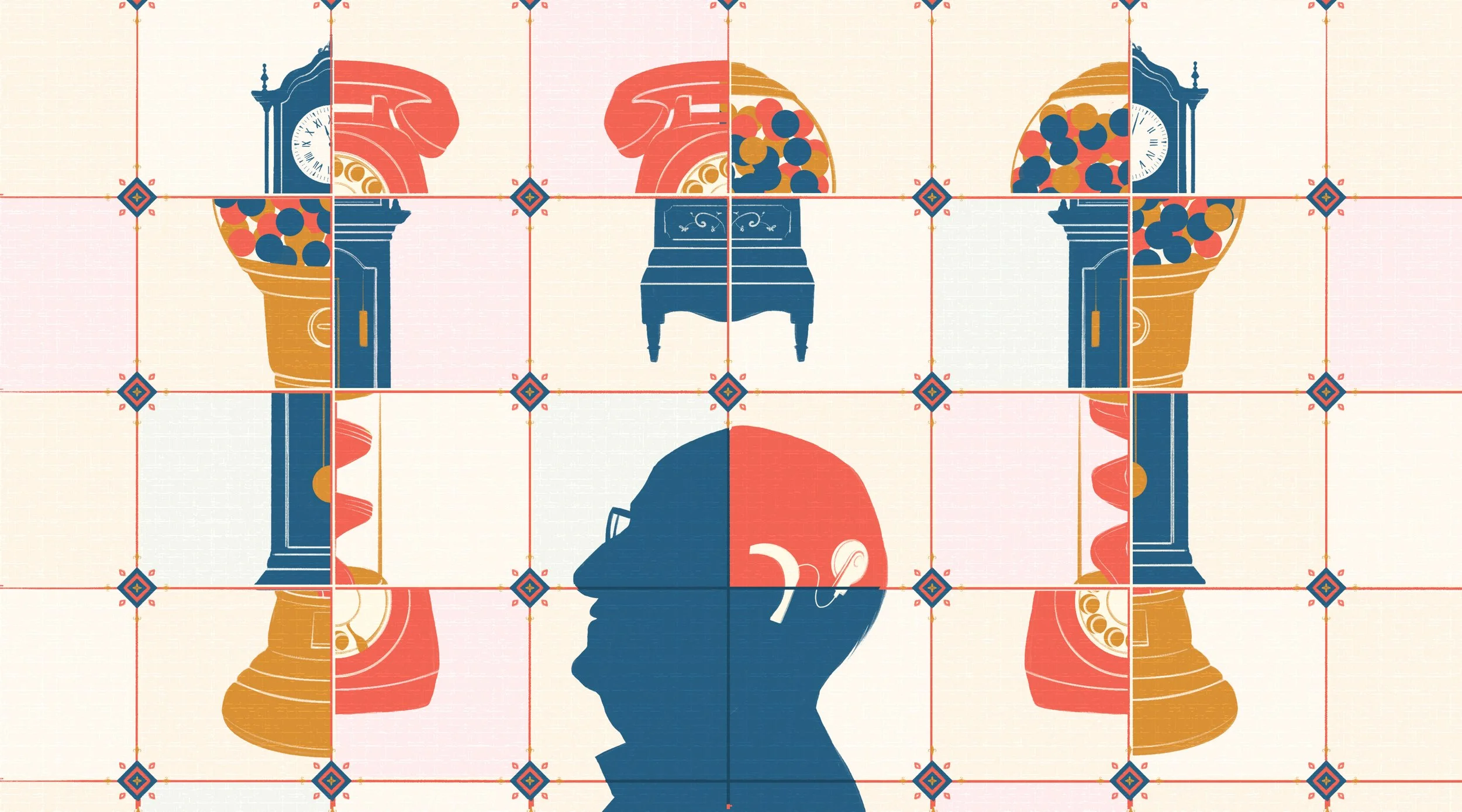
Jesse: Jedo's house was full of sound. Our big Lebanese family, us grandkids, and our parents, the gumball machine, the old rotary phone, the electric organ in the spare bedroom, and that huge mechanical grandfather clock that chimed every hour. But even though his house was a whole world of sound, his world was silent.
Jedo: I was deaf for 35 years. I had never heard any of my 11 grandchildren.
Jesse: As a kid. I remember putting my hands over my ears to try to imagine total silent, but it really wasn't silent. I could still hear. It was actually pretty loud. As someone who has always loved music and sound from singing in choirs since I was a kid, to now being a film sound designer, I can't imagine what this world was like, and at times I felt there was no way my grandfather, we called him Jedo, could understand my world.
Jedo: I would go to the, uh, the Albuquerque Boy Choir to see my grandson Jesse sing. And the silence was… was just devastating for me at times when I wanted to hear.
Jesse: Then when I was 13, Jedo received an operation for a cochlear implant to regain his hearing.
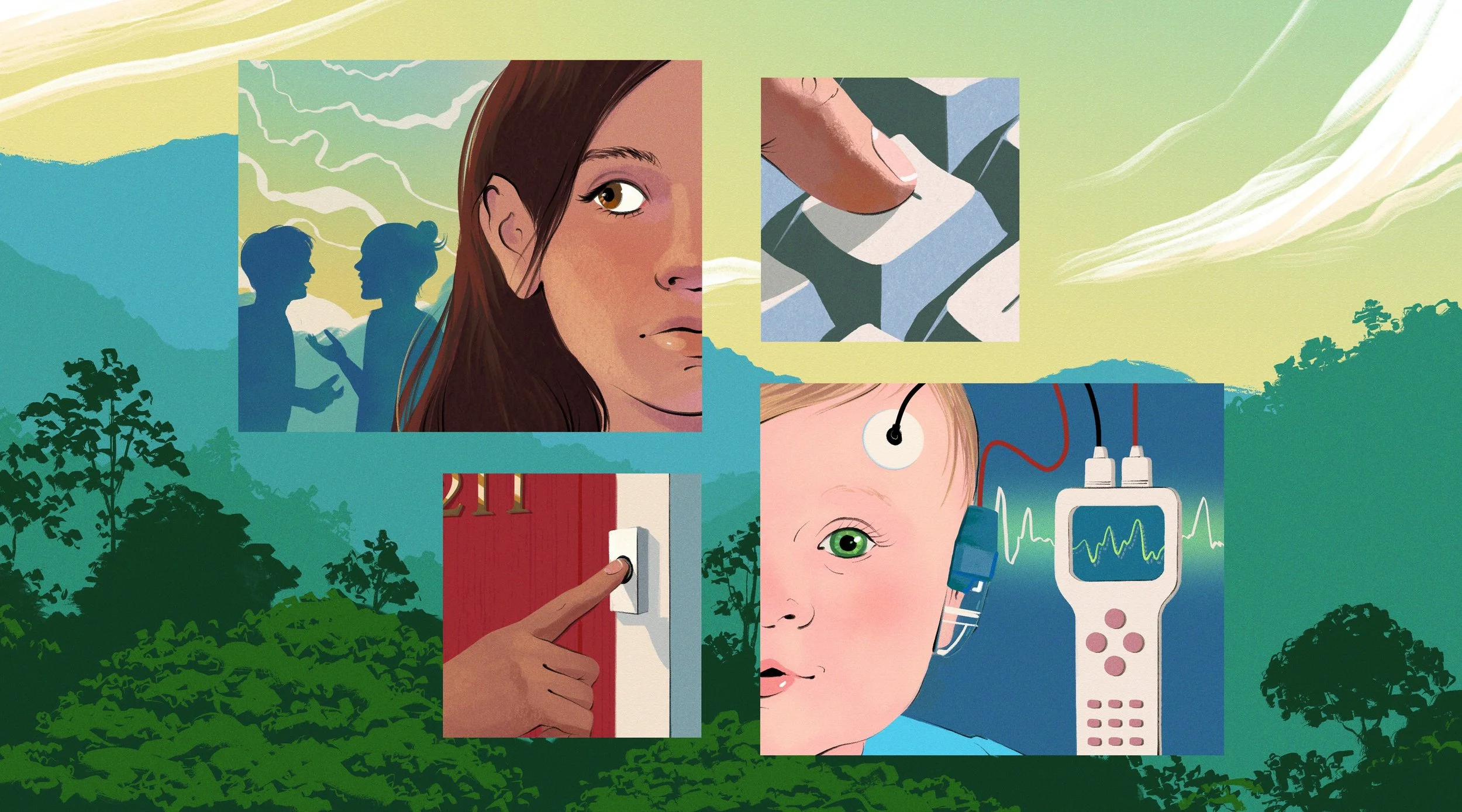
Dr. Epstein: Uh, my name is Dr. Chris Epstein. I'm an audiologist at Presbyterian Ear Institute, and I specialize in working with patients with cochlear implants. So a cochlear implant is a surgical device that help people with severe to profound hearing loss here. There's an internal part that goes inside the cochlea that takes the place of the damaged part of their ear, and then on the outside, they wear a speech processor and the brain interprets that sound, and that's how they hear. It doesn't give anybody normal hearing. It gives them a new type of hearing, is what I usually tell patients
Jesse: He didn't want it at first. Years previously, he had actually had an operation to fix his hearing that failed and accepting the risk of another disappointment was almost too much to try. Besides, he could communicate really well by reading lips, and his speech was perfect, even after decades of total deafness. And as Dr. Epstein said, the hearing you gain from the cochlear implant is not the same.
Jedo: I was against it because I thought I would only hear scratchy noise, not, not different sounds. And my family kept after me trying to change my mind. And one day, I was walking with my two grandchildren, Joshua and Noel. And Joshua said, “Jedo, we want you to hear our voices.”
Jesse: And with that, he got it. After recovering from the surgery, you go into a testing room where the audiologist activates the device.
Jedo: When we walked into the testing room, I saw 17 members of my family there. My silent world was shattered by three soft beeps. And all I could say was, “I can hear.”
Jesse: I remember that moment when he could hear again. We all went around the room and said whatever we thought of mostly “hi” or “I love you.” And then I remember right after that when we got into the car, my mom was driving.
Celeste: His window was open, we're driving, and he said, “What's that sound? It's really loud.” And I said, “Oh dad, it's your window.” I closed the window. It was the traffic going by, and the wind. And then I turned on my, my turn signal, and that was just really loud for him. And, and he asked me, “What's that sound?” And it was alarming to him. It was a little alarming.
Celeste: And then we were, we were told to go right home, but we went to a restaurant, which is probably the worst place, but we just wanted to celebrate. The footsteps on the floors. The, the talking, he was just taking it in. He had no idea what any of the sounds were, but he was just taking it all in.
Celeste: And then when he came home. Same thing. The water faucet turning on, wind chimes outside the refrigerator, dry leaves crunch. “I'm hearing something and I don't know what it's, it's too much information. I can't, I can't take it all in, and sometimes I wanna just turn it off.”
Jedo: It was like wanting a glass of water and finding myself in the pool.
Jesse: This type of experience can be very common with cochlear implant recipients. Dr. Epstein told us that it's extremely important to keep it on as much as possible, to give the brain the opportunity to identify sounds and begin prioritizing all of that input.
Dr. Epstein: I explain that to a lot of my patients, the family members, especially, saying, “This recipient is going to hear lots of new sounds and they are gonna need help knowing what these sounds are. Because if they don't know, it can be frustrating.”
Dr. Epstein: Once you know what a sound is, your brain can kind of put it on the back burner and just be like, “Okay, I don't need this.” But if you don't know, it's always there and you're like, “What is that?” So it's important to know what the object is, making that noise so that you can move on.
Jesse: As the brain begins to interpret all of this new sonic input, even the quality of sound eventually begins to transform from something that feels foreign and digital to something much more natural and even enjoyable.
Jesse: But getting over that initial obstacle requires the patient to find an ongoing motivation to learn, to remain open in this new world of sound. And it required us, his family, to support him in that.
Dr. Epstein: If a patient is motivated to hear, one, they're gonna wear their processor all the time. And research shows that you need to wear it at least 10 hours a day to get full benefit. They're gonna do that auditory training. They're gonna force themselves to have to listen even in hard situations, to train their brains, to listen in hard situations. The patients that do the best are the patients that are highly-motivated.
Dr. Epstein: And he was highly-motivated and his family was highly-motivated. And that's another good point. Because if the family is not supportive, the patient gets really discouraged. Family members have to be willing to work with the person who has a cochlear implant to make it successful. And I think Harry really had that going for him.
Jedo: My family was so, so good by taking care of me. They were right around me all the time. After church, uh, socials or whatever we were, there was always somebody with me to help me with someone who wanted to talk to me.
Jedo: When I was home, I began hearing sounds that I never heard before. Instead of buzzes on the timer, it was a tone sound, and the telephone, when I pressed the numbers on the telephone, it was a tone sound.
Jedo: I heard the grandfather clock ticking, and the chimes were beautiful, but the garbage disposal is like a 747 in my driveway.
Jesse: Reflecting on his story has totally flipped my notion that he and I couldn't ever relate on the topic of sound. Two years ago, he passed away at 96 years old. And only now I realize his experience is a lesson to me about the fundamentals of what it means to hear.
Jesse: Sound designers will often create the sound of rain in a movie scene by using recordings of bacon frying in a pan. It's easier to record that than getting your microphones wet in the actual rain, but the effect works because the scene prompts the audience to believe it's rain.
Jesse: What we hear is our belief of what's happening. Jedo had to hear that garbage disposal with the understanding of what it was enough times to train his brain to not believe that it was an actual 747 airplane in his driveway. And that was true of every sound in his world. Most of us get this ear training from birth, and as our world of sound changes, our perception learns along with it.
Jesse: But he had to start from scratch again. The type of auditory signal that his brain was now receiving is completely different than what he heard when he was a teenager back in the 1930s. And he had to take a crash course of the last 30 plus years of human made sound that he had missed, on top of the shock of any sound after that much silence.
Jesse: And yet, with the help of his family, the audiologists, and his own willingness to find gratitude in all of it, he did it.
Dr. Epstein: I saw him for that initial activation, and then I saw him a few days later, and then I saw him a month later, and then I saw him about every three months after that. And he was always so positive when he would come in and he would say, you know, “Things are getting better. Things are getting better. I'm understanding.”
Dr. Epstein: The way he would describe sound was just so touching. He was so thankful to be able to hear and be able to hear laughter, be able to hear the ocean, and being able to hear his grandkids.
Jedo: If I knew every word in every language, I would not be able to describe this feeling of being able to hear again.
Jesse: Jedo’s house was always full of sound. And over time he began to notice and enjoy those sounds more than any one of us. I remember he actually changed the grandfather clock to chime every 15 minutes, like a little note-to-self that he could hear.
[clock ticks and chimes]
[music in: Wesley Slover - Cold Sky]
Jesse: The choice to hear is dedicated to my Jedo, Harry Hakim, survived by his big Lebanese family. It was created, edited, sound, designed and mixed by Jesse Herrera. And produced by my wife, Michelle Priest. Special thanks to Dr. Horne and Dr. Epstein for giving my grandfather the gift of hearing again. And thank you to the rest of the staff at the Presbyterian Ear Institute, who continue to support implant recipients everyday, after they’ve made their own choice to hear.
Jesse: To see pictures of Jedo and his eleven grandchildren, or to make a donation to the Harry Hakim Scholarship Fund, supporting the education of children with hearing loss, follow the link in the description, or go to peiabq.org/giving.
After the break, Casey and I kick off this year's Listener Stories competition by unpacking what made last year’s submissions so special to us, and the philosophy behind what makes a story stand out.
[music out]
MIDROLL
[Microhertz Bumper]
Casey: Okay. So my first question is, when we first heard Jesse's story last year, what was your immediate reaction?
Dallas: Jesse's really good at this. My first reaction was just how, not only how good it is from a technical sound design and mix perspective, which, Jesse is an incredible sound designer and mixer, but so much of the nuance of storytelling that we've worked on for years was just inherently built into Jesse's story. He just gets it.
Casey: Yeah, totally. And it obviously is so personally relevant and resonant to him because it's his grandfather, he's hearing the voices of his mom, his family... When a story means something to someone, obviously that just kind of takes it to a whole nother level.
Casey: We love learning about things and hearing about an interesting topic, but of course, what we talk about all the time is when we can weave an emotional human story into that topic and learn something along the way, in this case, a little bit about cochlear implants, then that just… yeah, that's what really makes a good podcast, a great podcast.
Dallas: Yeah. I like how you brought that up because it is something that we talk about a lot, is that we're in this phase of the podcast and its maturity where we are always trying to find the human story first, and then wrapping the tech, or wrapping the concept, or the sound thing around it.
Dallas: You know, it's rare that we just go, "Here is a cool sound thing and here, you know, listen to it. That's awesome." So sometimes we'll get pitches where it's just like, "You should do, the sound of something…"
Casey: “Acoustic barriers.”
Dallas: Right. And it's just a more of like an observational thing. Whereas we're always trying to find this kind of like, “Well, where is the human start, middle and end,” because it's easy to think of sound as being this technical thing because so many people are technically-minded do it.
Dallas: But sound is just as human as our other four senses. And so it's very important that when we are projecting and putting sound on this stage, that it has done so with the same level of respect and care as any visual work of art or anything else based on any other sense, because it is so human.
Casey: So just recently, Jesse emailed us about a college course of his as it relates to this competition. Do you wanna mention that?
Dallas: Yes. Okay, so I'll rewind a little bit. We needed stories. There was a point here that we really needed some help, just due to overwhelm in other places. And so Casey and I are talking and we're going, “What can we do to just kind of… we just need a little bit more help from maybe finding old stories, or finding other podcasts ,or whatever."
Dallas: And I remember thinking, “I don't know if this is gonna work at all, but why don't we just ask the audience for stories? You know, maybe we'll get enough to play one single episode” that just relieves some of the production burden that I think anybody who's heard this show can imagine how much goes into every one of these episodes.
Dallas: So, we were thinking, "Okay, maybe five or ten people might submit a story just to help us out in this moment." And then I think that's what happened at first and we're like, "Okay, well, you know, we'll get one good episode out of this."
Dallas: And just like any creative project, it was the day before deadline when they just all started flooding in. And I remember just being so flattered by that to begin with. I was like, "Oh my goodness, people have put this much time and effort into these pieces. I can't believe it!"
Dallas: The feelings that I get hearing other people tell these incredibly beautiful stories, and I, in some way, was able to platform it. I just got like really emotionally overwhelmed and I just felt like a huge sense of love.
Dallas: I think that like if you've been with the show long enough, I have a tumultuous history of childhood and and stuff, and I think that reaching this phase of my life where I can make this thing that I just pour my heart and soul into, and I believe in so much, and I literally went way into debt to make Twenty Thousand Hertz, and then eventually it caught up, and then eventually it like eked a little bit of profit and at least pay the people who work on it.
Dallas: And then now, there's listeners who want to take their time and put their art together to where I can have a platform where I can put it. It's such a complicated emotion. It's hard to put into words, but it feels so good.
Dallas: Because another thing that I say often you know, since the beginning of Twenty Thousand Hertz, is that I want other people's voices on this show. For me, the greatest thing about Twenty Thousand Hertz is when other people are telling me stories. So you know, this might be extreme, but the perfect Twenty Thousand Hertz for me is where every single episode is told by someone else. It's crafted by someone else. It's their voice telling that story. I'm happy to kick it off. I'm happy to end it.
Dallas: But my personal satisfaction is to make something that I consider a work of art in audio, such as Twenty Thousand Hertz, and now it has amassed so many people who listen to it, one, but then so many people who now wanna contribute to it is so emotionally overwhelming for me. And I can't think about it too long without getting welled up over it. But it's very surreal to have these stories come from all over the world.
Casey: It’s pretty incredible. Um, oh, wait, so we didn't actually, we didn't actually talk about the… the student thing.
Dallas: Oh, I never actually…
Casey: Why don’t you talk about that?
Dallas: That's like classic Dallas. Um. Okay. So I remember Jesse emailed us not too long ago, so the same Jesse who told that story wrote in and said, “Hey, I know Defacto Sound works on tons of projects and Twenty Thousand Hertz and all of this. Do you happen to have any video footage I can use for my students to like re-sound design or remake?”
Dallas: Now Jesse is a legit top-notch sound designer mixer in his own right. But like every great audio person, he also wants to give back and teach. And I think that's very interesting in the audio community that everyone at the top of their game, for the most part, wants to share that knowledge.
Dallas: And so we wrote back and I was like, "Well, I don't feel comfortable with all of this copywritten stuff or even my YouTube channel stuff, because there's so many corporate entities and PR and things that are involved with that. And we have to sign all kinds of agreements to even get access to this.
Dallas: However, every single technique that we use at Defacto Sound for sound design, mixing, dialogue editing techniques, Foley, everything, we do that and more for Twenty Thousand Hertz, and we have control over the entire story."
Dallas: So I said, “Why don't you just make this part of your curriculum in your university or college, and make this something that you grade or you all guide together. And then maybe as the semester comes to a close in May-ish, you all work together, you present this together. And then if they feel happy with it, then submit that work from the students to our Listener Stories episode.
Dallas: So what I would recommend is like the best thing that any, I believe, that any sound designer, or aspiring sound designer, or mixer, or whatever could do is just make a compelling podcast with your own voice, with your own source recordings or interviews. And then you'll start to think like someone that you will help service, you know, in this industry.
Dallas: I often tell people that like, Defacto Sound's been around for over 15 years, but when we incorporated Twenty Thousand Hertz into the DNA of Defacto sound, the unintentional serendipitous side effect of that is now every single sound designer on our staff and people that we work with now think like creators. So when they're servicing these filmmakers, or ad agencies, or producers, they have experience crafting stories because we make our own. And that is incredibly valuable to anyone trying to get into this world.
Casey: Hmm. I hadn't really of it that way. I, obviously, since Twenty Thousand Hertz grew out of Defacto, I knew that the sound design techniques and mixing techniques from Defacto translated into Twenty Thousand Hertz. But I hadn't really thought about the feedback loop of then the Twenty Thousand Hertz, you know, storytelling sonic mindset feeding back into Defacto work.
Dallas: Yeah, absolutely. I mean, that's a big part of the secret sauce of just Defacto Sound in general and why I think it's important to make our own stuff inside this organization.
Dallas: It's one thing to service someone, but to walk in their shoes and understand the creative difficulties that they're trying to navigate in crafting a story, when we have experience on our side, and we are able to come in and support that. And then also sometimes go, "Hey, you might actually wanna think about changing this edit, or this word, or this sentence. Like, take it or leave it."
Dallas: But I think that, also, keep in mind that a lot of the people that we're working with are working on things that millions of people may interact with. However, when we’re in our organization, there's very few people who are watching it.
Dallas: So it's, quite scary if you have maybe five people or, or even 30 people working on a piece, whether it's an advertisement, or it's a documentary, or movie, or whatever, because the amount of brains on it are so few that when you, put that out to the world and now hundreds of thousands or millions of people now consume that, they start to point out things that you just straight up miss, and you go, "Oh my goodness…"
Dallas: So feedback in this creative world, whether it be TV, film, games, anything, feedback from a story perspective is what everybody's craving who's telling a story. And so we are able to do that due to the feedback loop of Twenty Thousand Hertz and Defacto Sound.
Casey: That's true. That's a good point. What do you think listener stories bring to Twenty Thousand Hertz that we simply couldn't create on our own?
Dallas: Well, when we bring in an independent producer to tell a story that you and I have already greenlit, then we've already kind of boxed-in what the capabilities are.
Dallas: So by just going, "You know what, we're gonna make it five minutes and we're gonna blast it to the entire world," these stories that someone has inside them that they know it's really good. They just, they haven't taken the first step. They haven't had a reason to make the story, but they know deep inside them. This is like one of my favorite stories ever. Those stories will be gone with you unless you tell them
Casey: Right.
Dallas: As creative people, it is our duty to tell these stories in the most beautiful way that we can, to the best of our ability. And I also believe in "Finished, not perfect." Don't be held back by like, “I don't wanna submit this because it's not perfect." Because perfect isn't what I care about. And perfect in a world of AI, is a negative to me.
Dallas: I want the bumps and the humanity that come with any story, whether I get a story from a, you know, a 13-year-old that might not be as polished as somebody who's a senior level sound designer, that 13-year-old has just as good of a shot because that's authentic and it's real, and there's humanity to it, and beauty to it. So I, I want to encourage everyone to get that story that you know is amazing out there through sound. So that's what this invitation is.
Dallas: Now, we can't promise that we'll be able to play every story that is submitted. However, I do guarantee that any person who does submit a story will learn so much from that experience, and it will be so meaningful to you, and you may be able to even pick back up on that story, or learn something from that story that you take into your creative journey that I promise it will be worth it.
Casey: And going along with that, what would you say to the teachers out there whose students might benefit from submitting a story to us?
Dallas: So I'd say to the teachers who are trying to shepherd students in sound, music, instrumentalists, I mean, anybody who creates anything or performs anything that's interested in this, to use this in your curriculum, have this deadline, make your own deadline.
Dallas: Because it's easy to think, "Oh, I can only do my sound design or mix if someone gives me a picture." Like, "Oh, I need to go and get, you know, Interstellar and take the audio off of it in order to then do my job." And I think that that really starts to stick with people and creatives who are young.
Dallas: And to the teachers, I would say like give them the agency through a project like this to have complete control creatively. We don't often get that as sound people or even sometimes in the musical world, because we're always trying to recreate someone else's work. But I think it's just incredibly important to give someone full creative control. And I hope that it encourages people to just go, "Hey, I don't need permission from anyone. Like, I can just make things myself."
Dallas: So yeah, I mean, I just, I want people to think “What vibe can you create?” It could be pure joy, it could be pure sadness, it could be anything in between. You know, I don't know, I just think that's what sound does: it gives a vibe. But like, what vibe do you wanna create?
Casey: Yeah, it could be funny, could be mind blowing, could be mysterious… could be anything.
[music sneaks in: Wesley Slover - Sandra Robot]
Dallas: You can make your music, you can not make your music. You can work with a friend, you can find a music library, like anything. I wanna just encourage people to create something. And again, "Finished, not perfect." This is your first step in going down this path, go for it. If this is, you're 10, 20, 30, 40 years into it, try it. But then, don't let perfection stop you from hitting submit.
Twenty Thousand Hertz is produced out of the sound design studios of Defacto Sound. Hear more at Defacto Sound dot com, or by following Defacto Sound on Instagram.
Thanks to Jesse Herrera for sharing his incredible story with us. And to everyone submitting this year, you can find details and submit your story at two zero K dot org slash 2026. There's also a link in the description.
I'm Dallas Taylor. Thanks for listening.
[music out]