← BACK TO SHOP
← BACK TO SHOP

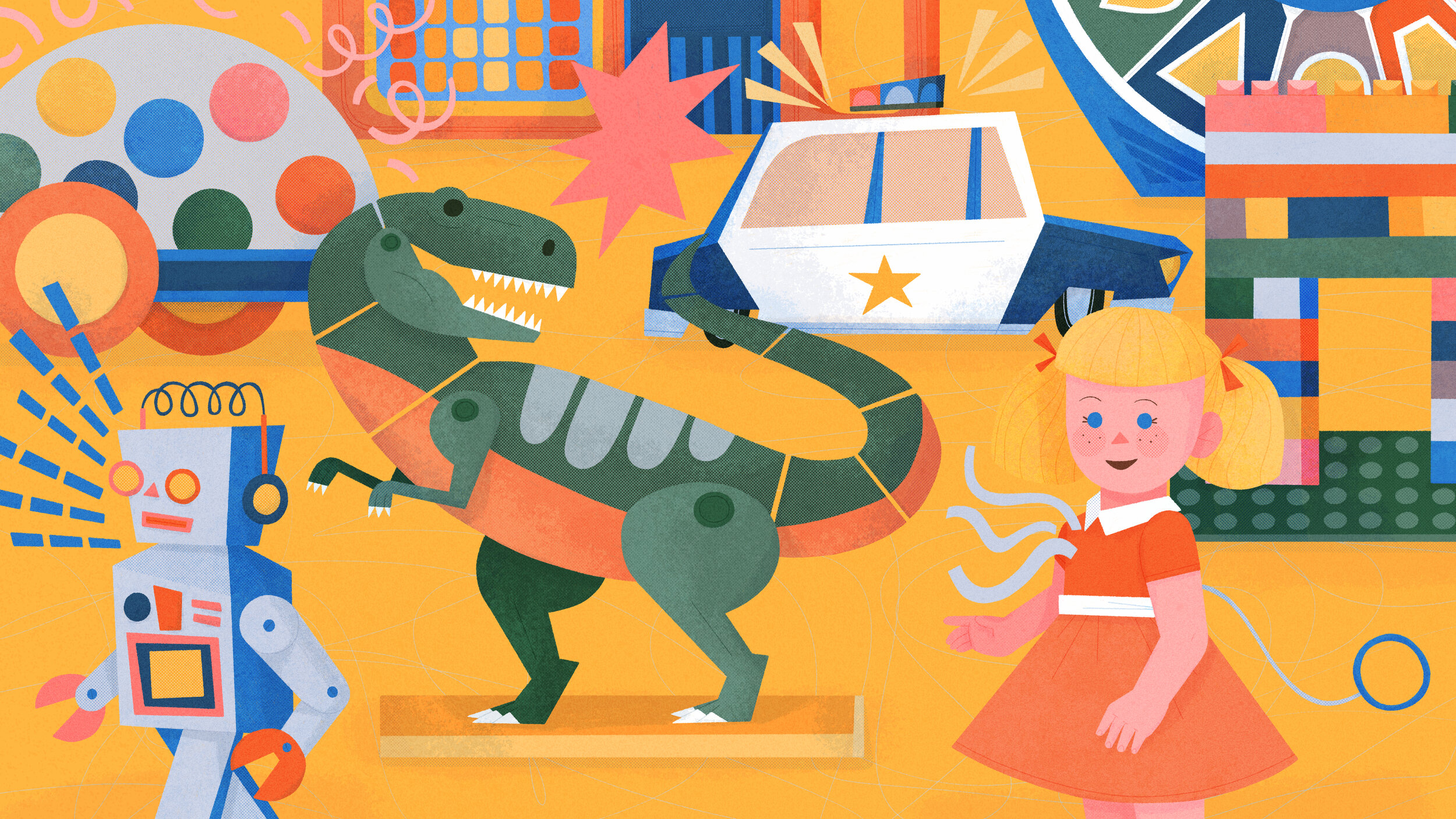
Noise “R” Us: The evolution of noisy toys

Art by Lauren Davis

This episode was written and produced by Marissa Flaxbart.

From See ‘n Say to Speak & Spell, and beyond, toys provide the soundtrack of our childhoods. Huge advancements in computer technology in recent decades mean that today’s toys can make a wider variety of sounds than ever before. In this episode, “The Toy Guy” Chris Byrne takes us on a nostalgic look back at the recent history of recorded sound in toys; then, with Dr. Hamid Djalilian, we consider what all that technological advancement means for young ears in the 21st century.

MUSIC FEATURED IN THIS EPISODE

Poppyseed by Sound of Picture
Cheesy Soul Loop by Breakmaster Cylinder
Kiss by Sound of Picture
Mr. Chompers by Breakmaster Cylinder
Amethyst by Breakmaster Cylinder
Unicycle Flips by Breakmaster Cylinder
All These Pieces Drifting Into Place by Breakmaster Cylinder
A Spiral Staircase by Breakmaster Cylinder
The Rainbow Road by Breakmaster Cylinder
Nocturne Op 15 No 2 by Sound of Picture
Sinister Fingertips by Breakmaster Cylinder


Twenty Thousand Hertz is produced by Defacto Sound.

Subscribe on ⁠⁠⁠⁠⁠⁠⁠⁠YouTube⁠⁠⁠⁠⁠⁠⁠⁠⁠ to see our video series.

If you know what this week's mystery sound is, tell us at ⁠⁠⁠⁠⁠⁠⁠⁠mystery.20k.org⁠⁠⁠⁠⁠⁠⁠⁠.

Support the show and get ad-free episodes at ⁠⁠⁠⁠⁠⁠20k.org/plus⁠⁠⁠⁠⁠⁠.

Follow Dallas on ⁠⁠⁠⁠⁠⁠Instagram⁠⁠⁠⁠⁠⁠, ⁠⁠⁠⁠⁠⁠TikTok⁠⁠⁠⁠⁠⁠, ⁠Facebook⁠, and ⁠⁠⁠⁠⁠⁠LinkedIn⁠⁠⁠⁠⁠⁠.

Join our community on ⁠⁠⁠⁠⁠⁠Reddit⁠⁠⁠⁠⁠⁠.

Consolidate your credit card debt today and get an additional interest rate discount at lightstream.com/20k.

Get a 14 day free trial of Zapier at zapier.com/20k.

Check out Chris Byrne’s podcast The Playground wherever you get your podcasts.

View Transcript ▶︎

You're listening to Twenty Thousand Hertz.

[music in]

Even before we are born, the sounds of the womb shape our world. As newborns, while our vision is still coming into focus, our sense of hearing is already fully developed. The first sounds that we come to love are our parents’ voices and lullabies. And before long, we become obsessed with a very different kind of sound: the sounds of our toys.

[SFX: toy sounds - toy fire truck siren, toy train whistle, Tamagotchi, Elmo]

Few things trigger nostalgia as quickly and powerfully as the sounds of our childhood -- sounds like sifting through the lego bin [SFX - hand rifling through a lego bin] or for me, the friendly storytelling bear, Teddy Ruxpin [SFX: Teddy Ruxpin].

For most of human history, kids’ toys couldn’t generate much sound on their own. Though, over the course of the past five decades, advancements in manufacturing and in computer technology have changed all that.

[music out]

When today’s adults think back to the sounds of our toys, we’re likely to think of sounds the toys made themselves, at the pull of a string [SFX: “There’s a snake in my boot!”] or the push of a button [SFX: Classic 80’s laser gun toy]. Nowadays, toys can create more sounds than ever… for better and for worse.

Chris: Hi, I'm Chris Byrne and I'm known as the Toy Guy. I've spent the better part of the last 40 years in the toy industry in a lot of different positions from marketing and operations to writing and being a goofball on TV.

Chris really loves toys. He’s a frequent guest on morning shows across the country, where he’s usually talking about the hottest new toys on the market. [SFX: Kelly & Michael Clip] But Chris is also passionate about the history of the toys we love. He wrote a book called “Toy Time!”, and in it, he asked hundreds of people about the toys that left the biggest impact.

Chris: One of the things that I think is always so remarkable about the toy industry is that the role of play in a child's life in terms of having new experiences, exploring the world and expressing yourself really doesn't change from decade to decade and generation to generation. That said, the toys themselves can be quite different.

Though toys have changed a lot over the years, the history of toys that play recorded sounds dates back almost as far as recorded sound itself.

Chris: Sound has been a component of toys really since Thomas Edison put a record player inside a doll.

[Clip: “Twinkle twinkle little star, how I wonder what you are”]

[music in]

Toy makers have come a long way since then. Up through the 1950s, most toys were analog, and the kids who played with them made the sound effects themselves. In the late ‘50s, the Fisher Price company released the trusty Corn Popper. When you pushed the toy like a vacuum, its colorful balls would bang against the toy’s plastic dome. [SFX - Fisher Price Corn Popper] Fisher Price used simple technologies like this to add sounds to many of their toys. Another one called toy barn made a signature mooing sound everytime the door swung open [SFX: Family Farm door “moo”]; they also had a toy cash register “dinged” like the real thing [SFX: Fisher Price vintage register].

[music out]

It was around the same time in the late ‘50s when Chatty Cathy was introduced. She could say a monumental 11 different phrases when you pulled the string in her back. [SFX: Chatty Cathy commercial]

Chris: It was essentially a small record inside a big plastic box that was stuck in the back of the doll.

[SFX: Chatty Cathy - “I love you.”]

[music in]

By the 1960s, advancements in plastics made it easier to mass-produce toys of all kinds, including ones with recorded sound components. The toy company Mattel had struck gold with Chatty Cathy. Now they had the brilliant idea to put their pull string technology into a toy that toddlers still play with today: namely, The See ‘n Say, first produced in the mid ‘60s. That’s the one with, like an arrow in the middle, that just spins in a circle and lands on an animal.

[SFX: See ‘n Say - “This is a pig”]

[music out]

By the early ‘70s, Fisher Price released the first version of a musical toy made to look like a record player, complete with thick, brightly colored, plastic records [SFX: 1971 Fisher Price Record Player]. Inside, the toy worked just like a music box, the raised ridges on its two-sided records dictating what song the music box played. But these simple, mechanical sound-makers were about to have some competition from the computer age.

Chris: Jumping ahead, when we started to see chips come into toys, that really revolutionized sound. That was the next big revolution in sound for toys because suddenly you could put a lot more sound on a chip.

Chip-based toys had humble beginnings. In the 70s, space toys and toy laser guns could only play one or two sounds [SFX: ‘70s Star Wars toy]. By the late ‘70s, toy and game makers Milton Bradley proved that with just 4 tones, you could make a toy that helped define a generation [SFX: Simon Tones]. They named their soon-to-be iconic puzzle toy “Simon,” after the children’s game “Simon Says.”

Chris: It had lights and sounds and if you remember it, it was a follow the maze type of game where you had to follow the different colors. That was one of the first to have a chip in it.

The chip inside Simon was made by Texas Instruments. They’re the ones that made that famous graphing calculator you may have used in high school. The same year that Simon came out they also made the chip in another iconic toy.

[SFX: Speak and Spell ad: “He’s learning spelling with Texas Instruments Speak & Spell. ‘Spell Rain...R-A-I-N...that is correct”]

Speak & Spell’s child-sized keyboard let little fingers type and hear each letter out loud. A classic robotic voice would ask kids to spell words that appeared on the screen. It also had mini-games that could teach kids other things, like how to pronounce difficult words.

Chris: Speak & Spell was really a revolution as well because we'd seen the Pull-String types of toys in the past where you pulled the string and you had to mechanically turn the arrow to say, "The cow says moo." And then the cow would moo. Speak & Spell was really much more child-focused where you're punching letters and had kind of a keyboard. And the letters would pop up and then it would say them.

The invention of the Speak & Spell marked the first time a children’s toy had speech recorded onto a computer chip, as opposed to mechanical technology like a record or a tape.

Chris: The thing that's been amazing since Speak & Spell is how much better speakers have gotten in toys, because it was really kind of hard to tell the difference between an N and an R in some of those early toys.

[SFX: Speak & Spell - “Now spell child.”]

And interestingly enough, at that time what we were seeing was that chips that had become obsolete for consumer products, for adults and families, were now filtering down into the toy industry.

[music in]

The Speak & Spell had revolutionized the electronic toy market as well as the educational toy market. It went through a huge number of upgrades and improvements over the next decade, but by the early ‘90s, computer technology had advanced so much that the groundbreaking toy became somewhat obsolete. In its wake came a whole new wave of electronic toys, educational and otherwise.

Chris: It really depended on how much you wanted to spend, what the compression rates were, what you wanted the toy to say. But toys suddenly went from the miraculous 11 sayings in 1959 to hundreds and hundreds, if not more, by the Eighties and Nineties.

The growing affordability and computing power of these chips made it possible for toys to make so, so many sounds. They also made it feasible for more kinds of toys to make sounds. You see, when a ‘90s kid opened a toy box, it wasn’t just your dolls and action figures that talked to you. It was your stuffed animals [SFX: “I love you”] , your toy police car [SFX: toy car siren], and your laser blasters [SFX: toy laser blasts]. By the middle of the 90’s, even your board games and your keychains were making noise.

[music out]

Chris: One of the things that's really driven the evolution of sound and lights and things like vibrations in toys has been the declining cost of electronics. So you suddenly have a bump switch that can activate something. You suddenly have a speaker that's less expensive than it was before. You've suddenly got a sound chip that you can put so much more on than you could before. And all of that is designed to enhance the play experience. So the sounds that we used to make with our mouths, you know “bang, bang” and “buzz” and whatever it was that we did when we were playing back in the dark ages when I was growing up, the toy can now do that.

In the mid-nineties, some of these noise-making toys sparked their own cultural phenomenons.

[SFX: Tickle Me Elmo commercial: “Just tickle Elmo, and he really talks! (that tickles) and laughs”

Chris: I was the very first person to have Tickle Me Elmo on national TV. I showed it to Al Roker on the today show from Toy Fair in 1996. It became a phenomenon and Interestingly enough, it always laughed, but It began its life as a monkey with the electronic unit inside it. But it was the advertising agency and specifically an account guy named Bob Mole who said, "This thing has to shake because you need that TV moment to make it work." And the rest is kind of history.

The Tickle Me Elmo doll was SUCH a phenomenon that its Christmas release has gone down in history as one of the most chaotic toy crazes of all time.

[Audio clip: “No wonder he's laughing... all the way to the bank. Because North America has been gripped by Tickle Me Elmo hysteria."]

Chris: I was actually going through security in the New Orleans airport with one probably around the 10th or 12th of December. And a guy offered me $500 for it right on the spot. And I said, "Well, I can't do it. This is the only one I've got and I need it."

[SFX: Tickle Me Elmo laugh]

Also invented in the mid-nineties was the trusty Tamagotchi, [SFX: Tamagotchi beeping] a tiny digital display toy that you had to feed and play with to keep alive. If it died, you had to start all over again. On an average school day [SFX: Kids, school yard, multiple Tamagotchis] during a certain stretch of the late nineties, the needy beeping of the Tamagotchi was unmistakable and impossible to miss.

By the end of the ‘90s, kids who loved needy toys could now make a major upgrade...to the Furby.

[SFX: Furby ad “What’s that?” “Me up!” “It’s my Furby!”... “Tickle me! “Furby, the first gigapet you pet!”]

Chris: Well, I think what I can say about Furby is “da who oo eh ah ah”... no seriously. It looked like a big croquette with fur on it. And it had a sort of a beak and eyes and ears and at the time a lot of people thought it looked like the gremlin from the Gremlins movies. But it talked to you. The thing about Furby that was newsworthy if you will, it was the first toy that kind of grew up as you played with it. So it would start out babbling and the more you played with it and talked to it and had all kinds of different sensors on it, the more sophisticated the play would get.

[Audio: Furby ad, “Your Furby sneezed, and gave MINE a cold”]

Chris: I'm not sure how many kids actually played with it to get it to grow to that extent, because it took some time.

Even if you never had a Furby, it’s likely you recognize the name. That’s because the Furby became more than just a toy.

Chris: Furby was one of those rare toys – like Tickle Me Elmo, like Cabbage Patch kids – that made that leap from interesting toy to cultural phenomenon. It was kind of frustrating to play with, but everybody wanted to have a Furby. It didn't have an off switch... So it would keep talking for hours. And it was controversial. People brought them into work and they thought they were spying on them because it reacted to your voice.

[music in]

Perhaps that Furby paranoia seems pretty quaint compared to now, when many households have devices specifically designed to wait and listen for the sound of our voices calling for them. But that very advancement represents how far technology in general has come. And when technology advances in the world at large, toy technology advances right along with it. Nowadays, toy aisles are jam-packed with more powerful tech than even our computers had just a few decades ago.

What’s more, updated versions of many of the 20th century’s popular toys are still available today, or available again.

Chris: One of the things that we've seen that's been really interesting in recent years is that kids who have been immersed in electronics, I mean today's, what, 14 year olds have never lived in a world without a smartphone. The idea of a tactile toy, a mechanical toy, something that's not necessarily digital or chip driven is absolutely fascinating to them because it's novel.

[SFX: toys build up over next paragraph, coming to a cacophony]

When you walk down the toy aisle, there are more sound-making playthings than ever before, including many familiar voices. But as manufacturing noisy toys has become easier and cheaper for toymakers, the volume of some of these toys has been cranked up to the point that it could literally be damaging children’s ears. We’ll get into that, after this…

[music out]

MIDROLL

[music in]

Toys have been around forever, but it wasn’t until around the ‘50s that analog methods of adding sound became much more common. Advancing technology made the ‘80s and ‘90s an era for some of the most iconic sounds in toy history. Then, around the turn of the millennium, things went bananas.

Nowadays, physical toy stores are getting harder and harder to find. But whether it’s FAO Schwartz or the toy aisle at Target, children still lose their minds over the sight -- and sound -- of all those shiny new toys. Lately, parents are losing their minds too. Not with the same playful whimsy, but with a new awareness of the sheer noise of it all. It’s starting to feel like the toys are shouting over each other -- as if the toy with the loudest voice will be the one that gets bought and taken home. And interestingly, there may be some truth to that.

[music out]

Hamid: When we're actually born, our ears – and when I'm talking about the ears, I'm talking about the inner ear structures that do the actual sensing of the hearing. Those structures are actually adult size at birth. So pretty much our inner ear and everything is the same size as it is when you're born as it is now.

That’s Dr. Hamid Djalilian. He’s a professor at UC Irvine and an expert in problems of the ear, including hearing, balance, and tumors. He’s especially concerned with the long-term damage that noise exposure can do to children’s ears.

Hamid: Now we're born with a limited number of cells in our inner ear. So, we have these cells that pickup the sound, they have these microscopic hairs on top of them that pick up the vibration of sound as it travels through this liquid in our inner ear. And those cells are called hair cells with those little hairs on them.

As sound waves travel into the ear, it’s these “hair cells” that ultimately send a signal to a hearing-person’s brain. That signal is what lets us know that we’ve heard a sound.

Hamid: And we're born with about 3000 or so of these so called inner hair cells, which are the main ones that do the function of hearing. Now, damage that occurs to those cells is permanent. So if you get a very loud sound exposure, for example, [SFX: Loud crowd, explosion] that will cause some damage [SFX: Ears ringing] to those cells and then you've lost some of those cells.

This kind of damage won’t necessarily show up on any hearing test. But as we age, continued damage to these hair cells adds up, and no new ones are created.

Hamid: And then later on in life when they start getting age-related hearing loss, that's when we will see the loss of hearing reflect on the hearing test.

[music in]

Hamid: The critical, probably most important thing that we need to kind of keep in mind is that children's ears are just as likely to potentially get damage from very loud noise as adults could be. And that the sooner we start protecting children's ears from loud noise, the more cells they kind of have going into adulthood. So then they're more likely to have good hearing as they get into older adulthood, like fifties and sixties, etc....

Generally, we have more sensitive hearing when we’re younger. But a curious child, understandably, may not be the best protector of their own hearing.

Hamid: If you've ever seen a child play with a toy that makes noise, they want to just keep making the noise come out of it, so they'll just keep listening to it over and over and press the button over and over.

Hamid decided to research the volume of toys after seeing this first hand.

[music out]

Hamid: I was in one of these large stores [SFX: toy store ambience] that sell toys as well, and I was in the toy aisle and I saw this child that was basically, there's the little try me button to kind of see what it sounds like. He would press the button and then hold up his ear against the toy and then press the button [SFX: laser sound] and then hold up his ear against the toy [SFX: laser sound]. And I just thought to myself, this can't be good for this kid because this sounds very loud to me. And I was standing, you know, four feet away.

Hamid: That's sort of what's interesting to these kids, beyond the initial aesthetics of what the appearance is, it's really the sound that's the next most interesting thing about it.

[music in]

It’s been more than a decade since then. In that time, Hamid and his team of researchers have been putting noisy toys to the test in their lab at UC Irvine. In the United States, the National Institute of Occupational Health and Safety regulates how loud toys can be. The guidelines are not especially stringent: toys cannot produce a sound that reaches more than 85 decibels from 30 centimeters, or about 1 foot. That’s the approximate noise level of a busy restaurant, or a semi-truck passing by.

Hamid: We actually found that there are a lot of toys that actually make that level of sound that is above 85 decibels. Every year we go to a couple of the major outlets of toys and actually screen a whole bunch of toys and then buy the loudest ones, bring them to our lab and test them there to see how loud they actually are.

[music out]

The official guidelines measure sound from a foot away. But, kids don’t always play with their toys from a safe distance, especially the littlest ones.

Hamid: If you've seen children play, and I have a couple of little children myself, children oftentimes will take the toy and actually put it by their ear because they're trying to figure out where the sound is coming from because that's sort of what's interesting to them about the toy and they hold it up against their ear. So children don't abide by the rule of “hold the toy 30 centimeters away from your ear.” They will play with it and one of the things they'll do is they're trying to figure out where the sound is coming from.

The results from Hamid’s lab are startling. They’ve tested some truly LOUD toys. Toys like the Power Rangers Beast-X Ultrazord.

[SFX: “Ultrazord, ready for flight!” “Danger, let’s pull up!”]

Hamid’s lab found that Beast-X Ultrazord clocks in at over 87 decibels from 30 centimeters away — that’s higher than the federal standard. And if you hold your ear up to the speaker, get ready to be blasted at 107 decibels. That’s the volume level of a chainsaw [SFX]. And this toy is recommended for children as young as four years old.

Not all the offending toys at the lab tested are quite as obvious as the Ultrazord. Take, for example, the V-Tech’s Starshine the Bright Lights Unicorn, a sweet toy designed to teach kids ages one to four about colors, words, and shapes.

[Audio clip: Starshine Unicorn; “Hello there! I’m Starshine the Unicorn.” “Can you put the orange flower into one of my magic hearts?”]

Straight out of the speaker, toddlers are hearing about those orange flowers at nearly 104 decibels. That’s the same volume level as your average rock concert. And even from the requisite foot away, Starshine is still shouting at over 87 decibels.

[Audio clip: “Hello there! I’m Starshine the Unicorn.”]

The list goes on and on, but an alarming number of toys on it break the 100 decibel mark if you get too close, including a nearly unrecognizable descendent of the Bop-It called the “Bop-It Smash.”

[Audio clip: “You killed it! 114 points”]

[music in]

Hamid: Unfortunately noise is not something that people think about much. We kind consider kids to be able to be resistant to the things that are potentially dangerous to us, but you know the reality is they're just as sensitive to loud sounds as we are. Their sort of sole noise exposure risk when they're very young is toys, and the fact that digital music that's essentially being played, the speaker quality and all that stuff has improved. So you can play loud sound at a much higher fidelity than you used to be able to do maybe 20 years ago.

It’s terrifying to think that the toys we bring home could be damaging our kids’ hearing in ways that won’t be measurable for decades. As if the list of things for parents to worry about wasn’t long enough.

[music out]

So is there any hope for parents who want to protect their child’s sensitive ears?

Hamid: If a toy is loud and the way to assess whether a toy is loud is you can hold it up against your ear, and if it hurts then that's too loud.

Hamid: Now if a toy is loud, then place some kind of either glue or tape over the speaker. It's important to just make sure that the tape is placed such that a young child can't peel it off and potentially eat it and cause airway obstruction.

Culturally, we sadly think that loud is good. That loud means fun! But sunlight is good too, and yet we know we need to wear sunscreen. We understand that over the long-term, sun exposure can be damaging. As a society, we need to start treating hearing protection the way we treat sunscreen. And that can start with teaching our children about the importance of protecting their ears.

Hamid: So if you're in a loud noise environment, then either try to get out of the noise environment, wear earplugs, cover your ears with your hands or something, and teach your children that loud noise is not good for your ears, that noises can be damaging to your ears and it's permanent, and they learn that kind of going forward in their life.

Chris: One of my sort of soapboxes if you will, about learning toys is toys don't teach kids. People teach kids, but the role of these toys is to reinforce things kids are learning. And give them a chance to use them in different situations.

[music in]

When a toy grabs our attention at the store, there are many reasons we want to take it home: toys are fun! In some cases, they even remind us of the sounds of our own childhood. But as Hamid’s research shows, the Loudness Wars have hit the toy aisle. Toys are getting louder and louder, and not necessarily for enjoyment or education, but for the sake of marketing.

And another thing: toys like Beast-X Ultrazord are more than just loud. They’re a perfect example of how far toy tech has come. It has sensors in it that can sense how a child is playing with it. And it’s smart enough to shift between special flight noises when you’re flying it around and battle noises when you’re staging a fight against evil [SFX: Ultrazord voice sounds]. But...why? Kids are perfectly capable of making those sounds, or maybe even better ones, on their own. Imaginative play is a critical part of child development. Cutting the wires, removing the batteries, or taping the speakers of your kid’s toys could protect more than just their hearing. It might also protect their developing imaginations. And that imagination is way more powerful than a toy could ever be.

Chris: I think when it comes to parents and electronic toys, the greatest innovation of the last decade is the off switch.

[SFX: Starshine Unicorn fades in and is switched off]

[music out]

[music in]

CREDITS

Twenty Thousand Hertz is produced out of the studios of Defacto Sound. A sound design team dedicated to making television, film, and games sound incredible. Find out more at defacto sound dot com. This episode was written and produced by Marissa Flaxbart. And me, Dallas Taylor. With help from Sam Schneble. It was sound designed and mixed by Soren Begin and Colin DeVarney.

Thanks so much to our guests, Christopher Byrne and Dr. Hamid Djalillian. You can hear more from Chris on his podcast, The Playground.

The music in this episode is from The Mysterious Breakmaster Cylinder and Sound of Picture. Full track details for this episode and all episodes can be found on our website, two zero kay dot org.

Special thanks to Matt Altobell from Facebook, Scott Simons and Anthony Mikos from Twitter and user Hot as Milk from Reddit for naming this episode.

If you’d like to help us name future episodes as well as get the inside scoop on all things Twenty Thousand Hertz, be sure to follow us on Facebook, Twitter, or on our official subreddit… which you can find at r slash two zero kay. You can also reach out directly at hi at twenty kay dot org. Outside of making this show, my favorite thing is interacting with you, so don’t be shy.

Thanks for listening.

[music out]
Recent Episodes

Good Vibes: Unlocking music’s hidden power over your brain

Art by Zach Christy.

Art by Zach Christy.

This episode was written and produced by Leila Battison.

We know that music has the power to affect our moods, but you might be surprised by just how deep the rabbit hole goes. Music can affect our brains and bodies in profound ways. Professor Jessica Grahn tells us how our love for music has shaped us as humans while Nate Sloan unpacks our appreciation of music, and reveals how it can be used to manipulate us, both for bad and for good.

MUSIC FEATURED IN THIS EPISODE

Little Dipper by Sound of Picture
Gruyere by Sound of Picture
Enrichment by Sound of Picture
Loll by Sound of Picture
Morning Colours by Red Licorice
Leaving by Vesky 
Love Never Fails (Instrumental) by Ellie Holcomb
I'm doing me (Instrumental) by Paper Kings
One Eight Four by Skittle
Bundt by Confectionery
Lupi by Orange Cat
Thannoid by Bodytonic 
Cold and Hard by Cold Case
Quiet Sill by Darby
Ozi Logo by MVM Productions
Ambient Metal by Black Rhomb


Twenty Thousand Hertz is produced by Defacto Sound.

Subscribe on ⁠⁠⁠⁠⁠⁠⁠⁠YouTube⁠⁠⁠⁠⁠⁠⁠⁠⁠ to see our video series.

If you know what this week's mystery sound is, tell us at ⁠⁠⁠⁠⁠⁠⁠⁠mystery.20k.org⁠⁠⁠⁠⁠⁠⁠⁠.

Support the show and get ad-free episodes at ⁠⁠⁠⁠⁠⁠20k.org/plus⁠⁠⁠⁠⁠⁠.

Follow Dallas on ⁠⁠⁠⁠⁠⁠Instagram⁠⁠⁠⁠⁠⁠, ⁠⁠⁠⁠⁠⁠TikTok⁠⁠⁠⁠⁠⁠, ⁠Facebook⁠, and ⁠⁠⁠⁠⁠⁠LinkedIn⁠⁠⁠⁠⁠⁠.

Join our community on ⁠⁠⁠⁠⁠⁠Reddit⁠⁠⁠⁠⁠⁠.

Consolidate your credit card debt today and get an additional interest rate discount at lightstream.com/20k.

Try ZipRecruiter for free at ziprecruiter.com/20k.

Check out Switched On Pop wherever you get your podcasts.

Also, check out Nate Sloan’s new book, Switched on Pop, wherever you get your books.

Follow Jessica Grahn’s music and neuroscience research at the Twitter handle @Neurobeats.

View Transcript ▶︎

You're listening to Twenty Thousand Hertz.

[music in]

It probably comes as no surprise that music has the power to change our mood. Perhaps you’ve experienced the high of a funky song, or feel your heart break to a ballad.

Whether we’re consciously aware of it or not, we pick music to suit our tastes and moods in the moment.

Which got me wondering, what’s actually going on inside our brains when we make those choices? Do we control the music, or does the music control us?

To help answer these questions I need a musicologist… and I just-so-happen to know one!

Nate: Okay. We are live. Just double check my levels. Check, check, check. Testing, testing. Looking good.

[music out]

Nate: I'm Nate Sloan. I’m an assistant professor of musicology at the USC Thornton School of Music, and I'm the cohost of the podcast, Switched on Pop.

Right now, you might be wondering what exactly a musicologist is.

Nate: A musicologist is, wow. Tough question right off the bat, Dallas.

Nate: A musicologist is someone who studies the history of music and tries to understand how it both reflects and shapes culture through close attention to the composition, theory, and reception at different moments in time and space.

And right now, you’re probably STILL wondering what a musicologist is.

Nate: So, a musicologist is a really pretentious way of saying a music historian.

Nate’s an expert in dissecting the musical devices that keep us listening. But to understand what music is doing to us, we first need to get a handle on where music really begins and ends. What’s the simplest thing we can consider to be music?

Nate: Music is organized sound. Though there's also a question to that of who's doing the organizing? Sometimes I find myself nodding along to like, the rhythmic hum of the uptown C train [SFX]. And I'm like, "Is this music?"

You can find rhythmic, organised sound in some of the most unexpected places. In the dripping of a leaky pipe [SFX], the squeak of a door [SFX], or the mechanical thunk of office equipment.

[SFX: Desktop printer]

Nate: Desktop printers, I think, are some of the funkiest instruments imaginable when they really get going. If you're doing a big print job and you have a printer that's just kind of like humming on ... I really find myself nodding my head and tapping my foot to the sound of a printer.

Nate: I have to step back and I'm like, "Wait a minute. Is this music?" I don't know. I think my answer is, "Yeah. Sure. Definitely." So organized sound, but I think that anyone can organize it, including a Xerox machine.

Maybe we don’t all get our groove on to the copy machine, but there is one uniting principle of music.

Nate: We all have a heartbeat [SFX], so when we hear music that has a beat [SFX: Music in with heart beat SFX underneath], it resonates with us in some way.

Nate: There may be certain characteristics of music that you could say, okay, anyone with a pulse is going to enjoy this. There might be some fundamental attraction we have to repeating rhythms, beats.

[music out]

Rhythm is often a key element in music. Just like a painting is a composition in space, formed by patterns over a canvas, a piece of music is a composition in time, and the rhythm is the pattern it makes through time.

And that organised beat has a surprising effect on our brains and bodies.

[music in]

Jessica: There are some basic physiological things that happen when we listen to music whether we like it or not.

That’s Jessica Grahn. She’s a cognitive neuroscientist of music at Western University in Ontario, Canada...

Jessica: ...which basically means I study music and the brain.

Scientists like Jessica have spotted a trend in how us humans respond to music.

Jessica: We can't close our ears. When music is playing, we tend to process it automatically. That means that we have responses in various brain areas. So, sound processing areas immediately light up. If this is music that might be familiar to us, we'll have memory related areas. We also have reward system areas, so the areas that respond to drugs, and other things that really stimulate dopamine production in certain parts of the brain.

Jessica: If the music happens to be fast and up tempo, [SFX: sped up music] up beat, and loud, that is arousing. That stimulates our sympathetic nervous system, so our heart rate tends [SFX] to go up, our respiratory rate [SFX] tends to go up.

[music out]

So our bodies are getting a workout from our running playlist, before we even set foot on the track.

And it’s the rhythm at the core that guides our response.

Jessica: Because rhythm is the key to what makes us move to music. If we don't have rhythm, if we can't perceive the rhythm very well, if we don't really know how to predict it, we don't move along to it.

We may not all be the first up on the dance floor, but we’ve all experienced it. [music in] That irresistible toe tapping when a tune gets in your head. And it seems that moving to the music is something we start to do very early on.

Jessica: Interestingly, we move along to music from a very, very young age. Before we can crawl or move or speak. We don't synchronize accurately to the beat that we perceive in the rhythm, but even young infants [SFX: Infant giggles] will start moving rhythmically when they hear music.

[music out]

That link between music and movement is also seen in primitive cultures too.

Jessica: If you look at cultures today that are probably similar to cultures that were existing when humans were evolving, sort of hunter, gatherer cultures, some of them don't even have different words for music and dance. The idea that music was something you would have without movement is completely foreign to them.

So, in our brains and bodies, music subconsciously makes us move. It doesn’t take any learning, or practice, it just happens. That type of a primitive reaction like that might seem like an animal instinct, but amazingly, it’s almost uniquely human.

Jessica and her team have been working with monkeys to test this primitive response.

[music in]

Jessica: It does not appear to be that any of our closest evolutionary relatives show responses to music.

Jessica: It's actually very hard to even train them to pay attention to the sound because they're really not interested in sounds that aren't directly relevant, like a communication sound from another monkey.

[SFX: Monkeys communicating with each other]

Jessica: This makes it problematic because you spend so much time trying to even train the monkey to notice and respond to the auditory stimulus that it's really inefficient.

But there are other species, more distant from us humans, that do seem capable of moving along to music.

Jessica: Particularly birds that have what we call vocal learning.

[SFX: Songbirds]

Jessica: This ability to modify their vocal output based on what they hear and those birds seem to be more likely to move along to music than some other species.

Vocal learning is most obvious in songbirds like parrots that can learn the noises we make and repeat them back to us. But it’s also been found in some other mammals, like elephants, dolphins, whales and seals.

Jessica: There's a fantastic example of a sea lion named Ronan who was trained to move to a metronome [SFX: metronome], and then automatically extrapolated moving to the metronome, to moving along to music.

[music in: Boogie Wonderland]

In a video on YouTube from the Pinniped Lab at UC Santa Cruz, you can see Ronan bobbing along to his favorite song Boogie Wonderland. It really is quite a thing to see.

[music out]

But although these animals can respond to a beat, it’s not quite the same as what we as a species seem to be capable of.

[music in]

Jessica: In general, certainly, the universality of music in human culture, the early age at which we respond to it and the spontaneous production of music, it's something that we all do automatically from a very young age. A lot of these things do seem to be specifically human.

Jessica: This is a part of the way the brain operates that we don't really see in other species. It may be part of our fundamental human nature. It's certainly one of our more mysterious activities.

[music out]

So our unique relationship with music is one of the things that makes us human, and there’s an enduring theory that it helped to give our brains a boost.

[music in: Mozart]

Jessica: There is a history to music and babies, and childhood development that's gotten into the popular culture.

...that theory is that listening to classical music will give young children an intellectual head-start, to make them smarter.

Jessica: We buy this baby Einstein music CDs, and other, try to enrich the environment. Some people even buy headphones that they can put on their bellies when they're pregnant, to transmit music to the fetus earlier, because earlier is always better, right?

Jessica: There really is zero evidence for that.

[music out]

Nate: I think there's a pervasive myth that listening to classical music, listening to Mozart will make you smarter, and that is categorically untrue.

That’s not to say that studying music doesn’t have ANY effect…

Jessica: There are some studies that suggest that a year of music lessons leads to an increase in six year olds an IQ of five or six points.

Jessica: However, almost all of these differences really seem to be minimal by the time kids get to college. That's in part because people do a lot of things with their time. You might be intensively doing music, but someone else might be intensively doing other types of activities that are also developing.

So if it’s not intelligence, why are we humans so obsessed with music?

[music in]

Another theory is that it helps to shape us as social creatures.

Jessica: The idea is that people who move together tend to feel more positive toward each other, more socially bonded, and are more altruistic to each other.

Jessica: Music, and particularly in a steady drum beat is one way of synchronizing massive groups of people. This is why we can have rock concerts with thousands of people attending all moving or clapping together, because sound is a very effective synchronizing cue. And one thought is that the groups in which music was present were moving together, and were more socially bonded, more altruistic, so would perhaps be better at resource sharing and other evolutionarily youthful behaviors.

So the early humans that leaned in and embraced music were the ones that succeeded, and survived.

[music out]

Nate: So on one hand, there's the experience of playing music, composing music on your own. [SFX: Solo Tabla Player] I liken that to the experience of writing, I don't know, writing in a journal or going on a walk or something or staring out the window on a train ride, meditating even. I think it's a mindful activity.

Nate: And then there's the experience of making music with other people. [SFX: Indian Ensemble comes in] That is one of the most extraordinary social experiences you can have. I think one of the big reasons for that is that it often transcends verbal communication

[music out]

Nate: That's pretty exciting and almost kind of addictive in a way because I wonder if it's not a way of actually getting closer to people than you could by ever talking to them.

Nate: There's an intimacy there in communicating through the medium of music that can be really healing and really just a powerful force for bringing people together.

Of course, despite all these theories about how evolutionary and socially important music can be, many of us don’t share that experience. Some people just don’t consider themselves musical.

Jessica: A lot of people feel they can't dance or they can't sing, or we test people's rhythm abilities and they come in, and, "Oh, I can't keep a beat." Most of the time, the people that come in can do these things completely adequately. I think what they're saying really reflects a terrible thing that western culture has done to music, which is to make a divide between performers and consumers. Performers are ever more the experts, and no one should be forced to hear anybody's music except somebody who is deemed good.

But that’s not how music is used in all cultures worldwide.

[music in]

Jessica: In fact, one of the best things about music is the fact that it is something we all pick up on from a very early age and respond to, and can continue to respond to without any formal training. Things like folk dancing, or Ceilidh dancing in Scotland. These are activities that are based around music that are appealing because absolutely everybody can participate at some level.

So music made us the social creatures we are, and today, it’s still a powerful force to unite us. But music is also deeply personal. We pick our music to suit our mood, our taste, and our personal identity. But that gives others the chance to use our musical choices to manipulate us, for good, and for bad.

We’ll find out how, after the break.

[music out]

[MIDROLL]

[music in]

Our appreciation of music is one of the things that makes us uniquely human, and although it might not make us more intelligent, it certainly helps us to be more socially successful.

But for many people, musical choice is incredibly personal. Often, we choose to listen to a certain kind of music based on how it makes us feel.

[music out]

Jessica: Music can be an enhancer of a mood that we're in, loud and intense music can increase physiological arousal, but exactly what you do with that and how that gets expressed is really dependent on the person and the situation they're in, and what they want to achieve with this music.

It’s like when you might put on sad music when you feel sad just to really lean into it. Or maybe you put on some peppy music to get you through some household chores.

[music in]

Jessica: People usually have a pretty good intuitive sense of what the music is doing for them.

Jessica: I also use music to emotion regulate. So I've learned that if I'm feeling a bit irritated or frustrated...and there's really nothing I can do about it right now...then I absolutely have some music that I use to do that. Despite having a degree in classical piano, most of the music that I go to tends to be pretty cheesy pop music.

Jessica: The intensity of the music, I think for me, matches the intensity of what I'm experiencing, which is somehow helpful.

[music out]

So while Jessica is working through her feelings with cheesy pop, others might prefer 80s ballads, or some soothing jazz.

Nate: It would be wrong to assume that we have some objective relationship with music, some objective physiological relationship... that when you, Dallas Taylor, listen to a song and I, Nate Sloan, listen to a song that we hear the same thing, that we as common members of the human species have the same reaction to a song.

Nate:You may listen to death metal [SFX: Metal] and come away with it with a feeling of, wow, that was loud. That was intense. That was overwhelming. That was scary. That made me uncomfortable to listen to because it has all those musical qualities. And yet I wouldn't want to say therefore we have, as humans, have a biological reaction to heavy metal, death metal, black metal, with those qualities, you know, scary, overwhelming. Because if you talk to a death metal fan, they will not tell you that's how they experience that music.

...and it just so happens that we have a serious metal fan here at 20k HQ. None other than our ace producer Sam. So I thought I’d test out Nate’s theory, and ask her about her relationship with metal.

[music in]

Dallas: So this is really, really straightforward. What kind of music do you like, personally?

Sam: I mainly listen to metal, like melodic metal.

Dallas: And how does metal make you feel?

Sam: It's a lot of emotions actually, it makes me feel happy, but it makes me think, because a lot of the music I listen to is incredibly thoughtful and it's difficult, and there was a lot of work put into it.

Sam: Sometimes puts me in this trance. I go into my own little world while listening to metal, but it could also make me really energized.

Sam: The funniest thing I notice when you meet people that listen to metal is that they are the happiest people. And when they find other people that listen to metal and when they listen to metal together they just jam out, and it's just a silly, fun experience and you just geek out over it.

[music out]

So understanding what music appeals to us, and what it does to us, is harder than it might seem. But doing just that has become a holy grail for some surprising… companies. It’s not only music producers aiming to get the next best-selling hit, it’s also shops and restaurants looking to maximize profit.

Nate: That's why there is a whole subset of the music industry that is involved with using music to influence, for instance, our shopping patterns.

Nate: But again, it quickly emerges that that's not necessarily that there's a certain kind of tempo or pitch or sound that will induce someone to go shopping.

Nate: It's much more cultural. It's like what kind of music will entice a younger target audience to go shop at Forever 21 versus perhaps the older audience that will go shop at William-Sonoma, or something I guess.

[music in]

Consumer neuroscience, or neuromarketing, is nothing new. Businesses tap into our unconscious minds with colours, pictures, and music that a target group is likely to respond to.

Jessica: We form our musical identities, usually in our early teens up to early 20s. And we may continue to stay up to date on the latest music, but the music of that time does have a special influence on us.

Jessica: Stores absolutely know this, and when they want to send a message for, you know... who this clothing line is for, they can do that through music. Same with eating establishments. [SFX: Restaurant chatter, followed by Classical music] If this is an upscale expensive place, playing a little bit of classical music will fit people's perception of, "Oh yes, I should be paying $65 for a steak, because this is a nice place."

Jessica: Whereas if someone's playing rock or pop music at a high volume [SFX: Rock pop music with restaurant chatter, "I'm Doing Me - Instrumental"], you might influence turnover, so you might not want people to linger. You might want to get them in, eat quickly, and get out, and louder music seems to have that effect.

[music out]

Musical neuromarketing might not always get it spot on, but the effects of music on our shopping habits HAS been proven in scientific studies. And to make it more difficult for the musical neuromarketers, musical preference often changes with age and life experiences.

Nate: I love every kind of music. You can throw anything at me and I will say, "I have nothing but love and respect for that."

Nate: I think I used to believe that there was objectively good and objectively bad music and that I could play a song for anyone and they would understand how I felt about it or if I could just make them understand.

Nate: And now I don't think that's true any more. I think we all have our ears. Our ears are shaped by the time and the place that we live in.

Nate: And music isn't bad or good. It's like people are bad or good and what we do with that music is bad or good.

People have used music to do some pretty bad stuff. If you think musical neuromarketing is manipulative, it gets MUCH worse than that.

[music in]

Nate: During the wars in Iraq and Afghanistan when the American military had the go-ahead to use so-called enhanced interrogation techniques

Nate: One of the forms of sonic torture they would use would be to expose Arabic prisoners to Western pop music and often music that was designed specifically to be offensive to their cultural or religious sensibilities.

So, female singers could be offensive, or it could have lyrics that insult God. And even the Barney music has been used for bad stuff.

[SFX: Barney theme]

Nate: Eminem, I think, was pretty popular as well [Music clip: Eminem - The Real Slim Shady] as a form of torture. Now, if you're Eminem that probably feels horrible. But again, is that his fault? No. Music is something that can be used as a force of good or a force of harm, but music itself isn't good or harmful. It just is. It's just music. It's how we use it and how we deploy it and what we do with it that affects people.

[music in]

To balance the intentional harm being done with cruelly chosen music, others are working on using music to help and heal.

Jessica and her team have been studying how music can be used to help people that have difficulty moving.

Jessica: One of the populations we've been studying are people with Parkinson's disease who'd have problems in the later stages of the disease with walking.

We’re most familiar with the tremors that Parkinson’s causes, but the loss of nerve cells in the brain can have other, wider effects on the body’s movement.

Jessica: Often just initiating the movement, getting the movement going is tricky, and they may have problems with the speed that they move, as well as freezing where particularly if they go through a doorway or pass by somebody, they may suddenly find that they're feet are frozen to the ground, and not responding to any commands to move.

But that can change when a rhythmic sound is involved.

[SFX: Simple, steady beat, getting gradually more complex]

Jessica: For some patients, playing a regular steady beat or playing music that has a steady beat seems to make this much better.

If we play music that makes them want to move, they tend to walk faster, and we can measure this scientifically in the lab. This seems to happen regardless of whether they enjoy the music.

[music out]

[music in]

So music can make us happy or sad. It can be used to cause harm, and it can also be used to heal. It helped to shape us into the social animals that we are, but it can also help us work through our most private emotions. Jessica thinks it’s similar in many ways to language.

Jessica: It's made by people for people and as long as it's achieving the functions its set out to achieve, in the case of language, communication, it doesn't really matter if you're grammar is perfect or you got everything right, if somebody understood what you meant, then you have achieved the function of language, and I think the same is true for music. If in producing music or in sharing your music or in listening to somebody else's music, you have been affected, it's something you enjoy, it's something that you want to continue with, then that music has done exactly what it is supposed to do.

And each of us has a unique relationship with music. We may love it or hate it, or we might not care all that much. There’s no right or wrong way to feel about it, but it can tell us so much about ourselves and others, if you are willing to keep an open mind.

Nate: I prided myself on someone who hated Britney Spears and loved avant-garde jazz. How wrong I was, Dallas. How much better my life has come now that I've let all sounds into my ears. This is incredibly hokey, but forgive me. They say don't judge someone until you've walked a mile in their shoes. I think you could alter that. You say don't judge someone until you've listened an hour through their ears.

[music out]

[music in]

Twenty Thousand Hertz is hosted by me, Dallas Taylor, and produced out of the studios of Defacto Sound, a sound design team dedicated to making television, film, and games sound incredible. Find out more at defactosound.com.

This episode was written and produced by Leila Battison, and me Dallas Taylor, with help from Sam Schneble. It was sound designed and mixed by Soren Begin and Jai Berger.

Thanks to our guests, Nate Sloan and Jessica Grahn. Nate co-hosts the podcast Switched on Pop, all about the making and meaning of popular music. I love it, and you should definitely go subscribe. Nate also has a brand new book, also called Switched on Pop.

Jessica’s music and neuroscience lab is actively researching music’s effect on our brains. You can see what she’s up to at the twitter handle @Neurobeats.

Thanks also to Sam Schneble, for offering a surprise insight into the world of a metal fan.

Is there a certain type of music that you use to change your mood? If so, tell us on Facebook, Twitter, or by writing hi@20k.org.

Thanks for listening.

[music out]
Recent Episodes

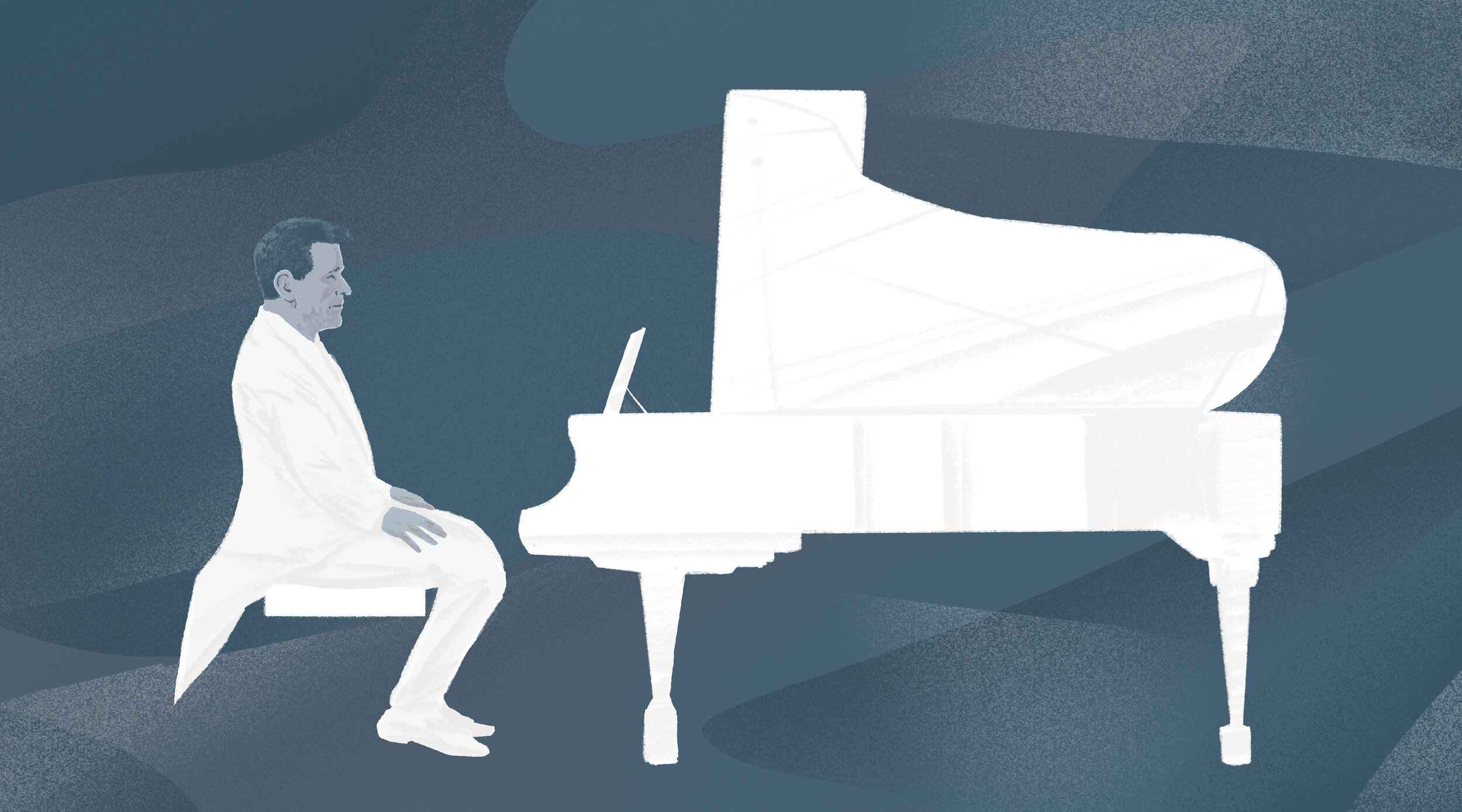
4’33”: John Cage’s revolutionary “silent” musical piece

Art by Jon McCormack.

This episode was written and produced by Martin Zaltz Austwick.

John Cage was a respected composer when, in 1952, he created his “silent piece”, 4’33’’ - a piece that would have the music world scratching their heads. This episode asks whether 4’33’’ is really “silent”, and we explore the history of a piece musicians still talk about today - and speak to the man who campaigned to get it to the top the British charts in 2010. Featuring composers Kyle Gann and Nahre Sol, and artist Dave Hilliard.

MUSIC FEATURED IN THIS EPISODE

Plastic Furniture by Audioblocks
Sleepwalker by Hey Lunar
Minor Stretch by Sound of Picture
Footnote by Martin Zaltz Austwick
A Bad Crossword (Instrumental) by Martin Zaltz Austwick
Snowmelt by Martin Zaltz Austwick
Slow Minnesota by Martin Zaltz Austwick
Am Trans by Sound of Picture
Got Spark by Martin Zaltz Austwick

Twenty Thousand Hertz is produced by Defacto Sound.

Subscribe on ⁠⁠⁠⁠⁠⁠⁠⁠YouTube⁠⁠⁠⁠⁠⁠⁠⁠⁠ to see our video series.

If you know what this week's mystery sound is, tell us at ⁠⁠⁠⁠⁠⁠⁠⁠mystery.20k.org⁠⁠⁠⁠⁠⁠⁠⁠.

Support the show and get ad-free episodes at ⁠⁠⁠⁠⁠⁠20k.org/plus⁠⁠⁠⁠⁠⁠.

Follow Dallas on ⁠⁠⁠⁠⁠⁠Instagram⁠⁠⁠⁠⁠⁠, ⁠⁠⁠⁠⁠⁠TikTok⁠⁠⁠⁠⁠⁠, ⁠Facebook⁠, and ⁠⁠⁠⁠⁠⁠LinkedIn⁠⁠⁠⁠⁠⁠.

Join our community on ⁠⁠⁠⁠⁠⁠Reddit⁠⁠⁠⁠⁠⁠.

Consolidate your credit card debt today and get an additional interest rate discount at lightstream.com/20k.

Try ZipRecruiter for free at ziprecruiter.com/20k.

Check out Kyle Gann’s No Such Thing as Silence: John Cage's 4'33" wherever you get your books.

See Nahre’s work at nahresol.com.

Find Dave Hilliard on Instragram at davehilliardart.

Listen to more of Martin Zaltz Austwick’s music at palebirdmusic.com.

View Transcript ▶︎

You're listening to Twenty Thousand Hertz.

[Music clip - In a Landscape, performed by Stephen Drury]

John Cage was one of the most significant figures in 20th Century music. He was a student of Arnold Schoenberg, but went on to be an influential composer in his own right. His work drew on Chinese and Japanese influences at a time when American society was just starting to open up to these cultures. He influenced avant garde composers like Phillip Glass and Steve Reich, as well as songwriters and artists like Yoko Ono and Lou Reed, and even Aphex Twin. He was also hugely influential in modern dance. What you hear playing is his 1948 piece “In A Landscape”. This version was recorded in 1994 by Stephen Drury.

[music continues]

This piece is actually not very typical of John Cage’s writing - he’s more known for his innovations in music, and his avante garde techniques. As far as John Cage pieces go, this is pretty much as “mainstream classical” as it gets.

But despite his reputation for avante garde writing, no one was prepared for what he did in 1952. This was the year he created the most daring piece of his career - something really “out there”, even for him. It was called “Four Minutes and Thirty Three Seconds” - It was a piece that some critics even refused to call “music”.

[music out]

Kyle: oddly enough, my first experience with 4'33" was playing it on my high school piano recital. I played it when I was 17 before I had heard anybody else play it.

That’s Kyle Gann, a Professor at Bard College. He’s also a composer, and a former critic at the Village Voice.

Kyle: I bought the sheet music in Dallas for 50 cents.

It’s almost ironic that you can buy sheet music for 4’33”. Because for the entire duration of the piece, the performer plays... nothing at all.

Well, to be technically, the performer is playing “rest” but to the audience, it looks like nothing is happening.

Nahre: I think people just looked around at each other and kind of smiled, then a few giggles here and there.

That’s Nahre Sol - composer, musician, and video creator.

Nahre: I was first introduced to John Cage in an academic environment.

Nahre: At first, it didn't really make sense to me, because here I was in the conservatory. I was really concentrated on playing the piano and when I first heard about Four minutes and Thirty-Three Seconds, it's a piece where you're not playing. So, it just didn't make any sense.

John Cage’s 4’33’’ was performed for the first time in the summer of 1952 by renowned pianist, David Tudor. It was at Maverick Concert Hall, which is an outdoor concert hall in Woodstock, New York [SFX: outdoor ambience, small crowd]. The concert featured all new piano music from different composers.

So, what happened here was a pianist walked out on stage [SFX], sat down at the piano [SFX]. Then, to start 4’33” he closed the piano lid [SFX]. He then sat there in silence, doing nothing, playing nothing - for thirty seconds. At that point, he opened the piano lid [SFX]. And immediately closed it again [SFX]**...**

He sat in silence for two minutes and twenty three seconds. Then, he opened the piano lid [SFX] and closed it once more [SFX]**...**

A minute and forty seconds later, he got up and walked off the stage.

The audience had no idea what to think.

[music in]

Nahre: I think it really pushed the edge around what people considered acceptable in classical music or any kind of music and that, in today's context, sounds quite ridiculous, because almost everything has been done in almost every way.

Kyle: A lot of people were kind of bemused by it.

Kyle: Cage's mother asked one of his friends, "Don't you think John has gone too far this time?".

A friend of Cage wrote to him, begging that he not turn his career into a joke.

John Cage had, well if you could call it “created” a piece of music that really challenged some very established ideas about music composition. It’s something that musicians are still inspired by - and still debate - even today.

[music out]

To understand just what John Cage was thinking, let’s back up to the 1940s. Back then, John Cage was making a name for himself composing for “The Prepared Piano”.

[music in]

Kyle: All during the 40s Cage's big instrument was the prepared piano, and the thing about the prepared piano is you put screws or erasers, or tape or anything on the strings of one note, and every note ends up having a different timbre and so you're no longer working with a continuum of pitch, you're working with a whole bunch of distinct sounds.

The music you can hear is Cage’s “Sonata Number Five” from “Sonatas and Interludes for Prepared Piano”, probably his most famous work outside of 4’33’’.

[Music clip: Sonata Number Five continues]

Nahre: What I find interesting is that when you prepare a piano, you're really dealing with a lot of elements of spontaneity and chance, because here you are dealing with foreign objects that are placed in the piano, and because of this set up, there are a lot of things that are unpredictable, once you do it, and it's really hard to keep the outcome consistent [Music clip: Sonata Number Five, chaotic part of song]. So, just by circumstance, you have to embrace that margin of not knowing the outcome. And so, when I was working with Prepared Piano, at first, I was really frustrated because I really wanted to reproduce a certain outcome.

[music out]

The sheet music for prepared piano has some really detailed instructions about where to place each object. But it’s impossible for every performer to have the same piano, or the same screw, or the same rubber eraser. So the sound you get is always different. This was pretty bananas and pretty alien to the way most composers, and musicians are taught to do things.

Nahre: I definitely have been trained to really put a priority on getting as much control as possible. I'm a little bit of a control freak when it comes to just wanting something to sound a certain way and wanting to play something a certain way.

Today we call a lot of John Cage’s work “chance music”. Basically composers of chance music create some guidelines for the performer, but major parts of it are left up to chance. So, every performance is something really special. Never heard before, and never to be replicated. John Cage used ideas from East Asia to find new ways to do that.

Kyle: It was really in 49 and 50 that Cage started getting heavily interested in zen. There was a tremendous influx of Japanese culture into America right after World War II.

The Chinese Book of Changes, the I-Ching, was a huge influence on John Cage. The I-Ching is over two thousand years old, and it’s pretty complex to explain. But basically you generate random numbers - by flipping coins, for example - and the sections that come up tell you something about a decision you need to make. It’s a bit like a Tarot deck, or a magic eight ball - just much, much, much more complex.

Kyle: You ask a question and it would give you any one of 64 answers randomly. And the synchronicity of the universe is supposed to ensure that that answer will be the right one for the moment, and Cage got interested in this idea and started... even before he wrote 4'33", started using the I-Ching in his composing.

[Music clip: John Cage, David Tudor - I]

This piece of music you’re listening to is Cage’s “Music of Changes” - composed by flipping coins and using chance to make music. This version was performed by Martine Joste [Music clip continues: John Cage, David Tudor - I]. You can hear how there are long periods with no music at all, interspersed with big, loud chords, and melodies which seem… well, pretty random.

[music out]

So, John Cage was getting increasingly interested in chance - in letting the universe provide the answer to the question “what note should I play next?”. But to hear the answer to the question, you have to listen. And in the 1940s, listening to the universe was getting harder to do.

[Musak in]

Kyle: The Muzak corporation was founded in 1934. It really took off during World War II and musicians of that generation were horrified by it, as were lots of other people.

Kyle: There was a case that went to the Supreme Court about it, and it was seen as a terrible scourge by lots of musicians. There were musicians who would make lists of restaurants that didn't play Muzak and only go to those.

But there were attempts to shut down the constant background music.

Kyle: In January of that year, 1952, there was a college student in the Midwest who started selling silent records for jukeboxes. So if you didn't want to listen to the jukebox for a moment, you could put in your nickel [SFX: coin going into jukebox] and it'd play a silent record [SFX: button press, needle drop, soft jukebox motor hum].

John Cage became obsessed with the idea of silence - and the idea that, increasingly, people were losing the option to shut out the background noise of the world. He worried that Musak would stop people from being able to hear silence altogether.

Kyle: He gave a lecture in 1948, and announced his idea to write a four and a half minute piece of silence that he was going to sell to the Muzak Company.

Kyle: It started out I think as kind of a political protest. That if you get a silent piece on Muzak, people get to not listen to anything for four and a half minutes.

So 4’33’’ actually started as an attempt to escape from music being imposed on us everywhere we go. But it struck a real nerve, and quickly evolved beyond that.

Cage was starting to think about silence not as the absence of sound - but as the opportunity to listen. And when he visited a truly quiet place, he made a startling discovery.

Kyle: He came up to Boston and visited anechoic chamber at Harvard.

Anechoic chambers are rooms that are acoustically treated to minimise sound to almost zero. There are no sounds in them - at least, not from the room itself ...

Kyle: He said he heard two sounds in motion and the engineer told him one was his nervous system, the other was his blood in circulation. This has been debunked. You can't hear your nervous system. It's been speculated that he probably had tinnitus like I do. I wish that were my nervous system I'm hearing, but it's the echo of past very loud concerts.

I’ve personally experienced an anechoic chamber, and it’s a really wild experience that can completely change your perceptions about sound and silence. Really, I could hear two distinct sounds. I could hear somewhat of a high-pitched hissing noise [SFX]. I don’t know if it’s a mild tinnitus, but it's something I’ve never heard before in my normal life. It really felt like my brain turning up an amplifier just grasping for anything to hear. And the other thing I could hear really clearly was blood pushing through my body [SFX].

Kyle: It gave Cage the idea that wherever we are, even our bodies make sounds. There's no such thing as a silent environment. As long as you're in your body, you're always hearing something.

This is where John Cage’s interest in chance and randomness met his interest in silence. He realised that creating an environment with no distractions wasn’t about creating silence. It wasn’t even about controlling noise. It was about the sounds that were already there, but you suddenly hear for the first time - when you’re really ready to listen.

That’s what’s so often misunderstood about 4’33’’, people think that it’s a joke, and the punchline is… well, nothing at all. But that couldn’t be further from the truth. What John Cage really wanted us to hear the beauty of the sonic world around us.

[music in]

Our world is getting noisier and noiser, and 4’33’’ has even more importance today than it did when it premiered, over 60 years ago. So much so that it recently broke into the UK pop charts. We'll find out how that happened after the break.

[music out]

MIDROLL

[music in]

John Cage was fascinated by the idea of chance. So he started experimenting with “prepared” piano, and later with the I-Ching. His distaste for Musak and interest in silence took him to the quietest place on earth. Once these two strands of his life met, he created one of the most controversial and influential pieces in history.

[music out]

But here in the 21st Century, 4’33’’ went mainstream, and even got into the UK Top 40.

Dave: So Cage against the machine started as a joke really.

That’s Dave Hilliard - a visual artist and psychotherapist - and founder of the “Cage Against the Machine” campaign.

Dave: What gets to number one in the UK music charts at Christmas, is historically quite a big deal. And so what I think had happened around 2009 and those X factor type shows [X-Factor - Joe McElderry - The Climb in], it started to become quite big. So as a reaction against that, you had a Facebook based campaign to try and get Rage Against the Machine [Rage Against the Machine - Killing in the Name Of] to number one at Christmas. They did that kind of, really just off the back of a Facebook page, and it was this really successful “people power” kind of idea.

Amazingly, Rage Against the Machine’s “Killing in the Name” topped the UK charts at Christmas 2009 thanks to this campaign. So in 2010, Dave decided to start his own Christmas number One campaign.

[music in]

Dave: It was a joke really at first, me suggesting 4'33 in the music charts.

It was taking the idea to a kind of ludicrous extreme really. I didn't really have any plans of how it might actually take place. It was literally just me doing something that amused myself. So I created a Facebook page.

At first, the page only had a few followers.

Dave: And I think it grew gradually and after that it started going up into the hundreds. It just started gathering momentum until it got into the thousands really. It was more media attention, and for a while silence became quite hot property. Silence was quite a desirable commodity.

Dave’s Cage Against the Machine campaign shifted from a joke into a reality. He was contacted by a couple of people who had the idea to air 4’33 as a Live Aid promotion.

[music out]

If you’re a child of the 1980s, you might remember the song “Do They Know It’s Christmas?” [music clip in] - with a bunch of celebrities singing in a recording studio as part of Live Aid. Dave and his friends were going to do the same thing… but with 4’33’’.

They managed to bring together some of the biggest names in the UK music scene and booked a studio in London. Performers who couldn’t be in the studio on the day of the recording literally phoned in their performances.

Here is a little bit of that performance.

[Music clip: Cage Against the Machine performance]

So what you hear buzzing in the audio lines and people softly shifting in the room. And yeah… that’s the point. Every performance of 4’33” sounds like the place it is performed. That’s the chance element of the music. When the recording was finished, Dave and his team got ready to share it with the British public.

[music in]

Dave: So yea, there was a Single launch party and somebody, thought it was a good idea to hold it in a London nightclub. It was due to be launched at midnight, but it was just a normal club night. So people had just gone there just for a night out.

When midnight arrived, the DJ stopped the music and played Cage Against the Machine’s version of 4’33’’.

[SFX: music cut out, disappointed audience]

Dave: Most of the people there had not asked to be involved in this performance at all. They hadn't gone out that night and thought, “Should we go and appreciate some avant garde performance art tonight?”. And so at first, if you just stopped playing music in a nightclub at midnight people were quite angry and shouting and “play the music” and “why has this stopped?”.

But, surprisingly, that didn’t last for too long.

Dave: And that reached a peak after about one or two minutes and then it went oddly silent and you could just hear little pockets of people talking and stuff. [SFX: Small conversations] And that was one of my favorite bits actually of the whole experience, was that was like a real enactment of the performance and the people involved in it hadn't asked to be involved in it, but they were having an experience and they were part of the experience and I thought it was wonderful really.

Cage Against The Machine made it all the way to number 21. But for Dave Hilliard, it had never really been about getting it to the top of the charts. For him, that strange moment in a London club was worth all the months of work.

Nahre: It's really about creating the environment for which you can experience sound in a specific way.

That’s Nahre again.

Nahre: Specific, not in terms of how it's imposed onto you, but how you experience that performance. You're just creating a space and that space is filled with sound. I think it's hard to accept for a lot of people to really consider that piece a piece of music, because a lot of the sounds being produced is not by the performer and they're not traditional sounds and there is a lot of silence but I think it really makes you reconsider what silences is, what music is in relation to silence.

Kyle: It's very different depending on where you play it,

This is Kyle Gann again:

Kyle: I find it really significant that the first performances is at a outdoor concert hall in Woodstock, the Maverick Concert Hall [SFX: natural ambience], because you know, it's a wonderful natural environment. When I played it in high school, we sat there and listened to [SFX: HVAC sounds] the auditorium HVAC system. It was a pretty antiseptic space for it, and Cage would have... it's just a much more minimalist performance. Cage would have found that just as legitimate as anything else.

[music in]

John Cage was trying to get us to listen. And this way of listening would have an impact far beyond music.

Dave: John Cage was quite into what we might call Eastern thinking, and things like mindfulness and meditation have been around for hundreds if not thousands of years in those cultures. And in the West we act like we've just discovered mindfulness. Whereas actually these things have been proven to be good for humans for thousands of years.

Mindfulness and Meditation are much more mainstream in the west now - but when John Cage created 4’33’’ in the 1950s, they were relatively new ideas to western audiences.

Dave: It's an experience and that allows you to bring whatever you bring to it. It's not a prescriptive experience and it reflects a lot back to you. That's the sort of thing we'd think about quite a lot in psychotherapy, that all your reactions to things and to other people come back to you and your thoughts and your feelings, it all comes from you. And I think that's a really potentially quite useful and quite profound experience to have. It is what you make it I think. It's what you bring to it.

Nahre: It just makes you a little more present and appreciate things just the way they are, and I think that's what everyone is still struggling to do, which is why Four Minutes and Thirty-three Seconds is still a subject of interest to a lot of people in terms of talking about what exactly is this, what's happening here, what does it mean? Is it really music? Is it sound? Is sound music? Is there a difference? But just really letting go of all of that, and just being and experiencing everything around, including everything that's not happening, it's hard to do.

433 is much more than its face value. Maybe, it’s even more than just a composition. Maybe it’s a philosophical question - unspoken yet universally understood, and worth considering even decades later.

Let’s hear what John Cage had to say in a 1991 interview.

[music out]

John Cage: When I hear what we call music, it seems to me that someone is talking. But, when I hear the sound of traffic, I don’t have the feeling that anyone is talking. I have the feeling that sound is acting, and I love the activity of sound. What it does is it gets louder and quieter, and it gets higher and lower, and it gets longer and shorter. I’m completely satisfied with that. I don’t need sound to talk to me.

When I talk about music it finally comes to people’s minds that I’m talking about sound, and they say ‘you mean it’s just sounds?’, thinking that for something to just be a sound is to be useless.

John Cage reminds us that music doesn’t just have to be about people sitting on a stage and playing complicated things. And that music isn’t the only kind of sound worth listening to. All sounds are worth thinking about.

[music in]

And in this spirit, we’re going to help you play your own version of 4’33’’ right now. And you and what’s surrounding you are going to be the performer. In fact, if you all play along, this might be the largest and most sonically diverse performance of 4’33’’ ever staged - over a hundred thousand completely different versions of 4’33’’ happening around the world, in wildly different places.

But every version of 4’33’’ will be personal. Completely unique to you.

So, make sure you have four and a half minutes to spare, and do not skip. I don’t want you to think about anything else. I want you to focus all of your thoughts into what you’re hearing. Listen for the high frequencies, the lows, the mids. The loud, the soft. The harmonic, the dissonant. Spend this time as mindful and present in your personal real-life sonic environment. Enjoy the magnificence of hearing and listening. The vibration of the world that in turn vibrates your eardrums.

There will be three movements, and I’ll let you know when they start. Get ready to take in the sounds happening around you right now - wherever you are. Here comes the first movement - it’s 30 seconds, starting [music out] now:

[John Cage’s 4’33]

And here’s movement two. It’ll be 2 minutes and 23 seconds.

[John Cage’s 4’33 continues]

And here is the final movement. It’ll be 1 minute and 40 seconds.

[John Cage’s 4’33 continues]

...and that is the end. You did it.

[music in]

Thank you for taking the time and taking part in this international, multi-location performance of John Cage’s 4’33’’.

So, think about what you heard. And remember these sounds not as distractions, but part of the movement and interaction of life; whether it’s calm or bustling, natural or human made. John Cage taught us an incredible lesson, and that’s that quietness is not an opportunity to stop listening. It’s when we really start to listen and finally hear the world as it is. So, no matter what you heard, you can be sure that your version of 4’33” was unique and never to be replicated again.

[music out]

[music in]

Twenty Thousand Hertz is hosted by me, Dallas Taylor, and produced out of the studios of Defacto Sound, a sound design team dedicated to making television, film and games sound incredible. Find out more at Defacto Sound dot com.

This episode was written and produced by Martin Zaltz Austwick, and me Dallas Taylor, with help from Sam Schneble. It was sound designed and mixed by Soren Begin, and Nick Spradlin.

Thanks to our guests Kyle Gann, Nahre Sol, and Dave Hilliard.

Kyle Gann is a composer - find his pieces wherever you listen to music. He’s also the author of No Such Thing as Silence: John Cage's 4'33", be sure to pick that up wherever you get your books.

Nahre Sol is a pianist, composer, educator, and YouTuber, and her website is NahreSol.com - that’s N A H R E S O L dot com.

Dave Hilliard is a visual artist and psychotherapist. You can find him on Instagram at dave hilliard art.

Most of the music in this episode is from our writer, Martin Zaltz Austwick, and I just adore this music. You should go listen to more of this music at pale bird music dot com.

You should also go check out our website, because we’ve posted a few videos related to this episode. The first is Nahre Sol playing a piece for prepared piano. The second is the recording of 433 for the Cage Against the Machine project. Both are so much fun to watch. You can find those at 20k dot org.

Finally, I want you to tell me about your personal 433 performance. Did anything surprising happen? How did it make you feel? Was it a powerful experience, or do you think this whole idea is nonsense? Tell me on Twitter, Facebook, or at hi @ 20k dot org.

Thanks for listening.

[music out]
Recent Episodes

The Seinfeld theme song w/ Composer Jonathan Wolff

Art by Zach Christy

This episode was written and produced by Casey Emmerling.

No bass for you!! In 1987, TV composer Jonathan Wolff was still trying to make a name for himself in Hollywood. Then one day, he got a call from Jerry Seinfeld, who needed music for his new sitcom. This is the story behind the unforgettable music of Seinfeld, and how Jonathan Wolff’s unique approach helped make Seinfeld a TV classic.

MUSIC FEATURED IN THIS EPISODE

Bit Rio by Sound of Picture
Slotcar by Sound of Picture
Reddit by Sound of Picture
Sunny Day (Instrumental) by Kylie Odetta
Swing It by Joseph William Morgan
Our World (Instrumental) by Sonny Cleveland
Nocturne in E flat Major, Op. 9 No. 2 by Will Herrington
If It Ain't Broke (Instrumental) by Sonny Cleveland

Twenty Thousand Hertz is produced by Defacto Sound.

Subscribe on ⁠⁠⁠⁠⁠⁠⁠⁠YouTube⁠⁠⁠⁠⁠⁠⁠⁠⁠ to see our video series.

If you know what this week's mystery sound is, tell us at ⁠⁠⁠⁠⁠⁠⁠⁠mystery.20k.org⁠⁠⁠⁠⁠⁠⁠⁠.

Support the show and get ad-free episodes at ⁠⁠⁠⁠⁠⁠20k.org/plus⁠⁠⁠⁠⁠⁠.

Follow Dallas on ⁠⁠⁠⁠⁠⁠Instagram⁠⁠⁠⁠⁠⁠, ⁠⁠⁠⁠⁠⁠TikTok⁠⁠⁠⁠⁠⁠, ⁠Facebook⁠, and ⁠⁠⁠⁠⁠⁠LinkedIn⁠⁠⁠⁠⁠⁠.

Join our community on ⁠⁠⁠⁠⁠⁠Reddit⁠⁠⁠⁠⁠⁠.

Check out SONOS at sonos.com.

Find Jonathan on Instagram and on Twitter.

You can reach Steve at stevelack.com

Check out An Arm and a Leg wherever you get your podcasts.

View Transcript ▶︎

[SFX: Seinfeld intro shaker]

You’re listening to Twenty Thousand Hertz.

[SFX: Seinfeld theme song]

Seinfeld is one of the most successful sitcoms of all time. During the nine years that it ran, Sienfeld had millions of viewers. It won ten Emmys, three Golden Globes, and its cast have become superstars.

Seinfeld ended over twenty years ago, but it’s still very much alive. It has a huge, obsessive fanbase, and still gets referenced all the time. It’s theme song, that we’re hearing now, was unlike any theme song that came before it, or has come after. And there’s a crazy backstory behind that wacky slap bass.

[SFX: Seinfeld theme song out]

But before we get into it, I need to tell you about my friend Steve.

[music in]

Steve: My name is Steve Lack and I am a post-production audio mixer and sound designer.

Steve and I worked together years ago when we were both sound designers at the Discovery Channel.

Steve: I consider Dallas one of my best friends. I really love Dallas.

Steve: We were both the night shift guys and we'd both come in around 6:00.

Steve: Night shift is generally unsupervised. You come in, you get your assignments, you work on your mixes, you work on your work, and then when you feel like taking a break, you take a break.

To give you a picture of what Steve’s like, he’s the type of guy who’s lived 100 different lives. Like the time he was a circus drummer and got into a fist fight with a clown. Or the time when he dropped everything moved to Trinidad. Or the time he was doing things he should’ve have been doing in a parking garage that collapsed hours later in the Northridge earthquake... yeah, Steve is easily one of my favorite people in the world.

Steve: I would wander over to his suite or he would wander over to my suite and we would talk politics or the events of the day or sound design or whatever. But we got to be pretty good friends because we had several hours of quiet time at night where we could just hang out and chat.

During one of those random late nights, Steve told me about the time he worked on Seinfeld.

[music out]

[SFX: record scratch]

Wait, what?! So apparently in the late 80s and early 90s, he’d been an assistant to a TV composer named Jonathan Wolff.

[music in]

Jonathan: When I first moved to LA, I was 17 years old.

...and that’s Jonathan. He’s composed the music for 75 TV shows, including Will & Grace, Married With Children and Who’s the Boss. But no one becomes a major TV composer overnight. Jonathan spent his first decade in LA doing musical odd jobs and making connections.

Jonathan: The studios were happy to have me, they treated me like a Swiss Army multi-purpose utility tool for musical chores, because I had good training in a wide range of fields.

But after ten years, Jonathan was ready for a change.

Jonathan: I decided that I no longer wanted to continue having the telephone dictate to me where I was going to work each day, and what I was going to do when I got there. So, I declared myself a composer.

Jonathan wrote letters to all of his Hollywood contacts. He thanked them for their support, but asked them to stop sending him these low-level musical jobs. Instead, he wanted to compose original music. This was a huge risk. It’s like an actor who’s only ever had bit parts deciding that he’ll only accept lead roles from now on. Jonathan knew he might regret it, but he mailed those letters anyway.

Jonathan: Then, I held my breath.

[music pause]

Jonathan: I may have just nuked the last 10 years of my life.

[music resume]

Jonathan: But, when those letters started arriving at their destinations, all over Hollywood, people just shrugged and said, "Well, that's too bad. He's a good utility guy." And then, they started throwing me little writing assignments, song writing assignments for their movies, and scoring assignments and that is how my composing career began.

[music out]

This is around the time that Steve got hooked up with Jonathan.

Steve: He landed Who's The Boss and he was doing some other afterschool specials and starting to really take off as a TV composer. And so he was looking for somebody to help out with MIDI tech, engineering, some orchestration and transcriptions, setting up gear and all that stuff. I wore many hats.

Gradually, more and more jobs started coming in.

Steve: We were doing Who's The Boss.

[SFX: Who’s the Boss Theme]

Steve: We did some Who's The Boss spin off shows. Some other sitcoms.

But getting connected with Jerry Seinfeld happened almost by chance.

Jonathan: It turns out, in real life, Jerry has a best friend named George. It's George Wallace, the comedian.

[George Wallace Clip: You know what makes me sick - people saying stupid stuff. I got off the airplane today, a man said to me, “My wife gonna die when I tell her I saw you.” I said, “Well don’t tell her.”]

Jonathan: George Wallace and I have been buddies for a long, long time. When Jerry Seinfeld confided to his best friend George Wallace that he was having trouble with the music for his new show, Wallace said, "Hey, call my buddy Wolff.” So, I got a phone call from Jerry Seinfeld.

Jonathan: He described to me a sound design issue. He told me that the music for his new show, which, at the time, was called, The Seinfeld Chronicles, the opening credits for that show would be Jerry, standing in front of an audience. He tells jokes…

[Standup Clip: Oscar Meyer is expanding his little area. It’s not little anymore, is it? Oscar Meyer is now a huge, monstrous place. That area, that whole section there keeps getting bigger. And for him it’s not easy to come up with new products. You realize for Oscar Meyer to come up with a new product, he has to invent meat. Folks, there is no olive loaf animal, as far as I know.]

Jonathan: People laugh.

Jonathan: That's the opening credits. And, he wanted music to go with it. I told him right away, that sounds like an audio conflict, because what we really need to hear is you telling jokes and people laughing.

Ya see, TV theme music leading into Seinfeld were these epic belting lyrical odes. Like the Golden Girls [SFX], A-Team, Family Ties, Dukes of Hazzard, or my personal favorite as an 80’s kid - Transformers [SFX]. All of these songs were designed to play in the clear, not as a device to prop up dialogue.

Jonathan: Theme music in the late eighties on TV was melodic. There was a lot of sassy saxophones…

[SFX: Facts of Life Theme: "When you’re learning the facts of life."]

Jonathan: And silly lyrics.

[SFX: Charles in Charge Theme: "Charles in charge of our days and our nights."]

Jonathan: I'm guilty of creating a lot of that kind of music, but it was not going to work in this case.

So Jonathan pitched a crazy idea: Instead of making a traditional theme song with verses and a catchy chorus, he would build music around Jerry’s standup bits.

Jonathan: So I pitched to Jerry, "How about this? How about we treat your human voice as the melody of the Seinfeld theme? Every time you do a different monologue will be a variation on the theme. My job, Jerry, will be to accompany you in a way that works well with your human voice, but does not interfere with the audio of you telling jokes."

Jonathan: “For example the human, organic nature of your human voice might go well with the human, organic nature of my human lips, tongue, finger snaps. Like this [SFX: finger snaps, mouth/tongue movements in a rhythmic way]." I had his attention, because that was music from Mars in the late eighties. Sampling was in its infancy. He said, "How's that work?"

Jonathan: And I said, "Come on over."

Jonathan had to prove he could make music that was memorable and fun, but didn’t distract from Jerry’s standup.

Jonathan: I threw it up against one of his monologues.

Jonathan: He liked what I showed him. He held the phone up to the speakers so that Larry David could hear it over the phone [SFX]. Larry liked it. That was, at that time, the entire approval process for the Seinfeld theme.

[music in]

Unfortunately, the network was less impressed.

Jonathan: There was a meeting, where they laid out some conditions. And the first thing on the list was music.

The network executives had some major concerns.

Jonathan: "What's up with the music? What is that sound? What's with the popping? What instrument is that? Can we not afford real music? It's distracting, it's weird, it's annoying."

Jonathan: When he said “annoying,” Larry David perked up. Larry, as you may know, likes to be annoying. So, I turned to our boss and huddled with him, and Larry, and Jerry and said, "Look, guys, I'll change the music, it's not a big deal.”

Jonathan: Larry David would have none of it. He just started yelling at me. He says, "What do you mean? What do mean, Wolff? Get out! You're done here. Out!" and I left the meeting because Larry David had thrown me out for suggesting that maybe we would change the music. Obviously, Larry hung tight on the music, and the music stayed in the picture. He's the hero of that story.

[music out]

So what made up this so-called “annoying” music? Let’s break it down to it’s essential parts. First up is that iconic slap bass.

[SFX: Bass fill 1]

Jonathan: At the time, slap bass was an element of funk music, buried in the mix. It had not yet enjoyed celebrity status as a solo instrument. I brought it forward, illuminated it, put it hot in the mix. It sounded kind of quirky.

[SFX: Bass fill 2]

Interestingly, these bass lines weren’t played on a real bass. Jonathan actually played them on a keyboard controller that could trigger different samples, including bass sounds.

Jonathan: It was about at that time that sampling was becoming really usable and I used Seinfeld as a proving ground for that bleeding edge technology.

To get the sound for the original Seinfeld bass, Jonathan and Steve took bass patches from two different devices and blended them together.

Steve: The actual original bass sound was a Roland D550 Popper and… a Korg M1 Slap Bass.

Steve: I think he started out with the M1 [SFX] and felt like it wasn't cutting enough, so then we added that D550 Popper in there [SFX], which had kind of more of an edge to it. And what I would do is, I would kind of get a balance between these 2 synths, while he was playing. Until we kind of just nailed exactly the right sound.

Jonathan: The bass line of Seinfeld [SFX: Seinfeld bass ling], the actual music of it, so basic, so simple, It did not require four beats to a bar, it did not require meter at all to hold water. I could stop and start the bass to make allowance for the timings of his jokes, and his punchlines, and the people laughing.

Then there are those “organic” sounds that Jonathan mentioned.

[SFX: Mouth Sounds]

Jonathan recorded these noises himself using his fingers and mouth, and mapped them to his keyboard so he could play them on the fly. Combine that with a simple shaker...

[SFX: Shaker]

These noises served as the rhythmic backbone of the Seinfeld theme. Even the tempo was set around Jerry’s comedic timing.

Jonathan: I watched Jerry's standup comedy. I noticed that he has a lyric sensibility about the way he delivers his lines. The way he moves, his choreography, his facial expressions move. There was a meter to it, that I put different clocks on. Finally, I settled in on [SFX: snaps] about 110.

[SFX: Jerry: I don’t think people think of their office as a workplace, I think they think of it as a stationary store with Danish. You know what I mean? You wanna get your pastry, your envelopes, your supplies, your toilet paper, six cups of coffee and you go home.]

Jonathan: And that seemed to work well with the metrics of Jerry's comedy. So, that became the tempo of the Seinfeld theme, in general.

A few other musical elements were used to emphasize punchlines and other key moments.

Jonathan: There was some horns... [SFX]. In Vaudeville, when someone told a joke, there'd be a rim shot [SFX]. Well, my music served the aural space of that. So, the horns would accentuate the end of jokes, and the end of the monologue itself.

Let’s listen to the opening monologue from the episode “The Mango.” Notice how the musical elements ebb and flow to match Jerry’s delivery.

[SFX: “The Mango” monologue.]

Jonathan: The idea of having to recreate a recording of the theme every episode was a new concept. I treated it like Lego music. These were elements that could be modularly manipulated to fit the individual timings and the overall length of each monologue. I knew that if this show went anywhere, I was going to have to recreate music bespoke for each monologue.

And so he did. To score an episode, Jonathan would watch and rewatch every scene, playing along on his keyboard to what was happening on screen.

Jonathan: They had to be done to picture so that the timings would be right. And so that I could maybe use some of his choreography, sometimes he would do things with his hands or his head that would give me musical instruction.

The music wasn’t just customized for the monologues, but also for the unique transitions between scenes. Like going from the terminal to the plane in the episode called “The Airport”:

[SFX: Transition 1]

Or from the cafe to Jerry’s apartment in “The Gum”:

[SFX: Transition 2]

Or when the gang ends up in a sleepy Massachusetts town in “The Finale”:

[SFX: Jazzy version]

This level of customization was completely unheard of in Hollywood.

[music in]

Most shows have one main theme song and a handful of filler tracks that get reused over and over. But on Seinfeld, every single episode is unique. It would have saved tons of time and effort to do things the normal way. But that perfectionism is exactly what makes Seinfeld feel so polished, even today.

But the main theme only scratches the surface of Jonathan’s work on Seinfeld. As the show progressed, Jonathan got to play around with a wide range of musical genres and tropes. These unique tracks underscored some of Seinfeld’s most hilarious and memorable scenes. That’s coming up, after the break.

[music out]

[MIDROLL]

[music in]

When creating the music of Seinfeld, composer Jonathan Wolff took a revolutionary approach: For each episode, he built the music around Jerry’s opening and closing monologues, and added unique transitions between scenes. This means that no two episodes are alike. Even the bass sound itself changed over the course of the show.

[music out]

Jonathan: The Seinfeld bass progressed, it evolved. In fact, there were multiple Seinfeld basses throughout the show. It became a thing around my office for my staff, to leave me gift bass samples to weave into Seinfeld cues [SFX].

It made it more fun and, for Seinfeld connoisseurs... they note how the Seinfeld bass sound changed from season to season, and from episode to episode sometimes.

As for the actual melodies, the early season transition music tends to stay a lot closer to the melody of the main theme song. Like this.

[SFX: Early Transition]

In the later seasons, the bass fills get a lot wackier:

[SFX: Later Transition]

There were also plenty of opportunities to branch out from the main theme, depending on what the script called for.

[music in]

Jonathan: About a week before an episode begins shooting, each production department receives a script, so they can prepare. Wardrobes, props, set dressing. My music editor would read the script, and database a to-do list of music pieces, and/or on-stage music assistance that this episode might need. Sometimes it's necessary to pre-produce music before they shoot the scenes. For example, when there's on-camera singing or dancing, I would need to create the music recording far enough in advance so the other departments, the actors, dancers, choreographer, director, camera crew, had time to prepare for the shoot.

[music out]

Jonathan: For example, I had to create the instrumental tracks for Jason singing “Believe It or Not, George Isn't At Home” in advance for playback during the audience shoot.

[SFX: Answering Machine]

Jonathan: Kramer's head-banging metal.

[SFX: Car song]

Jonathan: Rochelle, Rochelle: The Musical.

[SFX: Rochelle Rochelle song]

Jonathan: And Kramer's photoshoot of semi-naked George.

[SFX: Photoshoot song]

Jonathan: Also, in post is the time to create underscore music that heightens a dramatic or emotional scene, or serves as a comedic device.

Jonathan: In “The Hot Tub” episode, Elaine wanders the cold night streets, upset about her writer's block. The music is, at first, worried. Then, at the end, triumphant as she solves her Himalayan walking shoes assignment.

[Seinfeld Clip: Elaine: My back aches, my heart aches, but my feet… my feet are resilient. Thank God I took off my heels and put on my Himalayan walking shoes!]

Or the sentimental music that plays when George, and later Jerry, watch happy couples on the pier and decide to get married.

[SFX: Pier music]

Jonathan: On Seinfeld, cinematic action music with chase scenes became a thing. Jerry chasing Newman, the cable guy chasing Kramer, the geriatric bike gang chasing George, and the German tourist chasing Kramer. And that became a recurring Seinfeld comedy tradition. I always scored the Seinfeld chases in post as if they were serious, dramatic chases.

[SFX: Chase Music]

Jonathan: Same with, you know, Jerry's dream sequence, Tarantino-esque death scene in “The Baby Shower.”

[SFX: Shootout music]

Jonathan: Or, in “The Frogger,” when Jerry runs from The Lopper.

[SFX: Lopper music]

Jonathan: You get the idea. There's these moments for me to go over the top, silly, movie underscore.

[music in]

Jonathan: So, there was music in pre-production, there was music in post-production, and sometimes my duties were on set.

Because of the fast-paced filming schedule, Jonathan typically had just a single day to complete each episode.

Jonathan: In general, for a normal episode, I liked one full calendar day between receiving an episode and delivering finished music.

It was a hectic schedule, but all that hard work paid off. Seinfeld became a smash hit, and stayed that way all the way through it’s final season. The 1998 finale had 76 million viewers, making it the third most-watched finale of all time.

[music out]

Steve: It’s just such an interesting point in television history.

Steve: It's like working on Mary Tyler Moore.

[SFX: Mary Tyler Moore Theme: “You’re gonna make it after all”]

Steve: Or going back, if you worked on The Lucy Show.

[SFX: The Lucy Show Theme]

When a TV show captures a wide enough audience, it becomes a shared memory for a whole generation. A show’s theme song can be a huge part of that.

Jonathan: Often, the theme not only reflects the show's sensibilities, but also welcomes the audience by bridging the gap between the show's set and the viewer's living room.

Jonathan: I didn't write it, but the Cheers theme does that so well.

[SFX: Cheers Theme: “Sometimes you wanna go where everybody knows your name.”]

Jonathan: You really feel welcome to that show, because of the theme.

Jonathan: A TV theme like no other production element, transports you into the world of the show itself [SFX: Cheers theme]. TV themes are woven into the fabric of our personal experiences, like the soundtrack of our lives. Familiar themes, like Seinfeld, serve as pop cultural touchstones, marking times and places in our lives.

Jonathan: For me, those lifeline markers include themes like Mission Impossible…

[SFX: Mission Impossible Theme]

Jonathan: Pink Panther…

[SFX: Pink Panther theme]

Jonathan: Beverly Hillbillies…

[SFX: Beverly Hillbillies Theme: “So they loaded up the truck and moved to Beverly. Hills, that is.”]

Jonathan: For my kids, it's probably the Friends theme song.

[SFX: Friends Theme: I’ll be there for you, as you’re there for me too.]

Jonathan: People hold warm, fuzzy connections to the TV themes in their memories.

[music in]

For the millions of Seinfeld fans out there, the show’s music will always hold a special place in their hearts. So what was it like to work on something monumental?

Steve: Oh, it was great. I mean, the thing with Jonathan was, he had been in the business five or six years longer than me. I was a young guy. I was looking to break in and learn the ropes and he was just so helpful. He started many careers. Everybody who worked for him after me and at the same time I was there has gone on to big Hollywood careers… and it's all because of his mentorship and his guidance. He was really a giving person. He wasn't jealous of the success. He shared it.

Jonathan: I'm happy that the Seinfeld music became a unique identifying signature for the show. It became Seinfeld’s sonic brand. That satisfies me a lot, that even apart from the show, even when there's no picture to go with it, they recognize it as being the Seinfeld theme.

[music out]

[music in]

Twenty Thousand Hertz is hosted by me, Dallas Taylor, and produced out of the studios of Defacto Sound - a sound design team dedicated to making television, film and games sound incredible. Find out more at defactosound.com.

This episode was written and produced by Casey Emmerling, and me, Dallas Taylor. With help from Sam Schneble. It was sound edited by Soren Begin. It was sound designed and mixed by Jai Berger and Colin DeVarney.

Special thanks to our guests Jonathan Wollf and Steve Lack. Jonathan says he loves hearing from fans.

Jonathan: The fans find me on my Instagram or Facebook. It's easy to find me. My handle is “SeinfeldMusicGuy.” If you're listening to this, and you want to reach out to me, please do. I'll respond.

You can get in touch with Steve through his website, stevelack.com.

Finally, I also love your feedback! You can reach out to me and the rest of the team over through Facebook, Twitter, or by writing hi@20k.org. Also, if you haven’t checked out our website, you’re really missing out. Be sure to check it out at 20k dot org.

Thanks for listening.

[music out]

Recent Episodes

Sonic Wonderland: The world’s most incredible sounding places

Art by Zach Christy

This episode was written and produced by Fran Board.

There’s a reason we call tourists “sightseers”. As a society, we’re totally obsessed with the way things look. But our world is full of beautiful, fascinating and bizarre sounds. Join us on a sonic adventure around the world, as we climb up sand dunes, plunge into the Arctic Ocean, and even travel back in time. When we celebrate these treasures, we become better listeners and the world becomes a richer and more exciting place. Featuring Trevor Cox, author of Sonic Wonderland and Now You’re Talking.

MUSIC FEATURED IN THIS EPISODE
Faded by Vesky
Flares (No Oohs and Ahhs) by Roary
Cherries by Sound of Picture
Theme in G by Sound of Picture
Little Black Cloud by Sound of Picture
Pineapple by Sound of Picture
Daydreamer by Sound of Picture
Lake Victoria by Sound of Picture
Lazy River by Sound of Picture

Twenty Thousand Hertz is produced by Defacto Sound.

Subscribe on ⁠⁠⁠⁠⁠⁠⁠⁠YouTube⁠⁠⁠⁠⁠⁠⁠⁠⁠ to see our video series.

If you know what this week's mystery sound is, tell us at ⁠⁠⁠⁠⁠⁠⁠⁠mystery.20k.org⁠⁠⁠⁠⁠⁠⁠⁠.

Support the show and get ad-free episodes at ⁠⁠⁠⁠⁠⁠20k.org/plus⁠⁠⁠⁠⁠⁠.

Follow Dallas on ⁠⁠⁠⁠⁠⁠Instagram⁠⁠⁠⁠⁠⁠, ⁠⁠⁠⁠⁠⁠TikTok⁠⁠⁠⁠⁠⁠, ⁠Facebook⁠, and ⁠⁠⁠⁠⁠⁠LinkedIn⁠⁠⁠⁠⁠⁠.

Join our community on ⁠⁠⁠⁠⁠⁠Reddit⁠⁠⁠⁠⁠⁠.

Consolidate your credit card debt today and get an additional interest rate discount at lightstream.com/20k.

Check out SONOS at sonos.com.

Check out and subscribe to Reveal wherever you get your podcasts.

View Transcript ▶︎

You're listening to Twenty Thousand Hertz. I'm Dallas Taylor.

[music in]

We’ve all heard of the Seven Wonders of the World. And there’s actually a bunch of these lists. There’s the Natural Wonders [SFX: jungle atmosphere], Underwater Wonders [SFX: underwater atmosphere], Engineering Wonders [SFX: heavy machinery], and Architectural Wonders [SFX: construction site]. But what about sonic wonders?

The truth is, we are obsessed by the way things look. After all, there’s a reason we call tourists “sightseers”. But there’s a wealth of amazing sound out there that’s totally being underappreciated.

So today we’re becoming sonic tourists, and we’re going to explore some of the world’s most magical sounding places.

This adventure is inspired by the book Sonic Wonderland. Its author, Trevor Cox, started coming across interesting and unexpected sounds during his work as an acoustician.

[music out]

[music in]

The eureka moment that inspired the book came to him in an unexpected way. Here’s Trevor.

Trevor: I was down a sewer of all [SFX: Sewer atmosphere] places and heard this really strange sound effect. [SFX: Voice effect on Trevor]

Trevor heard that the sound in the sewer was spiraling all around.

[SFX: Voice effect and swirling on Dallas]

Trevor: I was both amazed as a human being, what's that sound? But as a scientist, I'm going, "Oh, what's creating that?"

Trevor: And it got me wondering about what the most amazing sounds might be in the world.

But when Trevor looked for answers, he was surprised to find that there wasn’t much information out there.

Trevor: I mean, it's interesting that there's not that many books about sound really. There’s quite a lot of books about music, but sound in general; there's a few books on silence, a few books about noisy worlds and how everything's becoming awful and noisy. But actually writing about sounds is unusual.

It turns out, we don’t tend to celebrate interesting sounds. Trevor wanted to change this, so he set out on a mission to find the most unusual and mind-blowing sounds our planet has to offer. This is how Sonic Wonderland was born.

So buckle up, [SFX] because we’re on our way to the Kelso Dune Field in the Mojave Desert to find our first sonic wonder.

[music out]

[SFX: Wind]

[music in]

You have to be a very dedicated sound explorer to experience this sound in person. The Kelso Dune Field is vast. It covers over sixty square miles and it's biggest dune is an absolute monster at 650 feet tall.

If that wasn’t daunting enough, the dunes only sing under very specific conditions. First, the sand needs to be at its driest. So, this involves visiting the desert in the height of summer.

Trevor: It's incredibly hot in the middle of summer, so it's a struggle to walk [SFX: walking in deep sand] up them to start with.

Trevor: The sand has to be really dry and it has to be just the right dune. The grains have to be all fairly similar size and have the right coating for this to work.

Then, once you’ve found the perfect sand, it needs to move. Sometimes this happens spontaneously when the wind picks up and creates these mini avalanches.

[SFX: Sand dunes singing]

[music out]

If you’re not lucky enough to be there on a windy day, you’ll need to do the hard work yourself.

Trevor was prepared for the heat, but not for trudging up and down sand dunes all day while they’re at their most slippery. He was also holding his breath to keep from ruining the recordings.

Trevor: You know when you're in the right place almost immediately ‘cause you walk on the dune, you get this weird sort of… it sounds a bit like a bad played tuba.

[SFX: sand dunes burping]

After you’ve finally made your way up, sliding down the dunes is a lot more fun.

Trevor: What you have to do is sit down in your backside [SFX], scoot down the side of the slope [SFX] and create the avalanche yourself. [SFX: sand dunes sliding] And when you do that, you can actually feel the dune vibrating under you.

[SFX: Sand sliding]

Trevor: And of course, being a desert, it's really quiet. So, it's really impressive to listen to.

Trevor: I think one of the wonders about trying to get these sounds is finding things that are unusual and out of the way and quite rare. And this is an example of quite a rare sound.

Singing sand dunes have historical significance too. Marco Polo and Charles Darwin wrote about them. And ancient texts describe how people in China would rush down the dunes as part of their dragon festivals, creating a huge roar of sound.

[SFX: Dragon sand dune roar]

So maybe in the past we were a little better at exploring sound? Trevor thinks this might be the case.

[music in]

Trevor: Partly it's because we’re visually dominated as a species, especially since writing happened, you know we conveyed lots of information for our eyes.

Trevor: In the past we've had more ways of sharing images and we've had more dependency on image for communication of information.

Before we could write, people had to listen very carefully to information. Nowadays, we can stop, pause, and rewind so it’s easier to take sound for granted.

People used to take more time to stop and appreciate sound. Trevor has even found 17th Century lists of sounds, describing different kinds of echoes. One type of echo that was written about a lot is known as a “whispering gallery.”

[music out]

Whispering galleries are great fun to explore with a friend. [SFX: Museum atmosphere] They owe their special sound to their curved shape.

Trevor: Whispering gallery effect is when you go to one side of, say a sphere or curve, and you whisper into it. And the sound whizzes around the inside of that curve to your friend on the opposite side.

[SFX: whispering on left and right]

Trevor: So, you can have lots of fun with your friends and actually make them think the sound is coming from the wrong direction.

[music in]

You can find whispering galleries around the world: The Mapparium in Boston, the US Capitol Building in DC, Grand Central Station in New York City, and St Paul’s Cathedral in London. But the most fun places are the ones that are less well-known. Because, well, they have less rules.

Trevor: When you get to religious sites you have to whisper, and it's actually much more fun to go to a place where you can really let rip and shout.

Trevor: You can go there and you can get your guitar, you can burst balloons, you clap your hands, you can whoop and you can make lots of sounds.

One place like this is an abandoned Cold War listening station in Germany that acts as a whispering gallery. It’s called Teufelsberg and sound aside, it’s quite an interesting place.

Trevor: It's up on a high hill and there's these spherical domes up there, which used to hide spy equipment.

Trevor: Teufelsberg's quite a strange place, partly because it's a health and safety nightmare. So, if you're up in the main dome, there's a great big hole missing. And a lot of the stuff is graffitied and in quite a mess.

Trevor: That's probably the most impactful aspect of going ‘round it, it is a sense of slight danger.

[music out]

Here’s Trevor talking inside the dome. Hear how his voice hugs the inside of the walls.

[SFX: Whispering gallery voice]

Trevor: [with echo from whispering gallery] It’s quite a, a weird place to talk; you can probably hear. And if I clap on the floor, bang with my foot [Trevor stomps his foot], you can hear the sound repeatedly bouncing and being focused back to me.

Of course, being an avid sound explorer that he is, Trevor’s made all sorts of noises in here. Bursting a balloon was one of his favourites.

[SFX: Whispering gallery balloon]

That reverberating noise you can hear is the sound doing laps around the dome’s curved walls, until it eventually dies away.

[SFX: Balloon reverberation dies out]

[music in]

Exploring sound is rewarding and entertaining. But there’s often more to these sounds than first meets the ear.

To find our next Sonic Wonder, we’re leaving Germany and whizzing across the ocean [SFX: airplane flying overhead] to Mexico, and the Mayan ruins of Chichén Itzá. You might’ve seen photographs of its iconic pyramid with steps running up each side. It’s actually one of the New Seven Wonders of the World. And its sound is pretty wonderful too.

[music out]

[SFX: Jungle atmosphere]

The sound of Chichén Itzá is no great secret.

Every year over a million people visit the ruins and, as tours reach the famous main pyramid, the guides stand a few meters back and ask everyone to start clapping their hands.

Trevor: When you clap your hands, what you get is you get a chirping sound.

[SFX: Chichén Itzá chirping clap sound]

We know from acoustic science how the noise is created. Each step gives a little reflection and these slowly space out a bit, which gives you the dip in frequency and the chirping sound [SFX: Chichén Itzá chirping clap sound continued]. But what other secrets might it unlock?

Trevor: The interesting thing about Mayan pyramids is, does it give us an insight into what our ancestors were thinking?

Trevor: Did our ancestors know about that sound? Was it done in any way deliberately? Or even if it wasn't deliberate, did they find out after they built the pyramids, "Oh, it makes this interesting sound. Let's use that in our ceremonies."

Chichén Itzá isn’t the only place in the world that makes this sound.

Trevor: You can experience this effect you get at this pyramid just by finding a staircase which is away from other buildings, which is quite rare, but you can find them, you can find them in soccer stadiums, for example.

But some acousticians believe the pyramid’s chirp is a deliberate part of its design. They say the clue lies in the sounds of the local birds.

Trevor: So, the suggestion with the chirping Mayan pyramids is that it imitates the sounds of the Quetzal bird, which is a very important ceremonial birds to Mayans.

Quetzal birds are found in the very same area of Mexico. They were celebrated by the Mayans and you can hear they do sound similar.

[SFX: Quetzal bird]

[SFX: Chichén Itzá clapping]

[music in]

So as sound explorers we can not only travel the world, but also travel back in time to hear these sounds as they would’ve been heard many, many years ago.

But our journey isn’t over. We’ll venture through dark caves, the Arctic Ocean, and mysterious towers. That’s all coming up after this.

[music out]

[MID ROLL]

[music in]

So far on our travels we’ve slid down sand dunes, explored whispering domes in abandoned spy towers, and visited the Mayan Pyramids of Mexico.

Now, we’re going underground to hear how some of the world’s most beautiful sounds come from stone.

[music out]

Luray Caverns in Virginia was discovered in 1878. [SFX: cave ambience, water dripping]

Trevor: It's the most amazing place full of most amazing cave formations.

Luray Caverns is a big space and it’s full of stalactites and stalagmites. Walking [SFX] all the way through takes about an hour, and it’s at the end of the tour when things get even cooler.

[SFX: The Great Stalacpipe Organ]

Trevor: For the acoustician, you want to get to the end of the tour where you're walking into this chamber, and there will be what looks like a church organ in the corner.

This organ is called the Great Stalacpipe Organ and it’s made by tapping the cave formations. It’s actually what we’re hearing right now.

[SFX: The Great Stalacpipe Organ continued]

Trevor: If you get the right cave formation, when you hit it with a hammer, it will make a nice sorta ‘ding’, kinda sound.

And so in the 1950’s one dedicated engineer set to work turning Luray Caverns into the world’s largest natural instrument. Now, there is a keyboard connected to 37 naturally tuned formations in the cave. And it can be played like a real traditional organ.

Trevor: He actually spent many years going around tapping the cave formations to find ones that are roughly in tune and ring nicely.

Trevor: And of course being in a cave, it's got that reverberant ethereal sort of ringing of the sound, so it is quite a wonderful kind of experience to listen to it.

No list of special sounds would be complete without at least one from the animal kingdom. There are way too many of these to choose from, so here’s a strange sound that you probably haven’t heard before.

Wrap up warm because we’re heading for the Arctic Ocean, [SFX: Wind, footsteps on snow and ice] somewhere between Norway and the North Pole. And the sounds we’re listening for won’t be heard on land.

Trevor: Some animals make the most peculiar sounds and I think of some of the most odd ones come underwater actually.

So, we’re diving in with an underwater microphone called a hydrophone. [SFX] The animal we’re listening out for is the bearded seal. They are enormous beasts with, as their name suggests, thick bristles on their faces. Here they come now.

[SFX: Bearded seal]

Yep, these weird, alien-like noises, are Bearded Seals.

Trevor: You get this most incredible sound where they sing these glissandos, a bit like I'm playing a trombone and gradually lengthen the trombone to give you a lower and lower note.

Trevor: These glissandos go on and on and on and actually they can last half a minute.

These calls are all part of an elaborate mating ritual. I mean, who wouldn’t be charmed by these sounds.

Trevor: Of course what they're trying to do is signal to a female, because he's a male calls to a female that, "Come over here, I'm the right person to, kind of, mate with." And if the females latching onto some vocal trick they've got, that vocal trick will get more and more exaggerated to be more and more appealing to the female.

The lady seals apparently couldn’t get enough of these eerie sounds, which is why they evolved into such long elaborate displays. And to add to the display, they’re also swimming round in circles and blowing bubbles.

[SFX: Bearded seal and bubbles panning left / right in circles around us]

Trevor: The glissandos presumably over evolutionary time, have become longer and longer to make them more and more impressive or that progresses singing and it's one of those signatures that they have put across to the females to get their mate.

We’ll finish our journey in Trevor’s hometown of Manchester, England, to prove that sonic wonders can be found right on your front doorstep.

[SFX: Beetham Tower]

A few miles from Trevor’s home is a skyscraper called Beetham Tower. The architects wanted it to be the tallest residential building in Europe, so to make the building a little bit taller, they included an extra decorative structure on top.

Trevor: When they first built it, they suddenly realized when the winds got really high, that it made this amazing humming sound [SFX: Tower humming] you could hear about five, six miles away. It was pretty loud.

Trevor: There's a structure on the top that the wind whistles through, and it's a bit like blowing over the top of the beer bottle.

They’d accidentally created a giant flute. Not many people enjoyed the sound, least of all the architect.

Trevor: I suppose there's a bit of schadenfreude because actually the architect owns the top flat and so it must really annoy him when it goes off as well.

The set of a UK soap opera called Coronation Street was also situated close by. Coronation Street also happens to be the world’s longest running TV soap opera. When the tower was first built the whistling frequently stopped their filming.

Eventually, this magnificent sound was considered too unruly and the building was treated to stop it being so loud. But when the winds really pick up, you can still hear Beetham Tower’s whistle. As always, Trevor goes to great lengths in his pursuit of sound. He’s gone out to record the tower on nights when the winds are particularly strong.

[SFX: Beetham Tower during a storm, thunder]

Trevor: It was storming one evening and really early hours. I got up and just about to go to bed. I thought, "No, I'm going to go make the recording." So, that was my recording trip to the Beetham Tower.

Trevor: I remember driving around in my old car, which had a sunroof, with a microphone stuck out on the top catching this sound.

[music in]

Trevor’s book has inspired a small army of sound recordists who share their unlikely finds with him all the time.

Trevor: A week doesn't go past where someone doesn't email me with another delight. This week, what was it? Someone had some recordings of piledriving of wind farms out in the North Sea, and was pointing out they were chirping.

It’s probably fair to say that for every one sound recording made in the world, there are thousands, if not tens of thousands, of photographs taken.

When it comes to finding amazing sounds, we’ve barely scratched the surface. It’s a huge, unexplored universe, many times right on our front doorsteps. So as a newly recruited sound explorer, your mission is to tune in, appreciate, and preserve the sounds around you.

Trevor: It could be the most rarest, the biggest, the loudest and all those kinds of things that appeal to us. Or it could just be something which is plainly very beautiful.

Sonic wonders are all around us, just waiting to be appreciated. There are all sorts of curious and poignant sounds that might simply pass us by, never to be heard again. And all we have to do to find them, is to simply open our ears and listen.

[music fades out to nature SFX montage]

[music in]

Twenty-Thousand Hertz is produced out of the studios of Defacto Sound, a sound design team dedicated to making television, film, and games sound incredible. Find out more at defactosound.com

This episode was written and produced by Fran Board, and me, Dallas Taylor, with help from Sam Schneble. It was sound designed and mixed by Soren Begin...and Nick Spradlin.

Thanks to Trevor Cox of Salford University. Be sure to buy his book, Sonic Wonderland. I have it sitting right here on my desk and it’s awesome.

If you have an episode idea, I would love to hear about it. You can tell us on Facebook, Twitter, or by writing hi at twenty kay dot org. And, by the way, if you haven’t checked out our website, be sure to do that. There you can find art, and transcripts, and all sorts of additional information. Again, that’s twenty kay dot org.

Thanks for listening.

[music out]

Recent Episodes

Historically Speaking: How language & accent shape your brain

Historically Speaking.png

This episode was written and produced by Leila Battison.

Language is a uniquely human gift. We have shaped it to our individual and cultural needs, and it has shaped us in return. Professor Lera Boroditsky reveals how the sounds we make with our mouths influence what’s going on inside our brains. And podcaster Helen Zaltzmann shows us how important language can be to our identities, and what happens when those language identities are challenged.

MUSIC FEATURED IN THIS EPISODE

Cascades by Sound of Picture
Blossoming by Sound of Picture
Many Hands by Sound of Picture
Kitten by Sound of Picture
Call Now by Sound of Picture
Dramamine by Sound of Picture
Buzzy Minuet by Sound of Picture
Saver by Sound of Picture
Light Touch by Sound of Picture
Periwinkle by Sound of Picture
Trickledown by Sound of Picture
Happiness by Sound of Picture

Twenty Thousand Hertz is produced by Defacto Sound.

Subscribe on ⁠⁠⁠⁠⁠⁠⁠⁠YouTube⁠⁠⁠⁠⁠⁠⁠⁠⁠ to see our video series.

If you know what this week's mystery sound is, tell us at ⁠⁠⁠⁠⁠⁠⁠⁠mystery.20k.org⁠⁠⁠⁠⁠⁠⁠⁠.

Support the show and get ad-free episodes at ⁠⁠⁠⁠⁠⁠20k.org/plus⁠⁠⁠⁠⁠⁠.

Follow Dallas on ⁠⁠⁠⁠⁠⁠Instagram⁠⁠⁠⁠⁠⁠, ⁠⁠⁠⁠⁠⁠TikTok⁠⁠⁠⁠⁠⁠, ⁠Facebook⁠, and ⁠⁠⁠⁠⁠⁠LinkedIn⁠⁠⁠⁠⁠⁠.

Join our community on ⁠⁠⁠⁠⁠⁠Reddit⁠⁠⁠⁠⁠⁠.

Consolidate your credit card debt today and get an additional interest rate discount at lightstream.com/20k.

Sign up for The Great Courses Plus and get a free month at thegreatcoursesplus.com/20k.

Check out SONOS at sonos.com.

The Allusionist is on tour! Check dates and locations at theallustionist.org/events. And if you haven’t already, listen and subscribe to The Allusionist wherever you get your podcasts.

Check out and subscribe to Risk! wherever you get your podcasts.

View Transcript ▶︎

[music in]

[SFX: Montage of Hello’s in different languages and voices]

Hello!

You're listening to Twenty Thousand Hertz... I'm Dallas Taylor.

[music out]

[music in]

Of all the sounds that it’s possible for us to make, nothing comes more naturally than what I’m doing right now. Talking to you, in my native language. When you think about it, the noises that come out of our mouths can be strange, but they’re the basis for how we do... pretty much anything. The languages that we’ve developed to communicate with are really central to who we are, but as the world changes, many languages may be under threat.

Lera: I've always been fascinated by language.

That’s Professor Lera Boroditsky. She’s a cognitive scientist based out of UC San Diego. She’s spent her career thinking about language, and how important it is to us humans.

[music out]

Lera: Language is a uniquely human gift. There are no other creatures that have the incredible, complex system of communication that we have.

Animals do communicate of course. Birds have beautiful and complex songs that they use to attract mates and stake out territory [Birdsong SFX]. Whale calls can be heard for thousands of miles across the ocean [Whale songs SFX]. And even insects have their own code of clicks, buzzes, and squeaks made by the percussion on their hard outer shells [Insect noises SFX].

Lera: There are lots and lots of smart, clever creatures out there, but there are a couple of really important differences between animal communication and human language.

[music in]

Lera: One is the sheer size of it, so for about 15 million years of evolution, the size of the communicative repertoire of most species is about 15 to 30 different communicative signals.

That means that these animals are capable of saying a maximum of 30 different things. They might have specific noises for ‘Hey, I’m over here’ [SFX: Red fox mating call], or ‘Warning, danger approaching![SFX: Sparrow Warning of Hawk].

Lera: Whereas a 20-year-old English speaker knows about 42,000 words.

[music out]

And those 42,000 words can be combined in any number of ways to get a much finer point across. For example, we can tell the difference between having cleaned your car, and having your car cleaned. Same noises, different order, totally different meaning. Or different order, same meaning...

Yoda: “When nine hundred years old you reach, look as good you will not, hm?”

So the size of our vocabulary is one thing that sets us apart from animals. The other difference is how we use it.

Lera: Humans are very social creatures [Chatting SFX]. Humans really like to chat. We like to chew the fat, so we like to talk about, "Oh, what do you think will happen tomorrow, and how do you feel about this?

That’s in sharp contrast to how most other animals use their language tools - they have a much more practical purpose in mind.

Lera: [Bee SFX] When bees come back to their hive and do this wonderful three- dimensional dance in the air to show other bees where the nectar is, that's amazing, but really that's all they ever talk about. They never talk about anything else, right? They don't chew the fat.

[music in]

That inclination to chat has led to us coming up with all kinds of ways of expressing our feelings, and describing the world around us. We can talk about what has happened, what might happen, what will happen, what would have, could have, should have happened. Millions of years of evolution has led to an incredibly complex communication system.

Lera: In fact, it's so complex we don't even fully understand how complex it is. There are 7,000 or so languages, spoken around the world, and there have been many more in the past.

Seven thousand languages. Considering that each one has grown from a separate community independently figuring out a unique system of communication, it’s even more incredible. Around the world, and across the history of the human species, we’ve found seven thousand ways of chewing the fat.

[music out]

Some of them sound familiar, like Shetlandic, from the small Islands north east of Britain...

[SFX: Shetlandic speaking clip]

While others are difficult for non-speakers to even get their head around. This language from South Africa called Xhosa.

[SFX: Xhosa speaking clip]

Lera: Each of these languages carries in them an incredible cultural history, all of the ideas and thoughts and adaptations that were made by generations and generations of other humans. It's an incredible human artifact, but also an incredible tool for humans to think and communicate. There's absolutely nothing like it anywhere else in the animal kingdom.

Language has given us these tools for communication, which in turn have allowed us to cooperate in a way that’s unique to the animal kingdom too. Shared language is the foundation for civilization. Without it, it’s hard to see how we could organise ourselves to make towns, cities, schools, shops, or any of the stuff that sets us apart from even the most intelligent animals.

But that’s not to say that everything always runs smoothly...

Lera: George Bernard Shaw had this wonderful quote. He said, "The only problem with communication is the illusion that it has occurred." We always think that we have communicated things perfectly, only to find out later, "Wait, you thought I said what? For 20 years you thought that?"

Lera: There's no achieving perfect communication, but of course the more rich the communication channel is, the more ways you can come back and verify and say, "I think you said this. Is this what you meant?"

[music in]

Another person who spends a lot of time thinking about language is my friend and fellow podcaster, Helen Zaltzmann. Helen makes a podcast called The Allusionist, which you should totally subscribe to. From her exploration of language, she’s all too aware of the power, and the limitations, of the words we use.

Helen: It's not like there's a treaty saying that, "This word means this, and it only means this, and it specifically means this." There's just this kind of tacit agreement between us that something means a certain thing, and we roughly agree on that, and that is how we communicate.

Helen: It really takes everybody to agree to that bargain, and anyone can break it at any time, and then you get chaos.

Helen: It is extraordinary that it works as well as it does.

Helen: The thing is, language is not a concrete thing. It hasn't been invented. It is something that is shaped by every human that uses the language because everyone will use it slightly differently, even without necessarily realizing it… even because our mouths sound different.

[music out]

At the most basic level it all comes down to our mouths. All languages are made up of a variety of speech sounds, called phonemes. These are noises that we make by constricting the different parts of our mouths and throat in one way or another, changing the way air flows. Changing the location of that constriction, and how much it’s closed off, will create different kinds of sounds.

Like plosives. “P” and “B” sounds are made by exploding air from between the lips. The same kinds of explosions further back in the mouth make “D”, “K”, “G”. You can literally feel your tongue touching different parts of your palette.

So, give it a try for yourself, and pay attention to where your tongue is.

Repeat after me: P, B, D, K, G.

And right at the very back of your throat, you have the glottal stop, the sudden swallowed pause you find in phrases like “uh-oh”. Try that… “uh-oh”.

Other sounds come from vibrating different parts, like “V, va” formed by teeth and lips vibrating together. Try it “vu va”. Other sounds include the nasal cavity like “Mmm” and “nnn”. Try that “MMMM” “NNNN”.

[music in]

Each of the world’s 7000 languages vary on how they use all of the sounds our mouths can possibly make.

Some use relatively few. Piraha in the Amazon region of Brazil uses just 8 consonants and 3 vowels.

[SFX: Piraha clip]

English uses a large set of 44 phonemes, with an unusually large number of vowels. The following sentence uses all the English phonemes:

[SFX: English phonemes clip]

But English isn’t the most diverse. The Taa language from southern Africa has more than 100 phonemes, including many unique types of click.

[SFX: Taa clip]

Now, if you try to imitate a language like that, you’re likely to struggle. If we’re not used to certain phonemes from experience with our own languages, we may have difficulty in finding the right place to form the sounds in our mouths. This is an issue even between American and British English.

[music out]

Helen: I just find my own mouth so incredibly limited phonetically. I can't even say things in American, you know, the rhotic 'R,' which is a great difference between American English and British English. My mouth doesn't have the muscles to do it. It's such a shame. You just take it for granted. You can throw it out whenever you want.

Around the rough and rugged rocks, the ragged rascal ran… ruh ruh ruh, ruh ruh ruh ruh ruh ruh ruh.

Helen: My husband's name is Martin. When he introduces him in America, they're like a little... it's a little hard for Americans to understand when he introduces himself. I mean, how would you say it? Martin.

I’d say Martin, but I’d feel like that was probably wrong.

Helen: There's no wrong. Don't go around saying your way is wrong.

Aw, thanks.

Helen: It’s just different.

So, Helen has first-hand experience with how we use English on a daily basis. As part of Lera’s research, she studies how speech sounds vary between different languages.

Lera: English distinguishes "R" sounds from "L" sounds, so "R" and "L" sound really different to us English speakers, but this isn't a meaningful distinction in Japanese. Japanese speakers have a really hard time telling the difference between "R" and "L," because that's just not a distinction that exists in the Japanese sound system.

[SFX: Lost In Translation Roger Moore Clip]

Even within a language, the phonemes can get warped and twisted to produce an almost infinite variety of accents. And it’s a topic that many people feel very strongly about.

Lera: The way you pronounce things, the accent that you carry, carries so much information about your identity. I grew up speaking Russian as my native language, English is my second language, and the way that I speak English to most people just sounds like a normal American accent. If people meet me and they don’t know that I grew up in Russia, if they find out say, two weeks later, they feel very suspicious about me because they can’t hear my accent and they feel like there’s something I’m hiding. So we really take accents to be a great indicator of who a person is, where they’re from. We expect to get a lot of information from it.

It’s kinda inevitable that with language so central to our personal and cultural identity, it becomes more than just a tool for communicating. It comes to define us, and we shape it to our needs. But, as Lera has discovered, the language we use also shapes us in return.

Lera: Languages talk very differently, even about very basic things, about space, time, number, colors, causality, basic things that you would need to name the rainbow or count your fingers or do the hokey pokey.

Lera: For example, some languages don't use words like "left" and "right" and instead put everything in cardinal directions like north, south, east and west. Like Guugu Yimithirr.

[SFX: Guugu Yimidhirr sample clips]

Lera: This is a language spoken in Australia ... even talking about body parts would involve words like "north," "south," "east" and "west," so you'd say, "There's an ant on your southwest leg."

It turns out that using language in this way had a surprising effect on the minds of it’s speakers.

Lera: People who speak languages like this actually stay oriented incredibly well, better than we used to think that humans could.

If I asked you to point to North right now, could you do it? It might take you a moment or two to orient yourself, but the Guugu Yimithirr speakers could do it without hesitation, even in an unfamiliar place.

[music in]

In many ways we’re the sum of the languages we use. We use our words to describe our feelings, or medical conditions, our environment. And the words that we choose to use shape our own minds and our identities.

Lera: For example, are you the kind of person that uses words like "simpatico" or "serendipitous," or are you the kind of person that only uses "literally" to mean literally and not as an intensifier?

Lera: We strongly identify with people who speak our languages. We feel a lot more comfortable around people who we can understand. It's a real marker of identity.

So, language shapes us as individuals and can define a culture. But cultures change, and right now we’re changing faster than ever. What will that mean for communities’ characteristic sounds? Can language move with the times, or are we facing a mass linguistic extinction? We’ll find out, after this.

[music out]

[MIDROLL]

[music in]

The simple sounds that we make with our mouths are one of the major things that set us apart from animals. The words that we use shape our brains, and are the core of our self-identity.

[music out]

Lera: Human language is infinite, because you can keep recombining words in new ways and create new sentences that you haven't heard before. It allows you to infinitely recombine and make new things, basically every time you speak.

Like the recombination of genes leads to evolution in nature, recombination of words eventually leads to linguistic evolution.

Lera: Languages are tools that we craft to suit our needs, and so we have the ability to change things that we find distasteful or not useful anymore in our language.

That's how languages always have changed, is people negotiate with each other about how they're going to talk, in a way that best suits the way they want to think and the world that they want to live in, and so, just a reminder that languages are these living things that we craft and have the ability to change if we want.

Helen: There are words being invented or added all the time, or the meaning is changed because new things are happening.

Every year, new words are added to the dictionary, that sharply reflect our changing world. Recently, the Oxford English dictionary added the word “exomoon”, a moon orbiting a planet that orbits a different star to our own. Because that’s a thing we know exists now, which is pretty cool.

Helen: People are very often resentful of the new linguistic terms, and yet that is a process that has been happening ever since language was first uttered. None of the terms were born at the dawn of time. All terms have been invented at some point, and, you know, didn't used to need a word for airplane, and came up with one when airplanes were invented.

In this way, slowly, gradually, what we consider to be OUR language transforms beneath our noses.

[music in]

If you go back in time, the subtle changes in the way our words sound, and how they’re used really add up. This concept is outlined really well in a youtube video from Simon Roper. The video is called ‘The Evolution of English’.

Here’s Simon reading a passage from Charles Dickens in 1860:

Simon: “It was the best of times, it was the worst of times. It was the age of wisdom, it was the age of foolishness.”

Pretty recognisable, for about 160 years ago. Now let’s rewind another 250 years to Early Modern English and the time of Shakespeare:

Simon: “To be or not to be, that is the question. Whether tis nobler in the mind to suffer the slings and arrows of outrageous fortune, or to take arms against a sea of troubles, and, by opposing them, end them.”

We can still understand that, but just 100 years earlier, people were speaking Middle English, which is suddenly very different.

Simon: “My name ys Parott, a byrde of Paradyse, By Nature devysed of a wonderowus kynde....”

And if we keep going back in time, about 1000 years ago, the Lord’s Prayer in Old English sounds completely foreign.

Simon: “Fæder ure þu þe eart on heofonum; Si þin nama gehalgod, to becume þin rice, gewurþe ðin willa, on eorðan swa swa, on heofonum.”

We can go even further... you have proto-Germanic, and Proto Indo-European, which was spoken about 4000 years ago. It’s thought to be the ancestor of all European languages.

Simon: “Gheuter tim regm eweukwet “Ihxgeswo deiwom Werunom”.

[music out]

Helen: I think English is an extremely interesting language because it combines so many other languages. It's very unusual.

The English language has come to reflect the long and complicated history of Britain itself.

Helen: 2,000 years ago, the Romans invaded, they added Latin to the mix. And then, Germanic forces invaded. They added their own stuff. Vikings, and then 1066, the French invaded, and they not only brought French, they brought a different form of Latin… And then, added to all that, you have got all of the words that came into English because of Britain's… very enthusiastic is the euphemism I might use, colonization of the rest of the world.

Britain is an island nation, so has always had a strong navy and from the 16th Century, ships sailed far and wide, discovering and colonizing as they went. At its height at the beginning of the 20th Century, the British Empire encompassed almost a quarter of the world’s population, and land area.

Helen: They took concepts and items from other countries, and they brought the names back with them. There was a lot of linguistic interchange.

Like “pajamas”, which was originally a word to describe the baggy trousers worn by Indian muslims. Or the word “Jungle”, morphed from the Hindi term “jangal”, meaning a dense growth of trees.

[music in]

Now, the British Empire is no more, but the English language is still spoken by two BILLION people, more than a quarter of the world’s population. It’s the most widely spoken language in the world, and has been for some time.

And that’s because while the British were bringing home new words, they were also leaving their own language behind.

Helen: English was firstly taken around the world, and often asserted over whatever local languages there were.

Helen: So it was a language of power, and that also might have incentivized people to use it because it is somewhat asserting power or claiming power, or at least attempting to, or communicating with people of power.

Helen: Then it becomes self sustaining because other countries think, "Okay, well if I want to deal with things internationally, I should get on board with what other people can speak." The more countries that do that, the more English is chosen as the international language of, for instance, science.

So for now at least, English is firmly embedded in the cultures of many countries.

[music out]

Helen: I think it's an extremely interesting language, but it's also very problematic because it has linguistically colonized so much of the world, and wiped out a lot of languages whilst doing it. So, I love it, but I also feel a lot of pain about what it has done.

The loss of language is something that we’ve become more aware of in recent years. Linguists claim that we’re losing languages at a rate of one every two weeks. They predicted that half of the world’s 7000 or so languages will be extinct in the next century.

The tragic thing is, we probably won’t even realize they’re gone.

Helen: Because there are also a lot of languages that have no written record, because they would have been oral languages. If there's no physical record of the language, then once it's lost and everyone's dead, and it was pre-recordings… you don't even know what is gone.

[music in]

In many cases, the loss of language is an unintentional consequence of globalisation. But sometimes it can be a little more sinister.

Helen: What happens when you have a language that is quite specific to your geographical region, or to your race, or to your culture, and then you're not allowed to use it. You can lose a huge amount without language. Not only this collective memory and certain things which would be specific to you and the other people who use the language, and there may not be words for it in other languages, because they wouldn't necessarily need them.

Since the language we speak defines our self identity, and our cultural identity, suppression of that language can mean a direct suppression of a cultural group.

[music out]

Helen: For example, the Scots language…

This is a clip from a Ted Talk from Michael Dempster:

[SFX: Scots language clip]

Helen: Which people in Scotland, a lot of them will speak at home, and then they would get to school, and they would be physically punished if they used it. There's a huge amount of shame attached to it. Then, a lot of them would never use it again, or they wouldn't realize that it was actually a language that was very widespread amongst people in Scotland. They might think, "Oh, this is just slang we use in our house, and I mustn't use it anywhere else."

But it’s not all bad news, with a strengthening of the Scottish identity, there’s more widespread support for the language.

Helen: There's been a lot of campaigning to try and revive Scots, and make it more visible. It is an official language now in Scotland, but there are people who are my age or younger who were beaten at school for using it and it's very hard to remove that wiring in your brain. It's such a big thing representing your culture, and your feelings about that culture, and your ways to express it.

The global world of international language is not always easy to navigate, and people haven’t always got it right in the past. But finally we’re waking up to the value of our languages, and what they can tell us about ourselves.

Helen: I think at the root of my interest in language is empathy, because language is so individual to the person who's using it.

Helen: They might not be using it in ways that I think they are, because I only have my subjective experience, and then some academic knowledge of other people, and anecdotal knowledge. I can't truly know what someone else is thinking about, but being aware of the different possibilities of language is one of the few ways available to me to understand someone else's thoughts.

[music in]

If we can understand the power of language, then we can be more conscious about the way we use it.

Helen: It's a very, very complex instrument. To use it thoughtlessly can be very hurtful. It can be dangerous, or misleading. Also, you can use it in a very positive way, if you know how to. You can use it to be very kind, or to really expand your horizons, or other people's horizons.

Not only is it helping us connect with other people around us, it’s the key to making us who we are, as individuals, as cultures, and as a species.

Lera: Language is really part of the human essence. The more we understand about human language, the closer we get to what is really unique about the human species, and how we come to be so incredibly smart and sophisticated as we are. The fact that we have so many languages is a real testament to the incredible ingenuity and flexibility of the human mind, that human minds are able to invent not just one way of looking at the world but 7,000 ways…

Lera: That tells you just how much capacity and creativity human minds have, beyond what we're used to in our own languages and cultures, just how much more we're capable of.

[music out]

[music in]

Twenty Thousand Hertz is produced out of the studios of Defacto Sound, a sound design team creating the sonic palette of the world’s most thoughtful brands. Find out more at Defacto Sound dot com.

This episode was written and produced by Leila Battison, and me Dallas Taylor, with help from Sam Schneble. It was sound edited and sound designed by Soren Begin, it was mixed by Jai Berger.

Thanks to our guests, Professor Lera Boroditsky and Helen Zaltzmann. Lera continues to research, write, and present on how language helps to make humans so smart. You can follow her work on twitter: @leraboroditsky.

The Allusionist is Helen’s podcast about language, and it’s absolutely fantastic. Be sure to subscribe by searching for The Allusionist. That’s Allusion with an A.

Thanks also to Simon Roper, for the samples of English through the ages, you can find more fascinating stuff on his YouTube channel - just search for Simon Roper.

Gregory Corlett named this episode. If you’d like to help name future episodes, follow us on Facebook or Twitter.

Finally, if you haven’t checked out our website, you’re really missing out! You can find all sorts of things, full transcripts of the show, Youtube videos, and links. You can check that out at twenty kay dot org. That’s two-zero and the letter k dot org.

Thanks for listening.

[music out]

Recent Episodes

Vroom Vroom: The symphony of high-performance engines

Vroom, vroom.png

This episode was written and produced by Nick Spradlin.

When was the last time you turned off your radio and just listened to your car? What’s really going on under the hood? We chat with our own Nick Spradlin about the simple force at the heart of every gasoline engine and talk with legendary recordist Watson Wu about how the sound of wild and powerful sports cars are captured.

MUSIC FEATURED IN THIS EPISODE

The Zone by Makeup and Vanity Set
HWY 103 Traveling Trail by Makeup and Vanity Set
Everytime (instrumental) by Chair Model
HWY 101 Ancient Archives by Makeup and Vanity Set
Got the Feeling (instrumental) by Juliet Roberts
Dusk by Kyle McEvoy
Hideout (instrumental) by Kingslynn

Twenty Thousand Hertz is produced by Defacto Sound.

Subscribe on ⁠⁠⁠⁠⁠⁠⁠⁠YouTube⁠⁠⁠⁠⁠⁠⁠⁠⁠ to see our video series.

If you know what this week's mystery sound is, tell us at ⁠⁠⁠⁠⁠⁠⁠⁠mystery.20k.org⁠⁠⁠⁠⁠⁠⁠⁠.

Support the show and get ad-free episodes at ⁠⁠⁠⁠⁠⁠20k.org/plus⁠⁠⁠⁠⁠⁠.

Follow Dallas on ⁠⁠⁠⁠⁠⁠Instagram⁠⁠⁠⁠⁠⁠, ⁠⁠⁠⁠⁠⁠TikTok⁠⁠⁠⁠⁠⁠, ⁠Facebook⁠, and ⁠⁠⁠⁠⁠⁠LinkedIn⁠⁠⁠⁠⁠⁠.

Join our community on ⁠⁠⁠⁠⁠⁠Reddit⁠⁠⁠⁠⁠⁠.

Consolidate your credit card debt today and get an additional interest rate discount at lightstream.com/20k.

Get a 14 day free trial of Zapier at zapier.com/20k.

Check out SONOS at sonos.com.

Check out and subscribe to ZigZag wherever you get your podcasts.

View Transcript ▶︎

[SFX: V8 Engine Start]

[music in]

You’re listening to Twenty Thousand Hertz. I’m Dallas Taylor.

[SFX: Car montage]

For the last century our society has been car crazy. Here in the US, the average person spends 220 hours each year, just driving to work and back.

Now, I’m the type who likes to drown out the sounds of my car with music and podcasts. But there’s a lot of sonic stuff going on under the hood. I’ve also met so many people who absolutely adore the sounds that a car can make. Now, I’ve neer been much of a car enthusiast myself. I don’t know why… I love sound and it seems like a natural fit. So, right now is the time for me to finally get to the bottom of this and figure out why the sounds of car engines can be so visceral to so many people. If you’re a skeptic like me, this is especially for you. First things first, I really need some help. Luckily we have a resident car enthusiast right here in the office. Nick Spradlin. Hey Nick!

Nick: Hey, Dallas.

[music out]

So, tell me… How did you come to enjoy the sound of a car engine?

Nick: You know, I started by just liking cars. When I was a kid, I was at a car show with my dad every weekend, I was just always around them. You can't help but notice the sound of a powerful car when you go to a hot rod show or any kind of car show. You're standing there just watching the cars parade by and one comes by, and it's just like thundering [SFX: Hot rod engine rev] and just feels so powerful. It's so visceral and alive sounding. As a car person, you just enjoy that. I think later in life when I became a sound professional, I started to think about where those sounds were coming from and understood it in a little bit different way.

So you're a sound designer, and I'm a sound designer - What have I been missing out by not being this car enthusiast?

Nick: I think we have to start from a place of if an engine is the soul of a car, or the heart of a car, then the sound of the engine is the voice of the car, and you can learn things and understand things about that car by the sound of it, [SFX: Race cars pass by] the way that it changes gears and revs up and revs down [SFX: Race cars pass by]. So as a sound designer, I think that's where it is for us. We do a car advertisement, or we do car sound design for a movie or a game, and we just use that to make it sound exciting, to reach out and grab you. And I think the average person can just understand that because it's like a voice.

I think the most basic question is I have no idea what actually makes the sound of a car. My entire mechanical history is limited to like changing my oil when I was a teenager, so I don't even know how a car makes a “blugblublubgblug" sound. On the most basic level, can you explain that?

Nick: Yeah, the most basic thing is explosions [SFX]

Explosions. [SFX]

Nick: Explosions. [SFX]

Like every single [SFX: Car idling], is that an explosion? [SFX]

Nick: Yeah, basically.

Okay...how in the world does that work?

Nick: So “engine” is the short name and the real name for it is “internal combustion engine.”

Internal explosions. [SFX]

Nick: Yeah, it means exactly what it sounds. Things are combusting internally in the engine.

Ok...

Nick: So you have gasoline in your tank [SFX: combustion engine cycle] and then a pump will take that gasoline and turn it into vapor and it will spray that gasoline mist into a cylinder. And then a piston will move up, compress that gas, spark plugs do their thing and they set that gasoline on fire. It makes a big explosion, but in a tiny space, so it just causes that piston to slide downward again. Then, they're all connected together, so one explosion in one cylinder causes another piston to move and then the whole sequence starts again. [SFX: Repeat cycle and speedup] You have a car with a V6 if I remember right?

Yea, I think I have a sticker on the back of my Toyota that says V6.

Nick: It means there are 6 pistons inside of that. So once all six have exploded [SFX], that's one revolution, so that's an RPM.

Now, is that the RPM, each individual explosion [SFX] or is it the six cycle?

Nick: Every six makes one RPM, one revolution. And then you measure that every minute, so revolutions per minute.

Okay, so six cycles pop, pop, pop, pop, pop, pop [SFX: Cartoon car engine], is my one RPM, but then I have a little dial on my car that says RPMs and it pops faster [SFX: cartoon car engine] and higher when I push down the gas.

Nick: Yeah.

So what's happening there?

Nick: So when you add more gasoline into the cylinder, you'll get a bigger explosion [SFX] and that will cause the engine to run faster. [SFX]

Oh, so that's how you go.

Nick: Yeah. that's why it's called a gas pedal. You're just pushing more gas into the engine.

That sounds terrifying. So basically, three or feet in front of us we have a ton of explosions [SFX] going off?

Nick: Yes, Let's figure out how many explosions [SFX] that is. You have a V6 and say it idles at 1,500 RPM?

Let's say that...

Nick: So every minute, if you're just sitting at stoplight, every minute there are 9,000 explosions [SFX] in your car in front of you

[SFX: tape stop]

Nick: Hey all, this is Nick from the future. After we first aired this episode, I realized I got my math wrong, and the real number is actually half that. In a V6, there are 4,500 explosions every minute at 1,500 RPM.

Nick: Basically I got excited telling my story to Dallas, and forgot about the exhaust cycle. What happens is, the piston will move 1 more time and push the exhaust out of your tail pipe. But there’s no explosion then.

Nick: And I want to say a quick thank you to all of our awesome listeners who wrote in to help me get this right.

Nick: Anyway, back to the story.

[SFX: tape start up]

Why don’t… H-How does… How does the engine keep the whole thing from just exploding [SFX] everywhere?

Nick: It's made of steel. It's just really strong, so people don't have to be scared of that. They're safe to drive.

Okay…Okay, so my Toyota sounds terrible. [SFX] How come it doesn't sound cooler with the pop, pop, pop, pop, pop, pop? [SFX] How come that and then another six-cylinder luxury car [SFX], one sounds very pleasant, and the other one sounds like white noise? [SFX]

Nick: It's been designed that way. So, for a car that is just meant to get you around town, it doesn't need to be very powerful, it needs to not annoy your neighbors, so they put a muffler on there that makes it more quiet.

Except for that one person who decides to take the muffler off and annoy everyone. [SFX: junky car]

Nick: Right. That happens. Like, you'll get to a stop light, and you'll hear a car that's just so loud…

Pop, pop, pop, pop, pop...

Nick: ...and you look at it and it doesn't look very nice, it's just a really loud car. [SFX: car speeds away]

It's always a not nice one.

Nick: Yeah, and that's just somebody who is equating loud sounds to performance, which is not true.

Okay, so those are our everyday, household type of get around town cars. So, to go to the other extreme, I'm thinking like NASCAR and it sounds like vroom ,vroom [SFX: NASCAR whoosh past]. What's happening there?

Nick: Take the same basic way that your car works and max it all out. NASCAR runs on a V8, and it’s run at 9,000 RPMs constantly, they're going 180 miles an hour, just at the limit. They never slow down. Those cars also don't have a muffler on them. They're really loud and then they go really fast, so that vroom [SFX] sound is just a factor of them going past you so fast and if you were just on the car, it's just a continual loud roar from the engine. [SFX]

So a V8... times 9,000 RPMs, is 72,000 explosions [SFX] per minute.

Nick: Yeah, per one NASCAR.

[SFX: tape stop]

Nick:Hey it’s Nick from the future again. Same deal here, take half that number. So it’s actually 36,000. Thanks!

[SFX: tape start, multiple NASCARs zoom past]

[SFX: multiple NASCARs zoom past]

It's starting to come together for me for the first time ever in my entire life. Now, let's go to another direction, like drag racing. A drag race car doesn't sound like vroom [SFX: NASCAR zoom past].

Nick: Yeah. You're talking about when the cars are getting ready to go?

Definitely when it's starting because then you have “blugblublubgblug” [SFX].

Nick: Yeah.

Then, you see the thing go to red, and it goes “blugblublug!” [SFX]. Like, sometimes you'll see fire coming out of the engine. Are those just bigger explosions?

Nick: I'm glad you brought up drag racing because cars that are purpose built for drag racing are some of the most insane cars in the world. Like a Top Fuel dragster doesn't even run gasoline. It runs nitro methane.

That sounds dangerous.

Nick: It's so dangerous. If you look at a Top Fuel dragster, there are these giant straps that go around the engine and hold it together because sometimes they do just blow up. [SFX]

Are drag race cars like a monument to our human arrogance?

Nick: You could say yes, but you could also say they're a monument to our ingenuity.

So it's like as far as we can go before we literally explode an engine, we're going to do that with a drag race car.

Nick: Yeah.

Okay, so we have normal cars, we have NASCAR, we have drag race - what other types of cars make interesting sounds?

Nick: Do you know what a Formula One car sounds like?

I know a Formula One car looks like a hammerhead shark at the front.

Nick: Okay.

I know this is sad, even as a sound designer, in my mind it sounds like a NASCAR car, but I know that that's wrong and you're disapproving right now. How does it actually sound?

Nick: Well... you're not wrong, I guess. I mean...

[SFX: Formula 1 cars racing by with Dallas’ own interpretation]

Nick: That was perfect ...the reason that it sounds different, but kind of similar, is because it's the same basic principle of explosions [SFX] happening. But, the shape of all of the parts of the engine on the inside will change how the explosion [SFX] sounds. That's what gives each car its voice is that they're all made a certain way and the more you learn about cars, the more you can identify which parts are being used by the sound of the car. In a Formula One or any road race, you're going to hear the car shifting up through the gears and down through the gears a lot more often. [SFX: Formula 1 car shifting gears]

These are different engines inherently. Right?

Nick: Yeah.

How does that affect the engine sounds?

Nick: Formula One now is actually a hybrid, so they have a combination of electric motors, turbochargers, and a V6 engine. [SFX] They kind of sound futuristic in a way. I like the sound of them and that might not be a popular opinion. I think a lot of the people really prefer the older Formula One engines, which were V12s. [SFX] So after these cars are done driving, they'll take them back into the shop and hook it up to a computer and the computer can kind of drive the engine to do all these diagnostics tests [SFX: engine testing]. And also, kind of a party trick that some of the Formula 1 teams were doing for a while was programming in songs into the engine. So the engine would change RPM and hold it there, just like you would do with a musical note.

[SFX: Formula 1 engine playing “God Save the Queen”...]

Oh that’s a real engine? That’s not just the computer simulating it?

Nick: Correct.

[SFX: Formula 1 engine playing “God Save the Queen” continues]

Wow ok so… we're going to veer towards sound design. Obviously, we work together, you're a sound designer. Do you hear cars on television or in films and stuff that just don't match the proper car and how does that make you feel?

Nick: Yes. I definitely hear that. It doesn't make me mad at anybody, but it just makes me feel off-balance and takes me out of the moment of whatever I'm watching because they're sounds that are so familiar to you and when you hear it wrong, it just really sticks out. There is some leeway there. As a sound designer, I know that sometimes you just want a really exciting car sound. That's more important than absolute realism.

[music in]

And cars change every single year, so it's just an ongoing progression of changing sounds, better manufacturing techniques, like things are going to change continuously, so you need someone who specializes in that because there's just this giant wealth of car sounds that need to be captured.

Nick: There are people who specialize in recording cars. So like in the movie Baby Driver, they're hopping in and out of all these different kinds of cars and they recorded that real car to do the stunts, so it sounds both authentic and larger than life.

Maybe I should talk to the person who recorded that car.

Nick: That sounds like a great idea.

Who did that?

Nick: ha I could tell you...but it’s the perfect time to take a little break.

[music out]

[MIDROLL]

[music in]

So to break it down, the sound of a car is basically made by a ton of explosions. [SFX] Albeit small, controlled, and ...”safe” explosions [SFX]. For myself, and the other sound designers at Defacto Sound, it’s critical to understand how car sounds work. And how they are recorded. So with that in mind, I reached out to one of the worlds best automotive recording engineers.

Watson: My name is Waston Wu. I am a sound effects producer and sound effects recording artist.

Watson is something of an ‘Audio Stuntman.’ When you hear an amazing car in a movie you might think that’s how it sounded on the set. But a movie set is a busy place. It’s almost impossible to get a good audio recording of anything, so the cars especially have to be added later.

[music out]

Watson: People come to me for the extreme sounds. Things that are loud [SFX: Jet Plane], too hard to manage. [SFX: WWII Fighter Plane] Such as weapon fire, loud cars [SFX]. It is a very small, small niche. Only a very few of us can control those sounds and record in a pleasant way [SFX: Ford GT500] you can hear them rather than just loud distortions. [SFX: car sounds distorting].

Watson: I had to go through a lot of recording equipment, a lot of different microphones to find what works and what doesn’t work. Just to manage all those really loud, harsh sounds.

[music in]

Watson travels around the world recording sports cars, weapons, roller coasters, and tons of other unique things.

Watson: What I do, it's not glamorous as you would think. It's a lot of sweating. It's a lack of sleep. It's a lot of hurry up and wait, a lot of flying with heavy gear, but I just love to capture great sounds.

But Watson didn’t originally set out to make sound effects.

Watson: Early on, I was involved with music and got good enough that I was offered a scholarship to continue my practice. I found out that writing music was my strong point, so I started writing more music. And then my client asked me, "Can you also do sound effects?" I had already owned gear and I always loved recording so I designed the sounds, I recorded them, edited them. It got me thinking, "I like this". So I just kept going job after job leading up to working on AAA titles, games, working on movies like Baby Driver.

[music out]

[SFX: Baby Driver clip]

Baby Driver was nominated for an Oscar in both sound categories. The main character is always listening to music as he drives, so the director wanted the music and sound effects to be perfectly synchronized together.

[SFX: Baby Driver clip continues]

It’s an awesome movie and I recommend you check it out. Especially if you’re into sound.

[SFX: Baby Driver clip continues]

Watson was hired to record all of the vehicles in the movie so that the sound editing team would have the best materials to work with. A ton of planning goes into a car recording session. It’s important to record the cars performing exactly the same moves that are happening on screen.

Watson: A lot of times I'm given a shot list of what to record and depending on it's a movie or a game, so movie I do according to what you see, it's linear, so I might have to do the same shot again and again. And in a game I have to do basically everything possible.

That includes the usual forwards and backwards, but also particular gears and specific RPMs. Game developers also need some special sounds to program a virtual car that you can drive.

[SFX: Audi R8 engine start]

Watson: What they call a ramp, put the car in gear and drive it smoothly up to the redline [SFX: engine revs peak] and then smoothly break down to a complete stop [SFX: engine stops]. Those are the most important moments in a car recording session.

In a normal car, Watson sits in the passenger seat with all of his recording gear. But many race cars only have 1 seat. And that presents some interesting challenges for recording.

Watson: For NASCAR, we had to record an actual race car and that is a very loud beast so put some of my best microphones on and inside of vehicles while the vehicle was going 9,000 RPM 190 miles per hour on the track. [SFX NASCAR zoom past] Every time the car would come back [SFX] I would have to hit stop, swap memory cards [SFX] and copy the sound files to my laptop. [SFX] And during the review I could then walk over, adjust the levels on my recorder inside a car, hit record [SFX] and let the car go again. [SFX] And we did that all day long until I was satisfied with what I've captured. [SFX: NASCAR zoom past]

Selecting the right microphone is essential. But choosing where to place them makes an even bigger difference. Cars are so large that they sound different depending on where you’re listen from.

Watson: [SFX: Car start] The onboard sounds is what the driver and passenger hears. [SFX] What we hear in front of us typically it's the engine [SFX] and then behind us is the exhaust sounds. [SFX] So I would put microphones in those areas, and right above the driver. [SFX] So that at all times I could dial in and listen to each of those areas.

The engine also has many different areas that contribute to the sound.

Watson: I use the firewall area to get close as possible to the engine block. [SFX] And then sometimes I put the mic into the air intake box so you get those sucking sounds as you floor the gas pedal. [SFX] And sometimes I'll put the mic really close to the super charger if it has one to get that high pitch belt driven sound [SFX] like you hear with a Dodge Hellcat. If you put two of the different brands of microphones for the exhaust, [SFX] they usually will sound different from each other. [SFX] You could use one or the other or a mix of both to enhance the car sound.

All these different perspectives really add a lot to the realism of a video game or movie.

Watson: If you're playing a racing game, you could change the camera angle so that you're looking at a third-person view of the car [SFX] then you're hearing more exhaust sounds from that point of view. And when you go back to the first-person [SFX] as the driver inside a vehicle you might hear a little more of the engine mixed into it.

Watson: Certain games if you win the race you win fictitious money [SFX: Game winning chime] and you could take that money and enhance your engine, enhance your exhaust. And then when you do afterwards you get on the road, [SFX: Cheesy car game upgrade sound] your car then sounds meaner, more like a beast so that's why we had to use a lot of channels, just in case they do modifications in the game.

[music in]

Tires are the only part of a car to actually touch the road. Sound designers can use tire sounds to let you know the car is sliding [SFX] or doing a sweet drift. [SFX] But to get the sound of high performance tires without a roaring engine is tough.

Watson: I hired a guy who has a Tesla, electric car, and this guy is a very professional driver. So I got him to do all kinds of stunt driving just to get the pure tire sounds without the exhaust sounds of a conventional car, the engine sounds leaking into the recording. We had to get burnouts [SFX], skids [SFX], drifting, cornering [SFX].

Watson: The driver is the actor. So the driver has to be very patient, very skilled and willing to do anything to get a great sound.

[music out]

Car recording sessions can actually be dangerous for the sound recordist. Imagine standing close to the side of the road while a sports car drives past you at high speeds [SFX] ...dozens of times [SFX] ...until you get the perfect take. [SFX] You have to place your own safety in the hands of the driver.

Or think about microphone in a hot engine compartment. [SFX: Engine revving] If you place it wrong it could literally melt. [SFX: Sound reduced to static] And there are dozens of other potential hazards.

[music in]

Watson: Let's see, how many microphones have I broken? Anything water related has to be last because when you're done with water, you're done. All the microphones are wet. The wind jammers to block the wind, they're all soaked and potentially your microphones will stop working. Instead of waiting for rain for a wet road, I rented a water pump and pumped water on to the street where I could control the situation. While we were doing the skids I pumped up some water but just enough that we could do slight skids because if you pump too much water onto the road, and you hit the brakes, what happens? You hydroplane, [SFX] which is not good, you're out of control and that's it, this session is over. It's something you'll learn from past experience and talking to people who do stunts. Control the situation.

[music out]

Watson has recorded literally hundreds of cars all around the world. And he makes safety a priority in every recording session. So these sessions happen on race tracks and closed roads away from traffic, but he also has a special recording location all to himself.

Watson: Not far from where I live is what I call my top secret road. I've recorded over 200 cars there. All kinds. Motorcycle, muscle cars, Ferrari's, Bentley. You have smooth asphalt, not so great roads, roads with reflectors to go over, grass, dirt, a little bit of gravel. It's in the middle of nowhere. The longest stretch of road, it's like two miles long. And I like how wide it is so that you could see if anything's coming towards you or not. So it's very safe.

Still, sometimes audio recording does draw some extra attention.

Watson: I'm probably going to get myself in trouble. I've actually met a few very kind law enforcement officers and while we're recording we're just doing simple stuff, maybe driving 20 miles per hour and they ask, "What are you doing?" And I said, "Well, I'm doing a recording session of this car." And I show them my equipment and they say, "Very good, carry on." And so I just keep going.

Watson: I was recording ambient sounds in Sarasota [SFX: City sounds] some years ago and apparently somebody called on me and said there was a suspicious looking guy with equipment. I knew the look when they were walking towards me and I said, "Well, hello officer. I'm recording sounds of this place." He says, "What? What are you doing?" I said, "I'm recording sounds. I'm recording sounds of the ambience of what it sounds like in this downtown area." So, I show him my equipment and we had a nice chat. And he said, "Yeah, somebody called and we had to check it out." I said, "Good, good. If I saw me I would check me out, too.”

[music in]

The sound of an internal combustion engine has defined a century of automotive history. But race cars retire, new cars come out, and old technologies go away. How we define the sound of a car now will eventually change. Probably sooner than we think. This is a reminder that sound comes and goes without us thinking about it. And zooming out beyond cars, it’s important for us to capture the sound of everything. Sound is incredibly temporary. It’s created, then it’s gone. But with a recording, we can hold on to that history forever.

Watson: I wish I had a recording of my mother when she was alive a long time ago. I remember what she said but I can't recall how she sounded like? What if you had a recording of your grandmother or your grandfather or their parents? If you had something, not just video, but if you have video with sound it becomes very personal. I think sound is documenting what has happened in the past. It’s almost like being a historian.

[music out]

[music in]

Twenty Thousand Hertz is produced out of the studios of Defacto Sound, a sound design team dedicated to making television, film and games sound incredible. Check out some of our car sound design at defactosound.com.

This episode was written and produced by Nick Spradlin and me, Dallas Taylor with help from Sam Schneble. It was edited, sound designed and mixed by Nick Spradlin.

An enormous thanks to Watson Wu. Be sure to check out his website watsonwu.com. Also, a huge thanks to our own Nick Spradlin for writing, producing, editing, sound designing and mixing this episode.

The music in this episode is from our friends at Musicbed. Check them out at Musicbed.com.

Special thanks to Cary Webb from Facebook and Matt Gore from Twitter for helping to name this episode. If you’d like to help name episodes, and keep in touch with me between episodes, go follow our Facebook and Twitter pages. You can find those at facebook.com/20korg and twitter.com/20korg. And, you can always write us by email, at hi at 20k d org.

Thanks for listening.

[music out]

Recent Episodes

Baby Shark: From summer camp song to viral earworm

Artwork provided by Benjamin Frisch.

Artwork provided by Benjamin Frisch.

This episode originally aired on Decoder Ring.

Baby Shark is a mega viral YouTube video, an unstoppable earworm, a top 40 hit, a Eurodance smash, a decades old campfire song, and the center of an international copyright dispute. In this episode from the podcast Decoder Ring, we explore the strange history of the song, what makes it so catchy, and who it really belongs to today.

MUSIC FEATURED IN THIS EPISODE

Coast Highway by Sound of Picture
Boop by Sound of Picture

Twenty Thousand Hertz is produced by Defacto Sound.

Subscribe on ⁠⁠⁠⁠⁠⁠⁠⁠YouTube⁠⁠⁠⁠⁠⁠⁠⁠⁠ to see our video series.

If you know what this week's mystery sound is, tell us at ⁠⁠⁠⁠⁠⁠⁠⁠mystery.20k.org⁠⁠⁠⁠⁠⁠⁠⁠.

Support the show and get ad-free episodes at ⁠⁠⁠⁠⁠⁠20k.org/plus⁠⁠⁠⁠⁠⁠.

Follow Dallas on ⁠⁠⁠⁠⁠⁠Instagram⁠⁠⁠⁠⁠⁠, ⁠⁠⁠⁠⁠⁠TikTok⁠⁠⁠⁠⁠⁠, ⁠Facebook⁠, and ⁠⁠⁠⁠⁠⁠LinkedIn⁠⁠⁠⁠⁠⁠.

Join our community on ⁠⁠⁠⁠⁠⁠Reddit⁠⁠⁠⁠⁠⁠.

Consolidate your credit card debt today and get an additional interest rate discount at lightstream.com/20k.

Sign up for The Great Courses Plus and get a free month at thegreatcoursesplus.com/20k.

Check out SONOS at sonos.com.

Check out and subscribe to Decoder Ring wherever you get your podcasts.

View Transcript ▶︎

You’re listening to Twenty Thousand Hertz. I’m Dallas Taylor.

[music in]

If you have toddlers or young kids, you knew from the moment you read the title what this show is about… and frankly, I’m kind of worried you’re not listening right now because of it. But if you did decide to tap the play button, I want you to know that you’ll be glad you did.. And for those of you who don’t regularly hang out with young kids, you probably have no idea where this is going, which is perfect.

So, for the latter group, there’s a youtube video of a kids song called Baby Shark that, at the time of me recording this, has 3 point 4 billion views. That billion with a B. It’s also currently the 7th most viewed youtube video of all time, and it’s a kids song. How in the world did that happen?

Well, the story behind Baby Shark goes a lot deeper than you’d expect. Its history spans decades, and illustrates how art can be adapted across cultures and genres. There’s quite a strange story behind this viral sensation.

[music out]

Today’s story comes from the podcast Decoder Ring. Here’s host Willa Paskin.

Willa: About a year ago, Jonathan Wright, a DJ and a children's musician who goes by the stage name Johnny Only, started getting strange comments on his YouTube page.

Jonathan: I don't read my YouTube comments very much, but I did start seeing comments. "Hey, there's a song out there exactly like yours, ya know."

Willa: These comments refer to a song Johnny often performed for toddlers and that he had posted on YouTube in 2011. It came with a video that he'd recorded with his kids and his sister's kids at her pool.

[Music clip: Johnny Only’s Baby Shark]

Willa: This song was perfect for three-year-olds. It has simple lyrics, an oft-repeated chorus, and hand motions that correspond to each verse of the song, which little kids love.

Jonathan: I knew my kids well enough that I knew that it was going to be a hit before I even recorded it, ya know.

Willa: The song did well for Johnny, but it wasn't massively popular or anything. It still has less than 100,000 views on YouTube. But it was an important part of his show for years. Then he started to get those comments.

Jonathan: I go to look for it. It was Pinkfong's version.

[Music clip: Baby Shark Pinkfong’s version]

Willa: This song is called Baby Shark, and that version comes from the South Korean children's entertainment company, Pinkfong. If you don't have a little kid, or know a little kid, or know a little kid's parents, you may not know this song, though that's about to change. Unlike Johnny's version, this version of Baby Shark is extremely, extremely popular. It is beloved by small children.

[SFX clip: child singing Baby Shark]

Willa: That, by the way, is one of my small children singing it. But it has also been performed on talk shows all over the world, tweeted about by famous people, and inspired a viral video dance challenge.

[SFX clip: Baby Shark dance challenge]

Willa: It's been performed by celebrities.

[SFX clip: “Please welcome Sophie Turner” (Sophie Turner singing Baby Shark)]

Willa: It inspired countless covers in different genres.

[SFX clip: Baby Shark alternative version]

Willa: In January 2019, Baby Shark even debuted on the Billboard Hot 100 where it has been as high as number 32. In other words, Baby Shark is a top 40 hit and that, like all of this, is not normal for a song whose target audience just stopped wearing diapers. Baby Shark is a massively popular, Billboard-charting, unstoppably catchy, super-sticky earworm that has endured for decades, gone viral multiple times, and become the subject of an international copyright dispute. Baby Shark is not just a song. Baby Shark is a phenomenon.

Willa: I have had Baby Shark stuck in my head for months. I have two small children and, like a lot of small children, they are totally obsessed with it. As I've heard Baby Shark, and sung Baby Shark, and made up new words to Baby Shark, I have had occasion to wonder, "Who is responsible for this unstoppable earworm?"

Willa: We're going to try to answer that question, starting with the present-day, viral version of Baby Shark, and then swing backwards through time into the song's past of which Johnny Only is just one part. "Where does Baby Shark come from?"

Willa: Let's start with a company that made the viral version of Baby Shark, the aforementioned South Korean company, Pinkfong.

[SFX clip: Pinkfong]

Willa: That's the Pinkfong logo tone, which plays at the beginning of all of their videos, a bit of sonic branding. Since being founded in 2010 by another South Korean company called SmartStudy, Pinkfong has produced more than 4,000 animated videos and stories for children, many of them poppy renditions of kids' songs in the public domain like Mr. Sun and Five Monkeys Jumping on the Bed.

[Music clip: Pinkfong’s Five Monkeys Jumping on the Bed]

Willa: In 2018, Pinkfong had 5.7 billion views across all of its content, and its YouTube channel has 15 million subscribers. Just to put that in perspective, Sesame Street only has 5 million subscribers. Children's entertainment is a world unto itself on YouTube, a bubble populated primarily by a strange but very lucrative genre of super-popular videos expressly designed for toddlers that unless you've got kids, you probably have no idea exists.

Alexis: Little kids' entertainment, like toddler entertainment, is it's totally YouTube driven, it's basically all music videos for kids, and it's like wildly international.

Willa: That's Alexis Madrigal, a staff writer for the Atlantic, who's reported on the types of companies that make these sorts of videos.

Alexis: There are companies in Dubai, India, Hong Kong, South Korea. Turns out that this is kind of a universal thing that you can make. It's like a highly-scalable, across the world kind of entertainment form.

Willa: Alexis estimates there are about a dozen or two dozen major companies doing this sort of work and hundreds of smaller ones. Their videos generally have a similar aesthetic, bright symbol animation with big-eyed human or animal characters often doing funny dance moves to upbeat and catchy songs with pop music flourishes.

[Music clip: Johnny Johnny Yes Papa]

Willa: That song, which you may have noticed bear some sonic similarities to Baby Shark, is called Johnny Johnny Yes Papa and it went viral in 2014. For adults who were raised on Sesame Street and Mr. Rogers, or even Dora the Explorer, 30-minute to an hour programs that have a gentle vibe and a clear, well-executed pedagogical vision. These videos can feel like they lack a purpose, you know, besides generating clicks. But kids all over the world are clicking on these things, which means that whatever their flaws, they are unprecedented.

Alexis: Children's entertainment produced all over the world soldered together from all the different world's cultures. Yeah. It's just this new melange of cultures that didn't exist before. Like, you couldn't really make this exist in any real other medium in particular because all these companies copy from each other relentlessly. You know, the Indians copying from the South Koreans copying from the Russians copying from the guys in Dubai or Israel, you know? And then that is making money for YouTube in the United States of America and being shown to people in the Philippines.

Willa: In a world in which entertainment is increasingly segmented, Pinkfong and companies like it have created a kind of global shared experience for three-year-olds. Baby Shark is part of a wild and strange monoculture for toddlers, a demographic that doesn't much care about language, cultural-specific taste, or adult measures of quality. To be fair to Pinkfong, in South Korea, it's considered to be a trustworthy educational company. If its educational bent is lost on English-speaking audiences, that's because we already know what Pinkfong videos are trying to teach, English.

Willa: Baby Shark is a good, simple vocabulary lesson, but the video has been so successful because it also works as pure entertainment. In the video, which was posted in June of 2016, a boy and a girl trade versus and do very specific hand motions, the Baby Shark dance, in front of simple, colorful, aquatic animation. For the verse about Baby Shark, for example, the boy does a little finger pinch that's supposed to be the baby shark's jaws going up and down. The girl uses her whole hands for mama shark. Daddy shark gets both arms. For the let's go hunting verse, they do a particularly cute gesture, pressing their hands together above their heads like they are shark fins and swaying back and forth.

Willa: All these motions make the song extremely appealing to toddlers who love a song that comes with movements. Think of Head, Shoulders, Knees, and Toes, If You're Happy and You Know It, Clap Your Hands, The Hokey Pokey, The Itsy Bitsy Spider, honestly, most songs for toddlers. But it also made the song appealing to another demographic entirely, South Korean pop singers.

[Music clip: Baby Shark pop version]

Willa: That's the girl group, Red Velvet, in a Baby Shark-inflected ad for lip gloss. K-pop, Korean pop is a very competitive field and it stars are constantly trying to reach as broad an audience as possible, not just the teenagers who make up their core fan base. One of the ways to reach that broader audience is on variety shows, which are extremely popular in Korea and Asia, more generally, and where goofing around with a meme, particularly one that is a children's song, is a good, and reliable, and cute way to appeal to a lot of people.

[SFX clip: Variety show, Baby Shark meme]

Willa: The K-pop stars amplified Baby Shark both as a song and as a viral sensation. More and more regular people began to dance to Baby Shark, recording their own routines to it, and posting them on Tik Tok, an extremely popular app in Asia where you post short clips of yourself lip-syncing and dancing along to a song. Meanwhile, Pinkfong has kept up with the craze by releasing over 100 different versions of the song in 11 different languages. There's now an EDM version of Baby Shark, and a Halloween version, and a Valentine's day version.

Willa: Throughout 2017 and 2018, the song just kept growing and growing, moving around the world until it caught on in the United States, first and foremost with kids who liked it so much, they helped propel it up the Billboard charts.

Chris: I'm not sure there's a real precedent for Baby Shark.

Willa: Chris Molanphy is a host of Slate's Hit Parade podcast and an expert on all things having to do with the Billboard charts. As Chris explained to me, there are a few kids songs that have charted on the Hot 100 before, The Chipmunk Song, a Christmas song, went to number one in 1958. Rubber Ducky from Sesame Street has also been on the charts, so have a number of novelty hits that aren't necessarily kids' songs but that really appealed to kids like Monster Mash and Psy's Gangnam Style, another K-pop crossover mega-hit. But those songs appeal to kids who are like school-aged kids, and the kids who are into Baby Shark are much littler.

Chris: It's the kind of record that somebody under the age of, I don't know, six might hit again, again, again on. That YouTube data factors into the chart and has made it an enormous hit.

Willa: But this raises the question, "Why have all of the animated kids songs that are out there on YouTube do toddlers like this one best? Why did this one breakout here?" Here, I think we have to turn to the song itself. Yes, the Baby Shark video is adorable, but that song, it's catchy.

Charlie: Well, the song is successful because it perfectly balances familiarity, repetition with novelty.

Willa: That's Charlie Harding, a musician and the cohost of Switched on Pop, a podcast that takes pop songs and explains why and how they work.

Charlie: That the melody itself is nursery rhyme, which very simple... Like, it's very memorable, and it has a sort of rhythmic bounciness to it. So it just catches in your ear, and you get it over and over and over again, which you think you should get bored but you don't. The reason why you don't get bored is every time they sing that repeated melody, something changes. So the first time they sing it, it's just a bunch of kids and a bass.

[Music clip: Baby Shark Intro]

Charlie: And then they start adding in hi-hats the second time around [Music clip: Baby Shark with hi-hats]. Then, the next time when you get daddy shark, you get this deep baritone voice [Music clip: Baby Shark with baritone voice]. So the baritone voice was kind of surprising. You get grandma voice, and grandma voice is surprising within the context of what you've heard before [Music clip: Baby Shark with grandma voice]. Then they add keys, and then they add more voices. There's like a chorus of kids that comes in and then, at that point, you've now heard like six or seven of the Baby Shark refrain and they modulate into another key. They take the whole thing higher, which is a very common trope of like '80s and '90s ballads.

[Music clip: Baby Shark continues]

Charlie: Once they do that, they even add even more arrangement. There's more of these piano arpeggios just... At that point, everything drops out except for maybe a kick drum and the voice. Then, last time, everything comes back in. So there's a way of doing the exact same thing over and over again by providing just enough variation that you stay interested.

Willa: I love Charlie's explanation of Baby Shark. Before talking with him, I had never noticed any of that. And I've listened to Baby Shark a lot. Charlie's explanation also made me find Baby Shark a lot less annoying. The fact that there's all this slight variation to it that keeps kids interested, it made me think about how repetition and variation work for adults. Yes, we're more sophisticated listeners than four-year-olds, or I hope we are, but we also like repetition so long as it has the right amount of variation.

Willa: We want the pop song to come back to the hook or the orchestral music to return to the motif. When a song gets it just right, I don't know about you, but I do listen to it dozens of times in a row. And we do the same thing with what we watch. We watch movies and TV shows we've seen before and seek out specific genres, crime shows, or superhero movies, or whatever's happening on Twitter where we basically know exactly what's going to happen. It's just the details that are different.

[music in]

It’s undeniable, Baby Shark is catchy, and it sticks with you long after you’ve heard it. But the story of Baby Shark didn’t start on YouTube. It actually didn’t even start on the internet. The origin of the song is somewhat of a mystery, and it spans decades. We’ll explore where this song really came from and who Baby Shark belongs to today, after the break.

[music out]

MIDROLL

[music in]

Willa: Pinkfong's version of Baby Shark is especially sticky, but I think that there's something elementally enticing and irreducibly catchy about Baby Shark no matter what its arrangement. And I think this because the Pinkfong version, it's not the first time that Baby Shark has gone viral. So now, in order to chase down Baby Shark's origins, we're going to have to leave the present and start moving backwards into the past and the early days of YouTube.

[music out]

Alexandra: My name is Alexandra Mueller. I am from Germany.

Willa: In 2006, Alexandra Mueller was working at a camp for kids teaching journalism. There was a song they sang at the camp called the Kleiner Hai [Music clip]. Kleiner Hai means little shark in German. As you can hear, the song has a different tune than Baby Shark, but it's recognizably related. The verses mean more or less the same thing and it comes with all of the same hand motions.

[Music clip continued]

Willa: Some of the campers recorded Alexandra singing Kleiner Hai and in January of 2007, she uploaded the video to her YouTube channel under the name Alemuel, an abbreviation of her first and last name. In the video, which is pretty grainy, Alexandra is sitting in a retro, pea-green armchair wearing a teal sweater and a bright red headband. Her emotions are exaggerated and very distinct. She gradually gets more and more into it until she gets to the daddy shark, and she starts using her whole body. It's weird but extremely watchable. And people watched it.

Alexandra: I think it took about a half a year that it got a million views, and then emails started to pour in asking me for interviews, like, "You're a viral video and its German. Can we ask you about it?" Then, a record company wrote to me and said, "Hey, you're so famous in the Internet, can we do a recording of the song?"

Willa: This record company was EMI, the giant label that's released music by the Beatles, Duran Duran, Kate Bush, and thousands more. She recorded new vocals for a dance-oriented version of Kleiner Hai [Music clip]. The song became a smash. In 2008, it spent 16 weeks on the German singles chart, peaking at number 25. Alexandra became something of a viral sensation herself. She released the song under the name Alemuel, the name that had been on her YouTube channel. And there was a lot of speculation about who she really was.

[Music clip continued]

Willa: This was further fueled by her outfit, the teal turtleneck and the red headband, which she wore to all of her public appearances like she was playing a character. She had a lot of public appearances in 2008. She went on a number of German talk shows, toured clubs in Germany and Austria, and played two performances in Mallorca [Music clip]. Her performances did not always go exactly as planned.

Alexandra: The people in the clubs were too old. My kind of fan group were a 14, 15-year-olds. I think in the clubs, there were like 25-30 and they often kind of stared at me with wide eyes asking themselves why they should kind of perform a children's song with me.

Willa: By 2009, the Kleiner Hai craze had wound down. EMI offer Alexandra the opportunity to record another song, a kids' song about a fish, but she declined. She went into journalism instead.

Alexandra: People often ask me if I'm embarrassed that this happened to me. But no, it was great and I'm really happy that I just jumped into the cold water and swam without being eaten by a shark. It helped me a lot, I think. I gained a lot of self-esteem because if you're booed from stage, then you're much cooler afterwards, I'd say.

Willa: Her young daughter recently found out about Kleiner Hai in school.

Alexandra: One of the women who work there, she's shown her the video. I didn't do that. Now, she wants to see it all the time. If somebody says, “hai shark”, then she immediately starts doing the gestures.

Willa: Okay. So how is it possible that an American children's musician, a South Korean entertainment company, and a German camp counselor all recorded different but successful versions of a song about a baby shark? To answer that, we have to go back even further in time.

Rebecca: So I think it was about 1989 or 1990, and I was at summer camp in New Hampshire, Camp Merrowvista. It was one of our favorite songs. We loved it.

Willa: That's Rebecca Onion. She's a writer and colleague of ours at Slate, and she is one of the many, many kids who sang Baby Shark in the '80s and '90s when it was just a song kids sang at camp, and school, and after school, and Girl Scouts, and Sunday school, and wherever kids gather and sing songs. There were hundreds of different versions of it. There are some with different tunes, just as there are German versions. There are French versions where it's usually called “Papa Le Cat” that sometimes, but not always, is sung to the tune of Mahna Mahna, the song made famous by the Muppets.

[Music clip: Papa Le Cat]

Willa: But even with all the variation, these versions have similar gestures and almost all of them have something else too, violence. [Music clip: “shark attack...”] There are a lot of variations to the violence, but it seems to be what made the song.

Rebecca: Speaker 10: And then it would be [Music clip: “shark attack...”], and you kind of like would move your body around as though you were being attacked by a shark violently. That was the funnest parts for everyone because we'd all be like, "Oh my God, we're dying." And kind of like lie on the ground.

Willa: The grizzly parts, which are not in the Pinkfong version or a number of other versions of the song on YouTube, including Johnny Only's, made it a little edgy and therefore fun for older kids, teenagers even and why the song was not, until recently, primarily for toddlers. Violence, I think it's a clue about Baby Shark's origins. We kept looking for earlier and earlier versions of Baby Shark. In print, we dug around and found a version of it in a book called Making Music Fun, that was first published in 1981 and that already refers to there being many different versions of the song. Then we spoke to Patricia Shehan Campbell, an ethnomusicologist at the University of Washington and an expert in children's musical culture, who also happens to have worked as a camp counselor in Ohio in the 1970s.

Patricia: This might've been the mid, late '70s, something like that. The song came up on a bus one time, and so I learned it from a child. Every child knew it, actually, already, and it sounded pretty much the same as it does now.

Willa: I asked Pat if it was possible that all of these different versions of Baby Shark had popped up spontaneously, a kind of polygenesis, like the way emus and ostriches evolved on different continents. She was skeptical.

Patricia: That'd be a little farfetched, given that the gestures is just very explicit, could've been separately created without some influence. But I don't know how to connect the dots.

Willa Paskin: We kept looking for a record or memory of Baby Shark before the mid to late 1970s, but we couldn't find one. Then, it occurred to us that there was something happening around this time that was extremely relevant. To be clear, we are now entering the realm of speculation, but honestly, what's the first thing you think of when you think of a shark attack?

[SFX: Jaws theme]

Willa: Steven Spielberg's Jaws was released in the summer of 1975, and it was a huge deal. Huge deal almost undersells it. Besides almost single-handedly creating the blockbuster as we know it today, the movie spread through all parts of American culture. The film industry began producing cheap copycats with titles like Piranha and Orca. There was a video game about sharks, and Saturday morning shark cartoons, and a recurring Saturday Night Live sketch about a shark, and there were tons of novelty records, songs that took John Williams famous theme music and riffed on it.

[Music clip: Jaws by Lalo Schifrin]

Willa: That's an instrumental disco version of the theme by Lalo Schifrin called Jaws that samples William's score. In this next one, Do the Jaws by the End, the song starts with some shark hysteria and there's a beat derived from the Jaws theme [Music clip]. This next one is my favorite. It's called Jaws is Working for the CIA, a novelty funk record by The Investigators, and it starts with a reference to a family of Jaws [Music clip].

Willa: I'm not saying any of these songs directly inspired Baby Shark, but I am saying that they're evidence of the shark-crazy atmosphere at the time and of ubiquity of the Jaws' theme song. If those things inspired a number of musicians, maybe they inspired some camp counselors too [Music clip continued]. If the jump from this song to this song to this song [SFX: Jaws theme] sounds big, remember the Baby Shark was transmitted orally and the jump from “da na da na da na” to “ do do do do do do” with about a dozen stops along the way, that sounds more like a game of telephone.

Willa: In fact, there's a version of Baby Shark song by various Girl Scout troops to this day. It's more of a chant than a song that ties Baby Shark and Jaws together very nicely because it's a version of Baby Shark about a specific shark family, a family of Jaws [Music clip: Girl Scout Jaw song]. So Jaws, that is our provisional answer to where Baby Shark comes from. The fact that it's made it to us over four decades later means that the song and the Jaws' theme music that may have inspired it has always been viral. This is what analog virality looks like, something so catchy that it's passed from person to person, kid to kid, counselor to counselor, musician to musician until it makes its way around the world, slightly different each time but still fundamentally itself, so crisscrossed and cross-pollinated, it's hard to untangle where exactly it started at all.

Willa: So now, we're going to move out of the past and head back to the present. But we're not going to get all the way there just yet because there's still a bit of a gap in the where did Baby Shark come from mystery, which is, "How exactly did Pinkfong find Baby Shark and decide to make their own video with it?" I initially thought this would be pretty straightforward to answer. We talked to someone at Pinkfong, but Pinkfong declined to speak with us and then declined and then declined. To be fair, they are in the middle of a huge wave of attention and I'm sure there are lots of people asking to speak with them.

Willa: But then we learned about Johnny Only, the children's performer who we spoke with at the very beginning of this episode. It became clear that there are some good reasons why Pinkfong might want to be vague about how they discovered Baby Shark. To explore those good reasons, we have to get back to Johnny Only's story. Just a reminder, this is what Johnny Only's version of Baby Shark sounds like.

[Music clip: Johnny Only’s Baby Shark]

Willa: He had first heard the song in the late 1990s while performing at summer camps. He had made some changes to it, like removing the verses about grandma and grandpa shark, but it's not like he had written the thing. So when he heard Pinkfong's version of the song, he thought that was that.

Jonathan: You know, I felt a little bit violated. I was just like, "Oh well, it's public domain, it's public domain. That's the way it goes."

Willa: But then, a representative from a South Korean political party, the Liberty Korea Party, an opposition party, contacted Johnny, asking him for permission to use his version of Baby Shark.

Jonathan: So I just gave them permission.

Willa: So the Liberty Korea Party used the song, at which point, SmartStudy, the company that owns Pinkfong, got involved, threatening a lawsuit against the Liberty Korea Party for copyright infringement.

Jonathan: So all of a sudden, as you can imagine, the lights are going off. I'm like, "Wait a minute. SmartStudy doesn't even realize that it's my version instead of theirs." There's a big red flag. Too, SmartStudy is saying, "Okay, I can sue you for copyright infringement." So all of a sudden I'm like saying, "Wait a minute, that means that I could sue for copyright infringement." You know what I mean?

Willa: There is something called a derivative copyright, meaning that when something like a public domain song, which Baby Shark is considered to be, gets recorded, things that are changed or added to it that are unique to that recording are protected under copyright law. So Johnny got a lawyer and filed a petition in Korean court, which as of this recording, is still pending. He isn't saying that he invented Baby Shark, but he is saying that he added things to his version, that Pinkfong then used in their version.

Jonathan: The key is exactly the same. You know, the driving beat is the same. The tempo increase partway through is the same. The way that they add the harmonies like when daddy shark comes onto the scene. In my recording, I used my voice as a lower voice to emulate daddy shark and they suddenly have a male voice coming in for daddy shark. So it was very similar approaches.

Willa: I want to be really clear here that I have no idea if Pinkfong heard Johnny Only's version of Baby Shark before making their own. But if it wasn't his, it was probably someone's. I mean, they had to have learned it from somewhere. Maybe someone who worked there sang it at summer camp. There's a risk for Pinkfong in revealing if the song comes from any one source because, among other things, there is now a huge amount of money at stake. Pinkfong's parent company's stock price is soaring. The videos are generating ad revenue hand over fist. There's tons of Baby Shark merchandise, and the company just signed a deal with Netflix to create a TV series. Pinkfong is hoping Baby Shark isn't just some flash in the pan, but the beginning of a global children's media empire.

Willa: I'm of two minds about all of this. The entire history of Baby Shark is an iterative one of people taking other people's version of it and changing it, massaging the tune, and the lyrics, and the language, sometimes for the better. Johnny Only and Pinkfong's version sound pretty similar, but Pinkfong's version is catchier. Why should Pinkfong have to worry that they learned the song somewhere and made it their own? That's what everyone else has always done.

Willa: But, at the same time, the history of Baby Shark also shows us that this song belongs to everyone. There's something kind of unsettling about the fact that right now it seems to belong to Pinkfong, who has real financial incentives to try and make it more and more proprietary. A representative of Pinkfong and SmartStudy recently told the CBC, "We are the producer and publisher. We own and control 100% of the song." Many people already think that that's true. And that's why for Johnny, even if he ends up winning his lawsuit, the emotional stakes are settled.

Jonathan: The Pinkfong version is so popular that even my fans prefer theirs over mine now, which is very depressing. You know, it's really kind of disheartening. I mean, they're very kind about it. My fans tell me my version was better. They're very kind about it. But, honestly, I know when they go home, the Pinkfong version is everywhere. I'm watching my audiences as I'm performing my version. Of course, my version does not have grandma shark and grandpa shark, and my audience, as I go into the next line, and they're starting to make the hand motion for grandma shark and it hurts. It hurts. It hurts a lot. It is really discouraging. It's really derailed me in many ways.

Willa: I hope Johnny takes some comfort in the long history of Baby Shark, of which Pinkfong is just a small part. I don't know, maybe their version of the song will help them spawn a children's media empire, but maybe it's just a novelty, another viral craze that has captured our attention right now, for this moment, and that we won't even remember in a few years. But when I say, "We," there, I mean us adults. As Baby Shark demonstrates, both the internet and children's culture are Petri dishes for virality, for memes, for things that get passed from person to person, altered and tweaked, but that stay essentially themselves.

Willa: The story of Baby Shark, in some ways, is this story of these two meme-generating powerhouses joining forces to amplify this song. This will not be the last time that this happens. The amount of video content being directed at kids is only going to increase as is the amount of time they spend in front of screens. It's hard to make a song as catchy as Baby Shark, but someone will manage it, maybe by rifling through children's songs of the past again. When they do, they will have an even bigger audience of three-year-olds all around the world doing exactly what they did with Baby Shark, watching and singing it over and over again.

[music in]

Willa: One of the funny things about Baby Shark is that this two-minute video that was designed for little kids' very short attention spans is going to live on longer in their collective memory than it is in the memory of most adults. For us, Baby Shark is a passing fad, yet another fleeting internet meme. But for kids, Baby Shark doesn't just exist on the internet, it's not some pop-culture object, something cute to share on social media. It's outside of all of that too, part of an older but still viral, still vital way of communicating. If the history of Baby Shark tells us anything, it's that the version of Baby Shark that was made to last is the version you can sing however you want. So, if you can bear it, keep singing.

That story came from Willa Paskin and the fantastic podcast Decoder Ring. In each episode, they examine the history, meaning, and importance behind an aspect of our culture. Be sure to go tap the subscribe button!

Twenty Thousand Hertz is produced out of the studios of Defacto Sound, a sound design team dedicated to making television, film and games sound incredible. Find out more at defactosound.com

This episode was produced by Colin DeVarney and me, Dallas Taylor, with help from Sam Schneble. It was edited and mixed by Colin DeVarney.

If there’s another earworm you just can’t get out of your head that you think would be a great Twenty Thousand Hertz episode, tell us! You can reach me and the rest of the team on facebook, twitter, or by writing at hi @ 20k dot org.

Thanks for listening.

[music out]

Recent Episodes