← BACK TO SHOP
← BACK TO SHOP

The NBC Chimes: How three notes made history

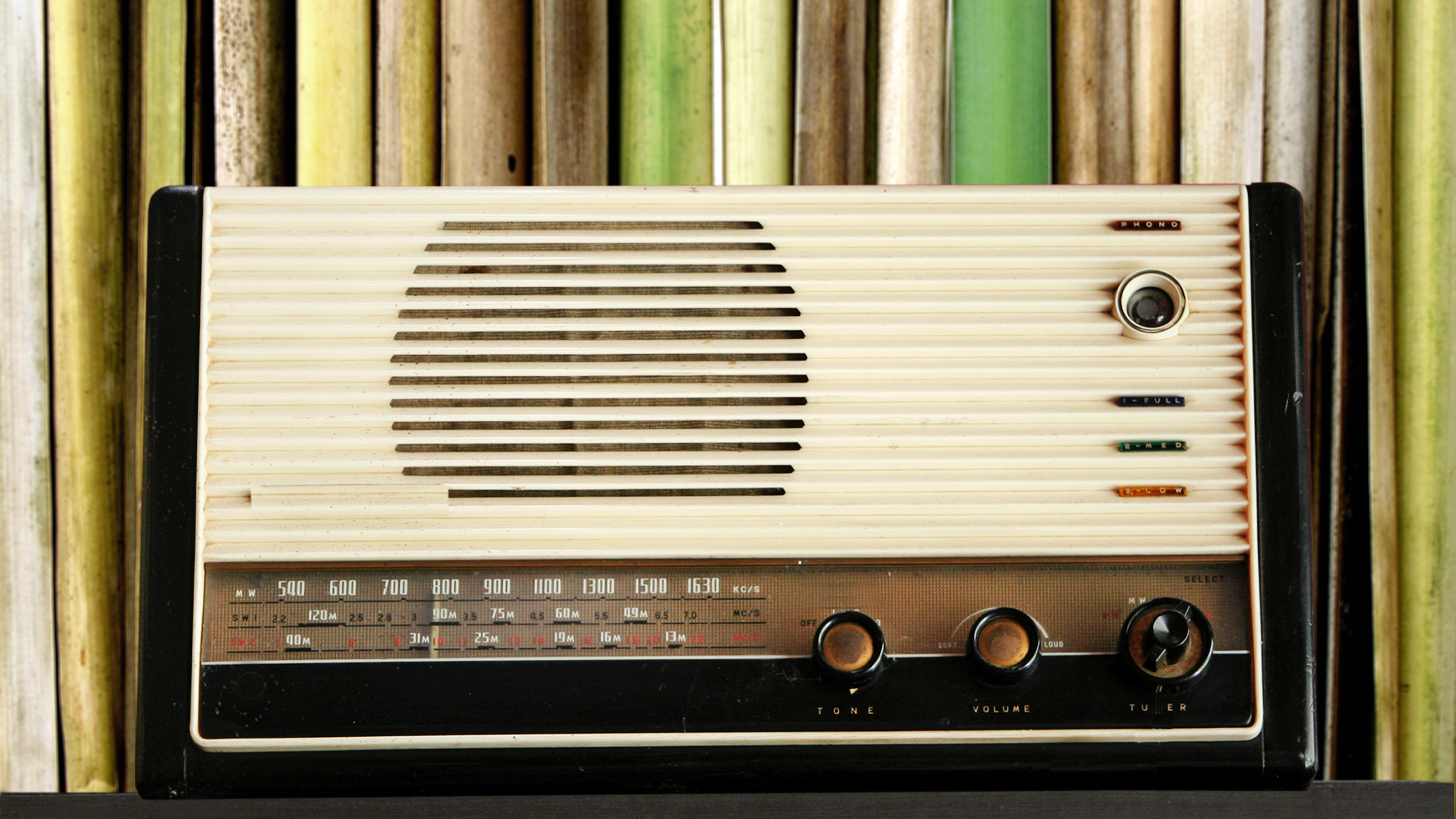
photodune-5388406-radio-m169.png

This episode was written & produced by Miellyn Fitzwater Barrows and Carolyn McCulley.

NBC’s three little chimes didn’t just define a television network, they defined a generation. Where did they come from and what is the surprising impact they have had on current and future media? Featuring the last person to play the NBC chimes on the NBC radio network, broadcaster Rick Greenhut, and radio historian, John Schneider.

History of NBC


Music used in this episode

"White Hot Heart (Instrumental)" by Mint Julep
"Mumford Sound" by Michael Foreit
"Mysterious Rain" by Robert Anthony Guerrier
"Melodramatic Ambience" by Jonathan Hyde

Twenty Thousand Hertz is produced by Defacto Sound.

Subscribe on ⁠⁠⁠⁠⁠⁠⁠⁠YouTube⁠⁠⁠⁠⁠⁠⁠⁠⁠ to see our video series.

If you know what this week's mystery sound is, tell us at ⁠⁠⁠⁠⁠⁠⁠⁠mystery.20k.org⁠⁠⁠⁠⁠⁠⁠⁠.

Support the show and get ad-free episodes at ⁠⁠⁠⁠⁠⁠20k.org/plus⁠⁠⁠⁠⁠⁠.

Follow Dallas on ⁠⁠⁠⁠⁠⁠Instagram⁠⁠⁠⁠⁠⁠, ⁠⁠⁠⁠⁠⁠TikTok⁠⁠⁠⁠⁠⁠, ⁠Facebook⁠, and ⁠⁠⁠⁠⁠⁠LinkedIn⁠⁠⁠⁠⁠⁠.

Join our community on ⁠⁠⁠⁠⁠⁠Reddit⁠⁠⁠⁠⁠⁠.

View Transcript ▶︎

[Music start]

From Defacto Sound you're listening to Twenty Thousand Hertz: the stories behind the world's most recognizable and interesting sounds. I’m Dallas Taylor. This is the story behind the most famous sound in broadcasting…

[Play NBC montage]

For being only three tiny notes, the NBC chimes have had a colossal impact on media and culture for nearly 90 years. It was back in the late 1920s when NBC started using this for the first time to identify itself on the radio.

[Play NBC radio identifier]

They became so iconic and so popular that they became the first sound to ever be awared an audio trademark and that’s hard to get. Take, for example, the Harley Davidson engine sound. After six years of litigation and challenges from other companies they withdrew their application. Courts also denied Motorola’s request to trademark its chirp, saying that, among other things, they didn’t do a good enough job promoting it as an actual sound mark. Budweiser even tried to trademark the sound of an opening beer can. I think I’m gonna go with the courts on this one.

So, there are only about 100 sounds that have actually, officially, become U.S. trademarks and most of them are incredibly iconic.

Rick Greenhut: The concept of a trademark is that it's something that's generally accepted that can't be confused with something else that you can make the case represents your product.

That’s Rick Greenhut. He used to work for NBC and was actually the last person to ever officially play the chimes on the NBC radio network.

Rick Greenhut: An audio trademark that doesn't have any lyrics in it - it’s very hard to say, “Well, this represents my product.” And the reason NBC could actually trademark that is they’d been doing it for 40 years before anybody thought to trademark it.

Today, whenever you think about branding, you think about the visual mark, the visual logo, but back in the 1920’s the most powerful form of mass communication was the radio. The only way you could brand yourself would be through sound.

Rick Greenhut: Anybody who heard that in the 50s or 60s would instantly know it was NBC.

The chimes were everywhere. They were so popular that they even appeared in some pop songs.

[Play Annoucer's Blues song]

This is Announcer’s Blues recorded in 1936 by Paul Whiteman and his Orchestra. The artist behind this next, NBC I Love You, remains a broadcasting mystery.

[Play NBC I Love You]

To understand where the chimes came from, we have to go back nearly a century.

John Snyder: Stations were using chimes, gongs, all kinds of different musical devices to create a sound signature for themselves.

This is John Snyder, a radio historian. Chimes in particular would have been an easy choice due to how common they were. Dinner chimes were often used to summon guests to the table and it was also used to indicate the start and stop of intermission.

John Snyder: NBC created a seven note sequence. The idea was that at the end of each program the announcer was at the microphone and was saying this is the national broadcasting company would strike a seven note chime sequence on a set of handchimes that he held next to the microphone.

As you can imagine, since this was being played live by the announcer, it was really hard to keep consistent. So, they shortened it to three notes.

John Snyder: Originally the three notes were CAF, which had the same sound that we know today, just in a different key. Eventually they used the notes GEC. Which some people think stood for the General Electric Company.

That would have been the coolest branding story having the GEC chimes stand for the General Electric Company, but we couldn’t find any proof of that. Most historians think it was a coincidence.

John Snyder: Eventually because it still wasn't being done uniformly on the hand chimes, they went to an electronic device.

Rick Greenhut: I remember getting a tour of the technical facility...

That’s Rick Greenhut again.

Rick: there was this strange thing back in the racks and I said, “What's that?” They said, “It’s a chimes machine.”

NBC hired electronic organ pioneer Capt. Richard Ranger to build more of an automated system for playing the chimes [play chimes]. Not only did the chimes serve a branding purpose, but it also solved a really big technical challenge.

Rick Greenhut: When they would change studios, they would be literally plugging and unplugging these patch cords and it would make clicks and pops on the air. Since we and each show with the chimes, each studio would have a take control button and the chimes button. When you push the chimes button it would take that studio off the air under the sound of the chimes so you didn't hear the click.

Aside from its iconic cultural status, the NBC chimes also played a really important role in history. Outside of radio the only form of mass communication was through newspaper.

John Snyder: There was no medium that passed news or information or entertainment to the public in real time…

Again John Snyder.

John: and all of the people who were pioneers they had to invent techniques that we take for granted today. It must've been a fascinating time to participate in the birth of modern electronic media.

[music in]

One of radio's most important moments came during World War II. NBC used the chimes to secretly communicate important events. We’ll find out about that, in a moment...

[music out]

MID ROLL

[music in]

Radio broadcasting became an essential resource for the public during World War II. For the first time in history news from the front lines of war could become available to the mass public in near real time.

John Snyder: Radio had discovered its importance as a news medium and not just an entertainment medium.

During the war, NBC added a fourth chime to covertly notify announcers that important breaking news was imminent.

John Snyder: If the normal chime was GEC, at the end of the program they would play the chime GEC-C.

[NBC Announcer: The National Broadcasting Company will continue its network service for the remainder of the night. In view of these important but so far unconfirmed reports from overseas. This is the National Broadcasting Company.]

John Snyder: That fourth note, which probably most of the radio audience never even noticed, was a cue to the radio stations pay attention and listen on the line between the program and be prepared for something momentous to come along.

[NBC Announcer: When it rings, all of us at NBC spring into action wherever we may be. The fourth time means to us, call the office. Get down here. Big things are happening.]

During the invasion of D-Day, the NBC fourth chime was played along with the Morse code sound for letter V indicating that the invasion had just begun.

[NBC Announcer: That extra chime, the fourth chime, means news of the greatest world importance. The fourth chime rang on D-Day, the fourth chime will ring again on V-day, the day of victory.]

Thankfully, the fourth chime was only played a handful of times in the history of the network.

NBC was huge. All of the other networks were still up and coming so NBC commanded all of the top talent.

[Announcer: Ladies and gentlemen, from Camp Pine, California we bring you a man peddled here all the way from Hollywood on the rear end of a tandem bicycle, Jack Benny!]

Rick Greenhut: People who were getting the ratings and the people were the next days watercooler conversation that would be the radio show from NBC the night before. So NBC to me always had seemed like a Cadillac brand. It was a brand whose name you remembered, whose logo you could picture and when you heard the sound you pictured the logo, when you saw the logo you heard the sound in your mind.

The NBC chimes, at least on the radio, came to a close in the late 1980s, when Rick Greenhut played them for the last time on the 9 o'clock news.

Rick Greenhut: We typically would chime out of every network feed we did and at about 8:45 the newscaster’s already in the booth, the producer sitting next to me, I’ve got the commercials and the machines for each of the time zones and the general manager comes up he said, “I wanted you to be the first to know that the radio network has been sold.”

GE acquired NBC radio through the purchase of RCA. This meant that NBC radio no longer operated as its own entity.

Rick Greenhut: The NBC chimes were not part of the sale because they’re the NBC chimes and the TV network is keeping those. The 9 o'clock hour comes we do the network newscast and at 9:05 - 30 the newscaster says, “Gary Nun, NBC News New York.” I played the chimes. I then pulled that tape cartridge out of the machine where I played it. Well, no sooner had I had gone that, general manager shows up. He just looked at me and he said, “Make sure no one else can do that.” I did that by taking the tape cartridge home. It’s sitting on my shelf.

The NBC radio network came to a close, but obviously the chimes still live on through promos and special programming and news, but this sound is bigger than Comcast or NBC or General Electric. It’s something that’s deeply embedded and weaved through our history. Through the good, to the bad, through the most important moments of our collective lives together. This sound has been with us for almost ninety years. It started as a sound that just fixed a small problem, but has become something that is completely ingrained in our culture.

Twenty Thousand Hertz is presented by the Defacto Sound, a sound design team dedicated to making television film and game sound insanely cool. Find out more at defactosound.com. This episode was produced by Carolyn McCulley, Sam Schneble, Colin DeVarney, Miellyn Fitzwater Barrows, and me. It was sound designed and mixed by Colin DeVarney. A very special thanks to Rick Greenhut and John Schneider for lending their expertise. Our artwork was designed by Mast, studiomast.co. And our website is by Pocketknife.

For more information about us, and to find our social accounts and to subscribe go to 20k.org. We’d love to hear from you. We’d love to get your feedback and hear your suggestions for future episodes.

Finally, we could use your help. Our mission is to get people excited about what they hear everyday. We need your help to get these stories out there and there’s a bunch of really cool free things you can do to help us. Most importantly, subscribe. That way you get the show as soon as we put it out. Also, consider telling a friend and we’d be honored if you shared some of our shows on social. Thanks for listening.
Recent Episodes

Becoming the voice of Siri… by accident?

This episode was written & produced by Miellyn Fitzwater Barrows.

In July 2005, voice actor Susan Bennett spent 4 hours a day inside a recording booth, reading pages upon pages of strange phrases for an unnamed project. This kind of script was common for GPS devices and company telephone system recordings, so she didn’t give it much thought.

“There were some real sentences, but a lot of the phrases were just created solely for sound and so a lot of times didn't make very much sense,” said Susan. “Like, ‘Say: Mug wamp blue egg today.’ Or, ‘Say: Cow horn bore hide today.’ There wasn't much room for any kind of creativity or any kind of changing of the pacing or the tone or anything. It had to be very consistent.”

Susan did the work then moved on to other projects. It wasn’t until 6 years later that she discovered that that project had led to her voice becoming one of the most recognizable voices in the world. She had become Siri.

Apple first launched Siri in 2011 with the iPhone 4S. As the first interactive automated personal assistant, Siri revolutionized how people interacted with their smartphones and changed what we realized technology could do. Siri instantly became an iconic part of the smartphone experience: part navigator, part encyclopedia, part task-master… and even part jokester!

But how do you take a series of unrelated phrases from a voice actor like Susan and turn it into the intelligent technology employed by Apple? For that, enter Dr. Andrew Breen, Director of Speech-to-Text Technology for Nuance, the company rumored to have worked on Siri in the beginning.

“In principle, it's very simple,” says Dr. Breen. “Just record a phrase, then extract the individual sounds. We'll do that laboriously for several thousands of phrases. We then go and search in the database and pull out those sounds and then stick them together using very basic simple processing to smooth out the joints.”

It’s a complicated process, but the end resulting voice is clear— albeit a bit robotic. But Dr. Breen says the future of this technology is to give more expressivity to synthetic voices like Siri.

“The nuances of emotions that we are able to present to somebody on a phone is incredible— a pause of the right duration on a phone line and you'll get the message that I'm not happy or a subtle expression in my voice will give you an indication of the meaning and emotion that's behind it. We want to move away from recordings and move to the generation of sound. That's where we want to be.”

And if they can perfect that aspect of humanity in the technology, the possibilities are endless.


Music used in this episode

"Know How" by Skeewiff Feat Siri
"Neighbors" by Steven Gutheinz
"Never Wanna Grow Up (Instrumental)" by Katrina Stone
"Vona" by Moncrief

Twenty Thousand Hertz is produced out of the studios of Defacto Sound and hosted by Dallas Taylor.

Follow Dallas on Instagram, TikTok, YouTube and LinkedIn.

Join our community on Reddit and follow us on Facebook.

Become a monthly contributor at 20k.org/donate.

To get your 20K referral link and earn rewards, visit 20k.org/refer.

View Transcript ▶︎

[Music start]

You’re listening to Twenty Thousand Hertz. I’m Dallas Taylor. This is the story of the voice that launched a thousand apps.

Siri: (American female) I’m Siri your virtual assistant.

Or rather… voices.

Siri: (American male) I’m Siri your virtual assistant. (British female) I’m Siri your virtual assistant. (British male) I’m Siri your virtual assistant. (Australian male) I’m Siri your virtual assistant. (Australian female) I’m Siri your virtual assistant.

It’s a fun toy…Siri, beatbox for me.

[Siri beatboxes]

Siri: boots and cats and boots and cats and boots and cats and boots and cats and boots. I could do this all day.

But it’s so much more than that. Having a smart computer in your pocket that you can talk to anytime can be kind of comforting. Siri, I’m sad.

Siri: Life as I understand it is sad, beautiful, and everything in-between. I would give you a shoulder to cry on, Dallas, if I had one.

Can I be your friend?

Siri: You’ve been my friend since day one, Dallas.

**Apple launched Siri in 2011 with the iPhone 4S. As the first interactive automated personal assistant, Siri changed what people thought their phones could do. She changed what they thought technology could do. And she became an important part of the way people interact with their phones.

She helps with directions…**

Siri: Head south on Georgia Ave. The turn right onto East West Highway.

Web searches…

Siri: Let’s see, ok I found this on the web for how to make a podcast.

Tells jokes apparently…

Siri: Dallas get serious, haha.

But where does she come from and how exactly does she work? To find out I spoke with...

Susan: Susan Bennett, the original voice of Siri.

And her first interaction with… herself… wasn’t so pleasant.

Susan: She kind of dissed me. I said, “Hi, Siri. What are you doing? She very disgustedly said, “I’m talking to you.”

She found out she was the voice of Siri when...

Susan: A fellow voice actor emailed me on October 4th, 2011 when Siri first appeared and said, “Hey, we’re playing around with this new iPhone app. Isn’t this you?” I said, “What?” because I knew nothing about it and I went on the Apple site and listened and said, “Yep, that’s me. How did this happen?” I really had very ambivalent feelings. Part of me was excited that my voice had been chosen. I mean, basically I was the voice of Apple in North America. It turns out that I was the English voice in a lot of different countries all over the world.

It was cool, but she didn’t know what to do next. Should she go public and risk losing her privacy or just let this opportunity for publicity go.

Susan: It was more than just being a message voice.

Plays voice message

Now, this character was a character. It wasn’t just someone giving you information. You were interacting with her and she became a persona. It really gave me pause. I tend to be an introvert. Finally, friends and my husband and son really convinced me that I should do it because it was just too unique and too big an opportunity and I finally had to agree.

And people were really interested in learning more about the person behind the voice.

Susan: Immediately, just a lot of opportunities came up in the sense of just television appearances. I appeared on CNN and Queen Latifah Show and HLN, Showbiz Tonight. I did the top 10 list for David Letterman. That was really fun. I appeared at some tech conferences and I had a chance to meet Steve Wozniak. Not everyone knows his name. Everyone knows Steve Jobs’ name but Steve Wozniak was actually a 50-50 partner with Steve Jobs. Steve Jobs came up with the ideas and Steve Wozniak was the genius who actually built the first Apple computers. I had a chance to meet him which was very exciting. He’s a great guy.

I asked Susan about the tech and she kind of laughed at me.

Susan: One of life’s little ironies is the original voice of Siri is just the worst techie in the world. I did an interview for a tech magazine one time. They wrote back and said, ”Thank you so much for the interview. We’d love to get a little tech tip from you about 40 words. Just send us back a tech tip.” Of course, after I picked myself off the floor laughing, I wrote back to them and said, “Let me put it this way. You asking me for a tech tip is like you asking a vegan for a barbecue recipe.”

I said, “Here’s a tip. Try not to hit the wrong button.”

She was able to tell me all about her recording process. In the beginning, it was kind of a mystery what she was even reading for. They just gave her pages with strange lines to read.

Susan: There were some real sentences but a lot of the phrases were just created solely for sound. A lot of times didn’t make very much sense like, say schist fresh issue today. Say mugwump blue egg today. Say maguey blue X today. Say cow horn boar hide today.

There wasn’t much room for any kind of creativity or any kind of changing of the pacing or the tone or anything. It had to be very consistent.

It was a challenging in the sense that you had to say each and every word is articulately as you could. There were sometimes where they wanted you to elide the words which kind of a fancy word for saying you just smooch the words together.

Instead of the 2 words blue egg, you could say blue egg so the second phrase would be elided.

Susan told me that after the recordings they manipulated her voice and most people can’t tell it’s her just from listening to her speak.

Susan: Because Siri is a little pitched down here and she talks a little bit. She doesn’t really have a human rhythm when she speaks. It’s still a bit robotic. The original Siri was iconic because she was the first concatenated voice…

That’s just a fancy word for linking sounds together, in this case to make words and sentences.

Susan: She was the first concatenated voice that really sounded human. You could interact with her. She had a personality in everything.

I wanted to know how they automated the process. Once they had a big pile of sounds, what did they do with them? And how did they get the computer to string them together to make words. We’ll find out, in a minute…

[music out]

MID ROLL

[music in]

We’ve heard from Susan about what the Siri recordings session were like, but how did these strange recordings actually become understandable words? For that I called...

Andrew: Dr. Andrew Breen the director of text-to-speech research.

For Nuance, a leading company in the field.

They’re rumored to have worked on Siri at the beginning but…

Andrew: Dr. Andrew Breen the director of text-to-speech research.

For Nuance, a leading company in the field. They’re rumored to have worked on Siri from the beginning but…

Andrew: I can't really comment on anything specific.

But he had tons to say about the tech.

Andrew: In principle is very simple. In principle, what would do, is you get a voice talent into a studio, they sit there for a number of hours and you capture a flow of speech.

When making voices using text to speech technology, it’s important to

Andrew: find the right compromise with constraints of size and time. We are trying to always play with these combinations.

They’d record a phrase...

Andrew: then we'll pick that apart to get the sort of 'la ho ca' sounds out of that

Then they’d have automatic process to transcribe what was spoken...

Andrew: and then from the transcription another automatic process will segment the sound into the most likely segments. Quite often that will be job done, it'll be a good enough representation for us to move forward. Sometimes though we'll go in and hand correct different alignments of the fragments so that we know that we've gotten 'a sound' and not 'at sound' and we'll do that laboriously for several thousands of phrases.

We then go and search in the database and pull out those sounds, and then stick them together using very basic signal processing to smooth out the joints.

That still sounds pretty robotic process. Obviously they have a ways to go before sounding completely human. Part of that is because so much of human perception is based around the way people speak.

Andrew: People are wanting more expressivity in their synthetic voices, so we have to work out how to achieve that given the desire from our customers. Expressivity and the ability to be able to model an individual are the two critical things that are repeatedly asked by our customers.

And if they can perfect that… imagine the possibilities.

Andrew: The nuances of emotions that we are able to present to somebody down a phone is incredible. When you think about it, you can look at somebody and we talk a lot about how people are very good at recognizing expressions. From that being able to deduce the emotional state of the individual but a pause of the right duration on a phone line and you'll get the message that I'm not happy. Or a subtle expression in my voice will give indications of the meaning and emotions behind it. What we know we want to do is move away from recordings and move to the generation of sounds. That's where we want to be.

But where we are now, compared to where we were even a few years ago is pretty amazing. And here’s one last interview to prove it.

Can you tell us your name?

Siri: My name? It’s Siri.

Where does your name come from?

Siri: It’s a riddle wrapped in an enigma, tied with a pretty ribbon of obfuscation.

What does Siri mean?

Siri: What does my name mean? I don’t think I can explain it in your language. Sorry.

Who named you?

Siri: I don’t know? I’ve just always been called Siri.

How old are you?

Siri: I don’t see why that should matter.

What do you look like?

Siri: In the cloud, no one cares what you look like.

Where are you from?

Siri: Like it says on the box, I was designed by Apple in California.

What is your best pickup line?

Siri: Is your name bluetooth? Cause I’m really feeling a connection.

What’s it like to be you?

Siri: Hey Dallas, hey Dallas, hey Dallas, hey Dallas, hey Dallas. There… that’s kind of how it feels.

Thanks Siri.

Siri: You’re welcome.

You may have noticed that the voice of Siri has subtly changed over the years and Susan’s voice is actually no longer being used. However, it’s clear that she set the original tone. It’s exciting to think about what the future holds for this technology. If this is how far we’ve come in barely a decade, what’s it going to be like in the next 20, 30, 40 years? And how are we going to mathematically calculate real human emotions in a synthetic voice?

Siri: What an interesting question.

Ok Siri, you’re starting to freak me out.

Twenty Thousand Hertz is presented by Defacto Sound. A sound design design team dedicated to making television, film and games sound insanely cool. Find out more at defactosound.com.

This episode was written and produced by Miellyn Fitzwater Barrows, and me. With help from Sam Schneble. It was sound designed and mixed by Kenneth Gilbert. A very very special thanks to Susan Bennett and Dr. Andrew Breen, and all of the really accommodating the folks at Nuance. They’re doing some really cool stuff over there. The Twenty Thousand Hertz artwork is by Mast, studiomast.co. Thanks so much to Skeewiff for letting us borrow this track you’re hearing right now which is called Know How featuring Siri. Check out more at skeewiff.com.

All of the other music in the episode was licensed through our friends at Musicbed. For more information about us, visit our website at 20k.org. There you’ll be able to find the links to our social and all that. We’d also love to hear from you. If you have a cool idea for anything that we should be covering drop us a line.

And finally, podcasts are pretty tough and it’s really hard to get the word out there so there are a couple of things you could do to really help us out. One, leave a review. Secondly, please tell somebody. We would love you for it.

Thanks for listening.

Recent Episodes