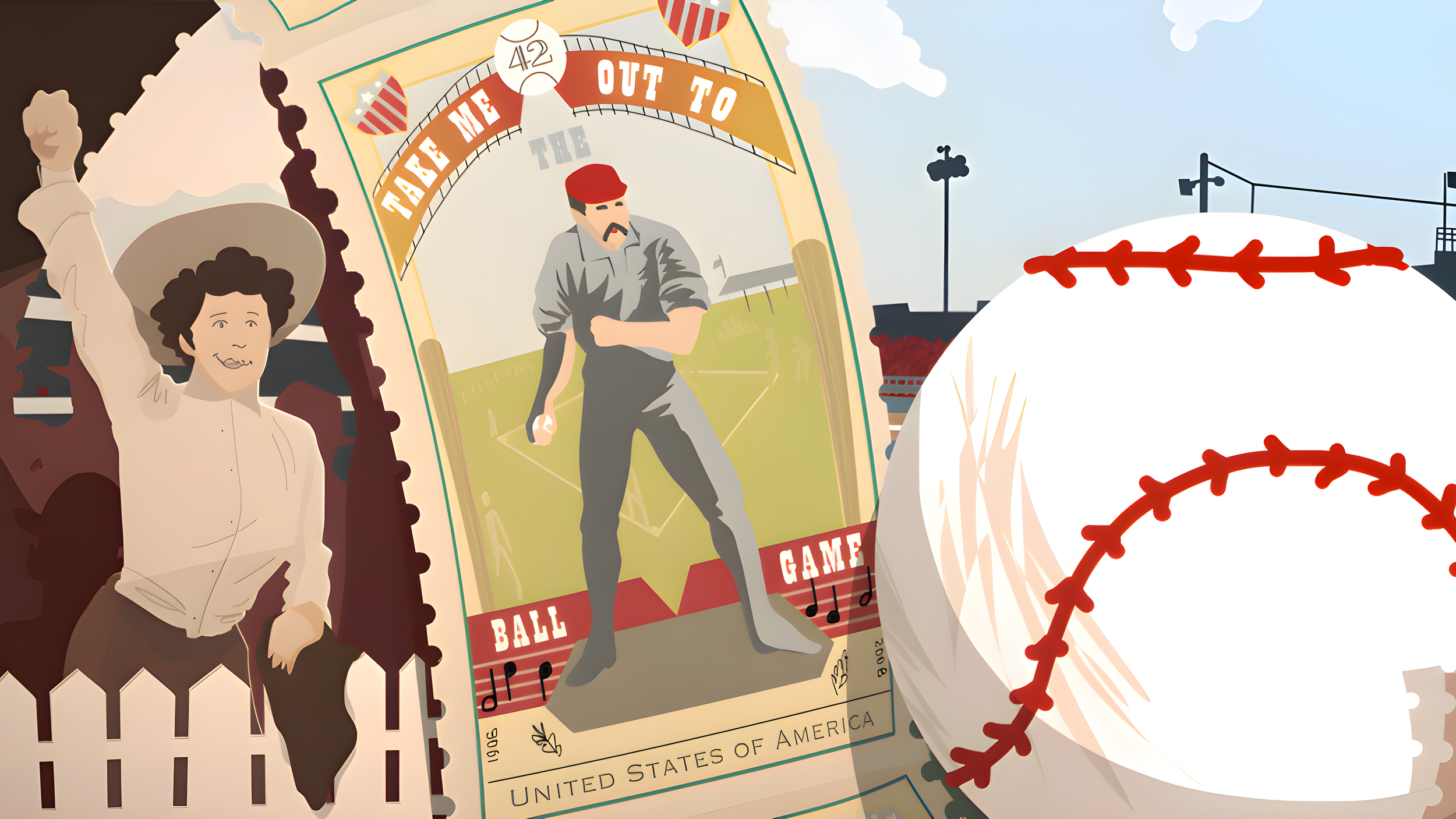
Baseball fan or not, there’s one song that virtually every American knows… or at least, we think we do. “Take Me Out to the Ball Game” is one of the top three most recognizable songs in the country, next to “The Star Spangled Banner'' and “Happy Birthday.” But if you dig into the lyrics, you’ll find a forgotten message buried among the peanuts and Cracker Jack. This story comes from the Smithsonian’s Sidedoor podcast.
The Spatial Race & the forgotten genius who invented stereo
In the 1960s, stereo sound revolutionized the music industry. But it turns out, a pioneering engineer named Alan Blumlein had actually invented stereo a full three decades earlier. Due to tragic events in World War II, his innovations were forgotten for decades. In this episode, we worked with OnePlus to tell the story of how audio has evolved from mono, to stereo, to quadraphonic, to surround sound and beyond. Today, we even have immersive, three-dimensional systems that can simulate 128 speakers using just two. Featuring Alan Blumlein’s son Simon Blumlein, and music producer Robin Reumers from the Abbey Road Institute.
Synth Showdown: Digital vs. Analog
In the 1960s, Bob Moog and Don Buchla built synthesizers that changed the world. But by the early 80s, they faced a new challenger who threatened to bring it all crumbling down: the digital synthesizer. To defeat this opponent, they’d have to recruit a new ally… and maybe even join forces. Featuring Bob’s daughter Michelle Moog-Koussa, Don’s collaborator Ami Radunskaya, and journalist Ryan Gaston.
Synth Showdown: Moog vs. Buchla
In the United States, the East Coast and West Coast have rivalries across food, sports, music and more. But there’s another rivalry that’s less well known, but just as important. This standoff created sounds that were unlike anything that had been heard before. It redefined what a musical instrument could be. And it changed the sound of pop music forever. Featuring journalist Ryan Gaston and composer David Rosenboom.
The weird, wild world of 1-900 numbers
In the late 80s and early 90s, 900 numbers were all the rage. For a couple bucks a minute, you could call and hear from Hulk Hogan and Freddy Kreuger, have a psychic predict your future, and even find true love. In this episode, we dig into the wild world of 900 numbers, and explore why they came about, what made them so appealing, and why they ultimately faded away. Featuring Doug Fraser of the Curious State podcast, 900 number experts Bob Bentz and David Wood, and a surprise guest…
Tokyo Rose: World War II’s most controversial radio DJ
In World War II, the Japanese military operated a propaganda station called Radio Tokyo. Along with jazz music, the station featured several English-speaking female announcers, who became collectively known as Tokyo Rose. But who was Tokyo Rose? And was she really the treacherous villain that the US government made her out to be? This story comes from the History Daily podcast.
Shock Horror A: The origin of the dramatic “Dun, dun, duuun!”
There’s a certain musical phrase that you’ve probably heard hundreds of times. It’s used to emphasize dramatic moments in movies, cartoons, commercials and musicals, most often as a gag. But while this little melody is everywhere today, the question is: Where did it come from? In this episode, we investigate the mysterious origins of a famous 3-note sting. Featuring Sound Historian Patrick Feaster and Composer Dick Walter.
Mind the Gap: NYC & London’s iconic transit voices
The voices of subway and train announcements are deeply ingrained in peoples’ lives. Many of us hear them every day, for years on end. And yet, hardly anyone knows who those voices belong to. In this episode, we uncover the human stories behind two of the most iconic transit systems in the world: the New York City Subway, and the London Tube. Featuring NYC Subway announcer Charlie Pellett and Tube announcer Elinor Hamilton.