
The names of pop and rock stars are known by millions of people around the world, but the people who actually write their music often stay in the shadows. In this episode, we peel back the curtain on the songwriters behind some of the biggest hits of the last forty years, and find out how this unseen part of the industry really works. Along the way, we’ll get the inside scoop about working with KISS, Bon Jovi, Ricky Martin, Snoop Dogg, Puff Daddy, and more. Featuring songwriter Desmond Child and rapper/songwriter Gizzle.
Pirate Radio: Britain’s AM rebels of the ’60s
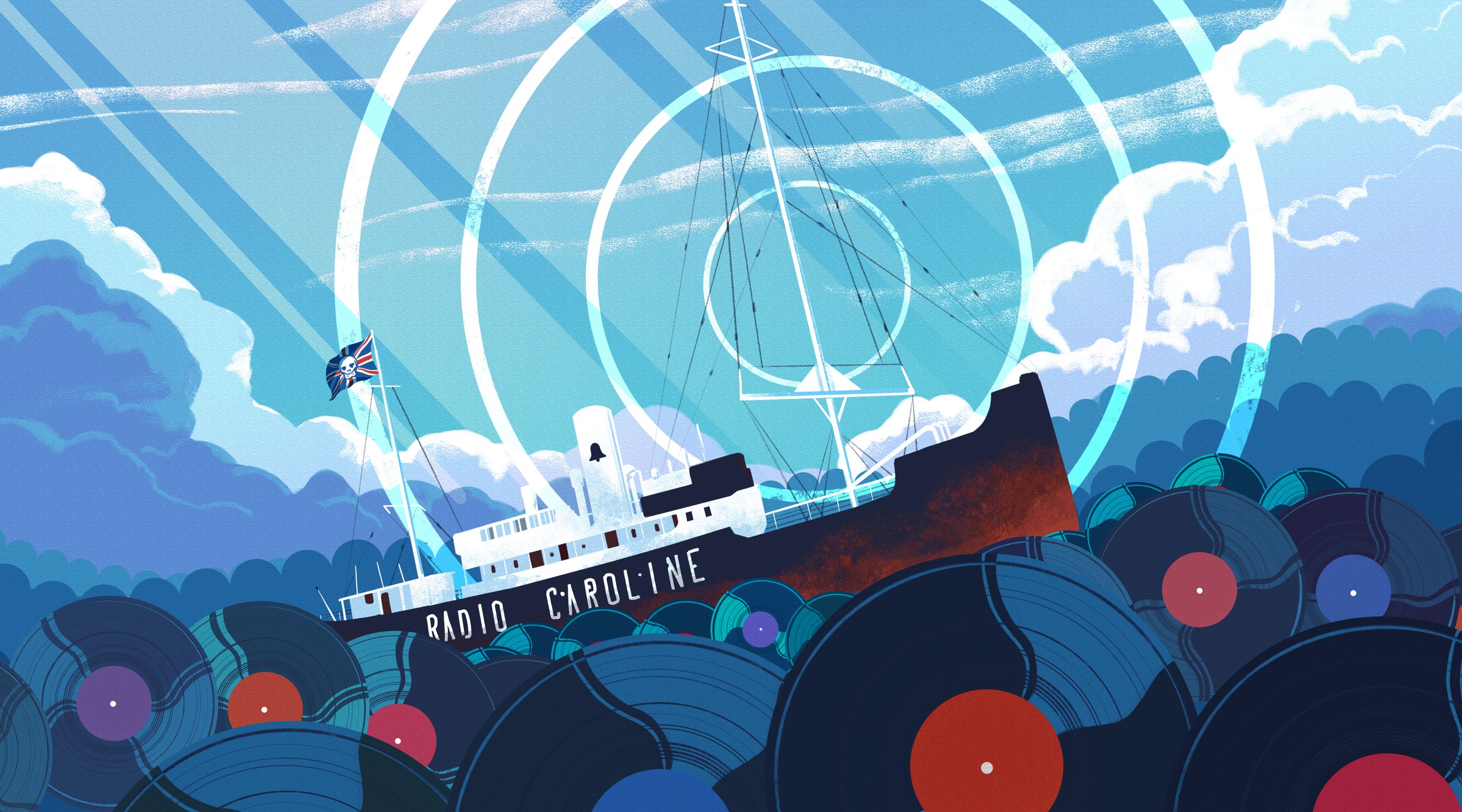
In the 1960s, the BBC had a vise grip on British radio, and rarely played the pop and rock music that was all the rage. So a group of rebellious radio DJs decided to give the people what they wanted, and started broadcasting popular music from boats stationed in international waters. Soon enough, these young DJs became national superstars… until the British government decided it was time to sink these pirates once and for all. This story comes from the History This Week podcast.
The Static Angel: How HBO perfected its sonic identity
In part 2 of our series on HBO, we explore the tough questions that the company faced in the digital era: Are people still willing to sit through a 90-second theme song before they watch a movie? Does the sound of analog TV static even make sense to younger viewers? Could the company change with the times without losing the nostalgia they had built around their key sounds? Featuring composer Ferdinand Jay Smith, former HBO Executive Vice President Bruce Richmond, HBO’s Head of Brand Marketing Jason Mulderig, and Made Music Studio Creative Director Mickey Alexander.
It’s Not TV: Behind HBO’s legendary sounds
In the 1980s, every movie that aired on HBO began with a truly epic theme song—a sweeping orchestral piece that triggers instant nostalgia for anyone who grew up with it. Then in the 90s, HBO introduced a 5-second audio logo for their original content. Today, we associate that sound with some of the most groundbreaking TV shows of all time. In this episode, we reveal the story behind the creation of these two iconic sounds. Featuring composer Ferdinand Jay Smith and former HBO Executive Vice President Bruce Richmond.
Sonic Bubbles: Escaping noise, but at what cost?
For over a century, humans have been using technology to shape our sonic environment. White noise machines, nature recordings, noise canceling headphones and high-tech hearables all allow us to create an auditory safe space we can escape into. But is it possible to have too much control over what you hear? Featuring media studies professor Mack Hagood.
The mysterious “Windsor Hum” is finally solved!
In 2011, residents of Windsor, Ontario started experiencing a strange rumbling hum that rattled dishes and kept people awake at night. Then, after years of getting nowhere, the mystery of the Windsor Hum was finally solved... Or was it? This is a totally remixed, revoiced, and updated version of one of our oldest and most popular episodes. Featuring documentary filmmaker Adam Makarenko.
The Buzzer: Are there secret spy messages on the radio?
Since World War I, countries around the world have been broadcasting mysterious numerical messages via shortwave radio. Though concrete evidence is hard to come by, the general consensus is that these coded messages are meant for undercover agents operating abroad. And one particular Russian station may have an even more sinister purpose. Featuring computer engineer Andrus Aaslaid, historian Maris Goldmanis, and documentary photographer Lewis Bush.
Leaky Pipeline: The fight that revolutionized cinema sound
In the late 80s, a small French company found a way to pair analog film with pristine digital audio. But getting their system into theaters would involve a long legal battle, hiding out in a Vegas bathroom, and a last-ditch meeting with a famous director. Their struggle is part of a larger narrative about the groundbreaking work of women in the field of professional audio. Featuring audio engineer Leslie Gaston-Bird and LC Concept co-founder Elisabeth Löchen.


